
Prime Minister Sanae Takaichi has introduced new visa regulations in Japan, impacting foreign business owners in the country.
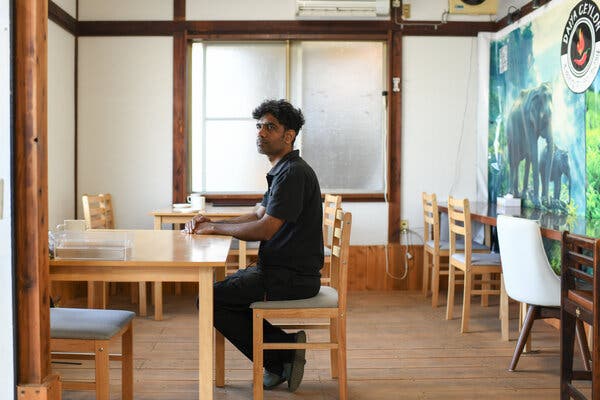
For three years, Mahendra Dharmapriya, a Sri Lankan restaurateur, shared the aromas of his homeland with his neighborhood in rural Japan. His restaurant, filled with creamy lentils, fish curry, egg hoppers, and black tea with ginger, had become a staple in Shimotsuke, located 66 miles north of Tokyo.
However, recent changes forced Mr. Dharmapriya to close his restaurant, Daiya Ceylon, after struggling to meet the tightened visa requirements aimed at controlling foreign residency in Japan. He now plans to return to Sri Lanka, feeling alone and uncertain about his future.
“I felt so alone,” Mr. Dharmapriya, 40, expressed during an interview while distributing unopened bags of spices and cassava chips to friends at his establishment.
Last year, Prime Minister Sanae Takaichi rose to power with promises to control immigration and tourism more strictly. Her government is now focusing on foreigners living in Japan under business manager visas. These changes are part of a broader effort to scrutinize the approximately 47,000 foreign nationals who hold such visas.
Japan’s approach to immigration has been cautious, with foreigners representing only about 3 percent of the population. Some experts argue that increased immigration is necessary to address labor shortages and offset the country’s declining population. However, nationalist sentiments have been increasing, with calls for more stringent controls under a “Japan First” movement.
Conservative voices argue that foreigners exploit visa rules to remain in Japan indefinitely. In response, the government has raised the requirements to obtain a business manager visa. Applicants must now present $188,000 in capital, a significant increase from the previous $31,000, and must employ at least one full-time staff member.