
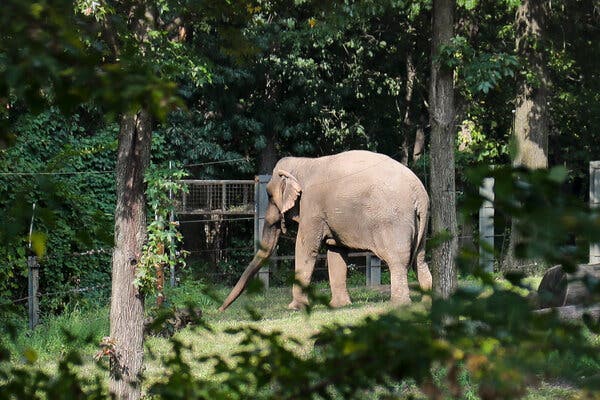
An Asian elephant named Happy, residing at the Bronx Zoo for more than four decades, will continue to stay there. This follows a ruling by New York’s highest court, which concluded that Happy is not a person under the law, and therefore not entitled to basic human rights.
The Court of Appeals, by a 5-to-2 decision, dismissed the argument of an animal rights organization. The group contended that Happy was being unlawfully held and should be relocated to a more natural environment.
This case centered on whether the legal doctrine of habeas corpus, used by humans to challenge illegal confinement, should also apply to animals with complex cognition, such as elephants. The court stated that it should not.
“While no one disputes the impressive capabilities of elephants, we reject petitioner’s arguments that it is entitled to seek the remedy of habeas corpus on Happy’s behalf,” Chief Judge Janet DiFiore explained. “Habeas corpus is a procedural vehicle intended to secure the liberty rights of human beings who are unlawfully restrained, not nonhuman animals.”
However, Judge Rowan D. Wilson dissented, stating the court had a responsibility to acknowledge Happy’s right to seek her freedom. Wilson argued that this case reflects societal values regarding the rights we extend to others.
Judge Jenny Rivera, offering a separate dissent, asserted that Happy was kept in an environment that was unnatural. Rivera emphasized that Happy should live as a self-determinative, autonomous elephant in the wild.