
WASHINGTON (AP) — Senators Ted Cruz, R-Texas, and Maria Cantwell, D-Wash., have put forward a bipartisan bill aimed at resolving ongoing debates over college sports. The proposed legislation seeks to manage player payments, limit transfers, and regulate coach movement during seasons.
Bill Introduction
The chair and ranking member of the Senate Commerce Committee briefed The Associated Press on their crafted bill. It requires 60 votes to clear the Senate. Cruz highlighted its focus on stability, not solely on name, image, and likeness (NIL) payments, which have significantly impacted football rosters.
Legislation Details
Cantwell noted the collaboration with Cruz stems from a shared belief in the current chaotic state of college sports. The bill resembles components from previous proposals, SCORE and SAFE, yet unresolved. It includes NCAA-supported elements like limited antitrust exemption and a provision to override state NIL regulations.
Meredith Page, NCAA Division I Student Athlete Advocacy Committee’s chair, referred to the bill as a crucial step, enhancing protections and stability in college sports.
Antitrust Assistance
The legislation aims to address increasing costs related to player payments and a rampant transfer portal, affecting smaller and women’s sports integral to the U.S. Olympic pipeline. Named the Protect College Sports Act, it provides targeted antitrust protection, particularly for the NCAA and the College Sports Commission. In exchange, it promises athlete protections such as health insurance and scholarship guarantees.
Regulations for Coaches and Players
The bill proposes allowing only one unrestricted transfer per college career, a popular idea nationwide. It mirrors the imminent five-year eligibility span from the NCAA. It also addresses midseason coaching changes, prohibiting them to maintain team stability.
Cruz highlighted the unfairness of poaching coaches midseason, likening it to NFL standards where such practices are barred during the season.
Media Rights and Financial Impact
Adjustments to the Sports Broadcasting Act are included, enabling conferences to pool TV rights. Although this has potential for increased revenue, requirements to allocate a portion to support women’s and Olympic sports might deter some, like the SEC, exploring alternatives like NCAA separation and collective bargaining.
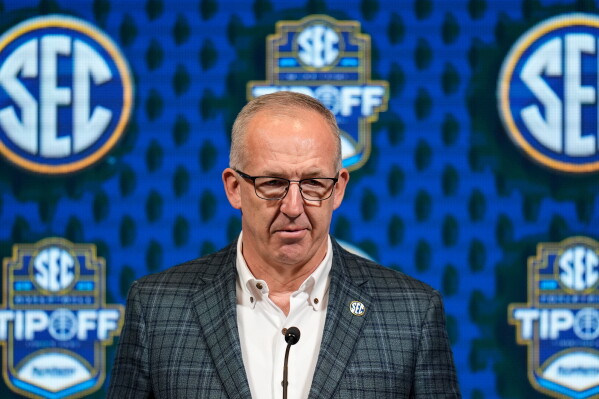
SEC Commissioner Greg Sankey, among other conference leaders, is reviewing the bill. Sankey underscored the importance of bipartisan cooperation in Washington.
Legislative Prospects
The previously proposed SCORE Act, lacking Democratic support, was removed from the House schedule after opposition from the Congressional Black Caucus and NAACP. Despite potential struggles, Cantwell remains focused on neutral stances, diverging from SCORE’s employee classification issue.
Sen. Chris Murphy, D-Conn., criticized the bill’s broad antitrust exemptions, arguing it benefits the NCAA and wealthy sports executives more than athletes. Legal expert Mit Winter expressed doubts about its passage, anticipating challenges with antitrust and liability provisions.
AP College Sports Writer Eric Olson contributed to this report.