
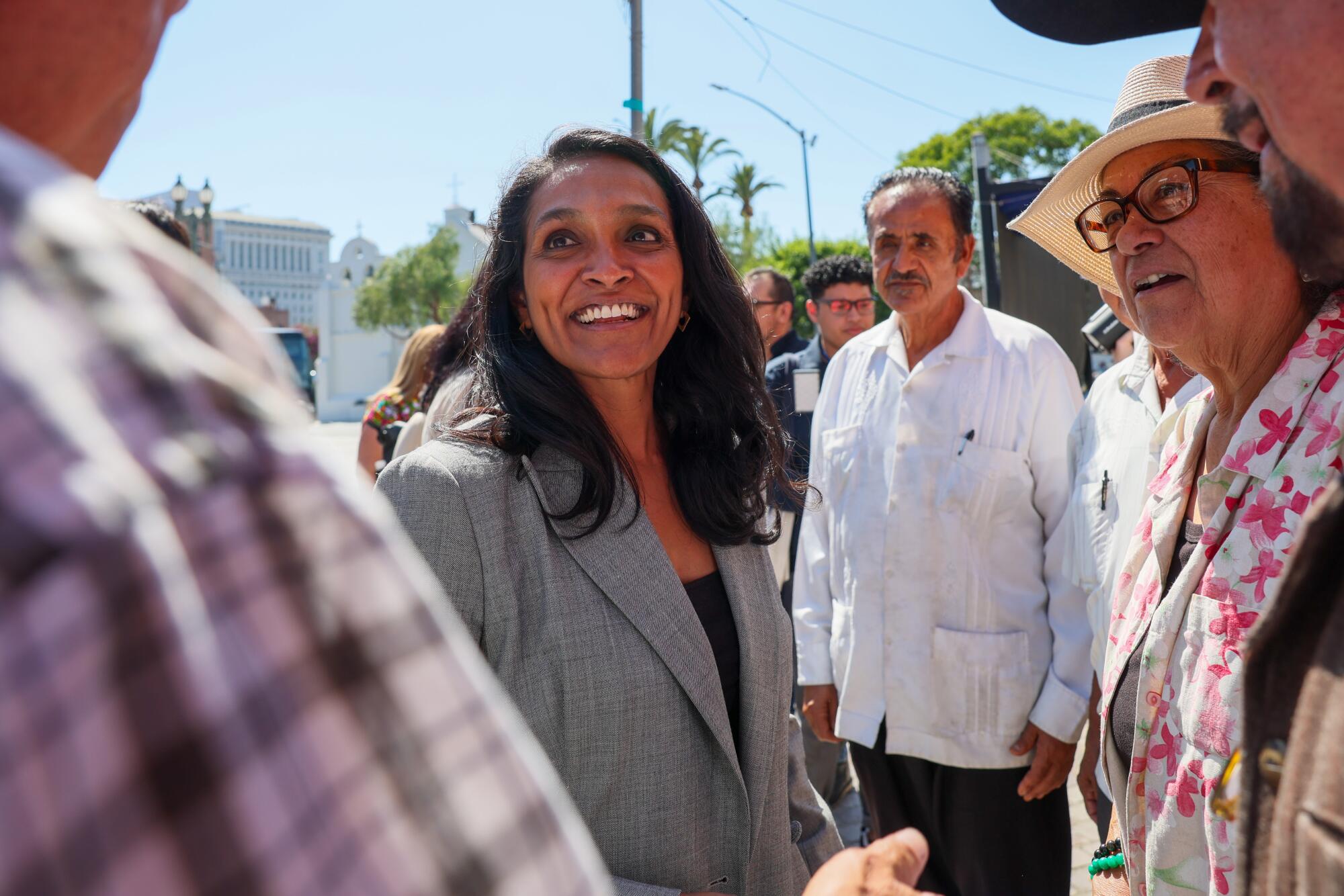
Nithya Raman paused thoughtfully during a debate with Mayor Karen Bass in Sherman Oaks when asked what she needed to improve as a politician. She responded, “What I know I need to keep working on is that in order to ensure your ideas aren’t stopped, you have to invite people in before you try and put them forward.” This moment highlighted her self-awareness in her quest to become Los Angeles’ next mayor.
A graduate of Harvard and MIT, Raman is often seen as one of the sharpest minds in City Hall. Over her six-year tenure on the City Council, she has championed notable legislation. Her efforts include the Tenant Anti-Harassment Ordinance in 2021 and revising the Rent Stabilization Ordinance to lower rent hikes. Despite these, she struggles with Politics 101—collaboration, alliance-building, and openness to differing views. “She is not a natural-born politician. She’s more attuned to governing than politicking,” noted Rick Cole, a former deputy mayor and current Pasadena City Council member. Yet, he acknowledges her potential due to her adaptive learning.
“When you want to move fast, you move alone,” said another council member. “When you want to move right, you move with the people.”
Entering the mayoral race right before the filing deadline, Raman surprised many by joining without prior consultation with allies, despite endorsing Bass earlier. She expressed frustration with the city’s direction, stating impatience in waiting for change. Her statement reads, “I have led the passage of some of the most significant legislation in recent history in L.A.” She cites examples like the Sanctuary City ordinance, the establishment of a homelessness bureau, and securing the strongest renter protections in the country.
Raman refrained from soliciting immediate support from the Democratic Socialists of America, L.A. chapter, who previously backed her. The group’s co-chair, Leslie Chang, emphasized the importance of collaboration in politics, but still supported Raman personally.
Despite her accomplishments, Raman finds her mayoral campaign challenging. She hasn’t received endorsements from the 15 council members. Current polls suggest a tight race with Spencer Pratt, with both aiming for a runoff against front-runner Bass.
Mayoral Platform
Raman criticizes Bass’ Inside Safe program as too expensive and promises a data-driven method to tackle issues like out-of-order streetlights and potholes. Her plans include reviving Hollywood jobs by reducing fees and permits. Raman champions expansive housing development while cutting bureaucratic hurdles and promoting “gentle density” in single-family neighborhoods.
Emigrating from India as a child, Raman studied at Harvard and MIT, focusing on urban planning. She co-founded SELAH, a nonprofit aiding L.A.’s homeless before her council tenure, where she worked to monitor city spending on homelessness.
Recently, Raman’s polling numbers indicate she is competing closely for a slot in the runoff. Former staffers note contentious dynamics, recalling a scandalous audiotape release displaying racism among council members. This hostile environment influenced Raman’s approach, leading to an adversarial perception.
Building Consensus
Raman has encountered hurdles in garnering neighborhood group support within her district. Debra Matlock from the Los Feliz Improvement Assn. appreciates Raman’s prompt response to community issues but misses the personal touch of past politicians. Similarly, the Sherman Oaks Homeowners Assn. claims meetings with Raman have been infrequent, noting a disconnect in housing policy stances.
However, some, like Amos Marvel of the Reseda Neighborhood Council, defend her dedication to housing and homelessness. Yet, others like Karen Bass criticize her lack of relationship-building with council colleagues.
Jesse Zwick, Raman’s former aide, acknowledges her sometimes politically costly decisions but praises her courage in following her convictions.
Policy Stances and Changes
Raman’s positions on policing have shifted since her council run, moving from a “defund the police” stance to recognizing the current LAPD size as adequate. Her opposition to Bass’ police union contract due to budget concerns has sparked debate.
Equally, her stance on Measure ULA, a property transfer tax, also evolved. Initially supportive, she argued for exemptions to prevent stifling development, causing tension with allies.
On no-camping zones, Raman initially resisted but suggested a more flexible approach during her mayoral debate.
Critics like Melina Abdullah of Black Lives Matter Los Angeles view her changes as a lack of commitment. Yet, Mike Bonin, a former council member, sees a thoughtful politician willing to reassess positions.
Despite setbacks, Raman remains a prominent contender in L.A.’s political landscape, navigating challenges as she aims for the mayor’s office.