
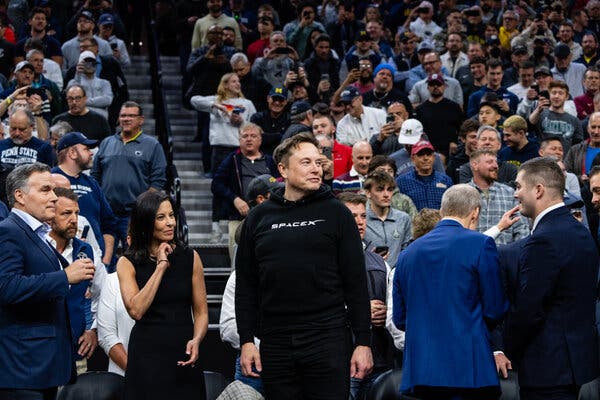
Elon Musk wields significant power over SpaceX, largely due to his control of the company’s “super voting” shares. In January, SpaceX granted Musk a substantial pay package comprising 1.3 billion restricted shares, contingent on remarkable achievements such as establishing a Mars colony with one million inhabitants and sending high-powered data centers into space.
Although Musk has not met these ambitious goals, he retains voting rights with these unearned shares. SpaceX’s offering prospectus, disclosed this week, confirms this arrangement, raising eyebrows among corporate governance experts. Ann Lipton, a law professor at the University of Colorado, Boulder, remarked on the unprecedented nature of this setup, suggesting that Musk effectively circumvented conventional corporate rules.
SpaceX is preparing for a potentially record-breaking initial public offering, valuing itself at over $1.25 trillion. The I.P.O., anticipated to occur next month, promises substantial rewards for Wall Street, Silicon Valley, and Musk himself.
As SpaceX unveils its corporate governance structure, several unconventional decisions come to light. The company’s board will not have a majority of independent directors, and there will be no committee of independent board members to determine executive pay, contrary to typical corporate practices. Furthermore, SpaceX’s governing documents stipulate that shareholder claims under federal securities law must be settled through arbitration.
These measures consolidate Musk’s control, allowing him to influence the board’s composition, choose those deciding his compensation, and protect himself from most shareholder lawsuits. Corporate governance experts note that Musk commands 85% of shareholder votes, emphasizing his predominant role within SpaceX.