
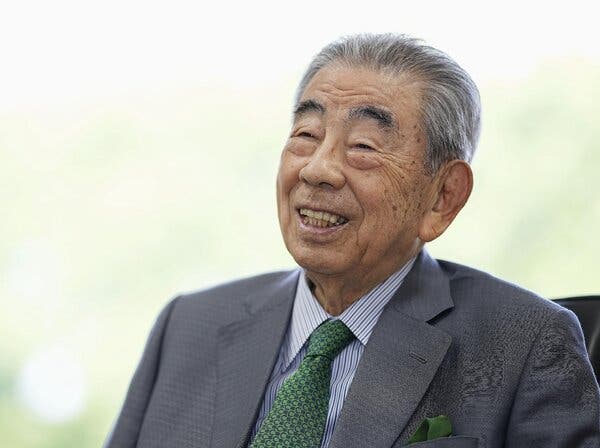
Toshifumi Suzuki, the influential figure behind the transformation of 7-Eleven into a staple of Japanese daily life, passed away on May 18 at the age of 93. His contributions to the convenience store industry in Japan have left a lasting impact.
Over four decades, Mr. Suzuki guided 7-Eleven Japan from a single store in Tokyo to a vast network with tens of thousands of locations. Known for his relentless innovation, he introduced many features that are now standard in Japanese convenience stores. These include in-store banking and popular Japanese snacks like rice balls wrapped in crisp seaweed.
After stepping down in 2016, 7-Eleven Japan encountered challenges. The firm faced stagnant profits, a takeover attempt by a Canadian company, and the struggle to find a new CEO capable of reviving growth. Some within the company felt the innovative spirit had dimmed after Mr. Suzuki’s departure.
Born in Nagano Prefecture, northwest of Tokyo, Mr. Suzuki started his career in publishing sales. His path took a significant turn when Masatoshi Ito, founder of the retail giant Ito-Yokado, recruited him. By 1971, Mr. Suzuki became a director at Ito-Yokado.
Soon thereafter, Mr. Suzuki noticed an opportunity with the American chain 7-Eleven, operated by Southland Corporation in Dallas. Despite skepticism about the viability of American-style convenience stores in Japan, dominated then by small family shops, he saw potential and successfully introduced the concept to the Japanese market.