
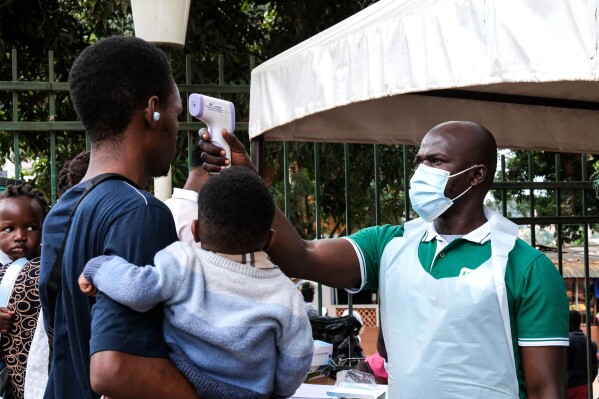
Arson attacks on Ebola treatment centers in eastern Congo highlight the significant obstacles authorities face. These include community backlash, as they work to contain the Ebola outbreak now declared a global health emergency. The recent burning of centers in two key towns reveals anger in a region troubled by violence from armed groups and the displacement of many people. Failures in local governance and cuts in international aid have further weakened health facilities.
“A devastating set of emergencies are converging,” stated the Physicians for Human Rights nonprofit.
The Ongoing Crises in Eastern Congo
Eastern Congo experiences threats from numerous rebel and militant groups. Some have ties to foreign entities or extremist groups like the Islamic State. The M23 rebels, backed by Rwanda, control parts of the region. The Congolese government maintains control over northeastern Ituri Province, the outbreak’s epicenter, though this control is fragile. The Allied Democratic Forces, a Ugandan Islamist group linked to IS, is responsible for many attacks on civilians.
Before the outbreak, an assessment by Doctors Without Borders noted that Ituri’s insecurity had worsened. This caused medical staff to leave, overwhelming health facilities and creating dire conditions in some areas.
Displacement and Disease Spread
According to the U.N. humanitarian office, nearly a million people have been displaced from their homes due to conflict in Ituri. The Ebola outbreak unfolds amid existing insecurity, displacement, and fragile health systems, explained Gabriela Arenas, a regional coordinator at the International Federation of Red Cross and Red Crescent Societies. There is concern that the disease could reach large displacement camps near the city of Bunia, where initial cases emerged.
Authorities have reported over 700 suspected Ebola cases and more than 170 suspected deaths, mostly in Ituri. Cases have also been documented in North Kivu and South Kivu, where M23 rebels are present, and in neighboring Uganda. As a result, management of the outbreak involves both government and rebel authorities, with support from various aid organizations.
Impact of Aid Cuts
Health experts argue that aid cuts by the United States and other wealthy nations last year were disastrous for eastern Congo, as the region faces multiple problems. The cuts reduced the ability to detect and respond to disease outbreaks, according to Thomas McHale, public health director at Physicians for Human Rights. Congo has endured over a dozen previous Ebola outbreaks.
Aid groups battling the current outbreak report lacking essential equipment like face shields, protective suits, testing kits, and body bags for the safe burial of victims, who can be highly contagious. Julienne Lusenge, president of Women’s Solidarity for Inclusive Peace and Development, mentioned that their small hospital near Bunia operates with minimal supplies, highlighting the inadequacy of current aid efforts.
Community Anger and Challenges for Health Workers
The arson in Rwampara and Mongbwalu, areas with the highest Ebola case numbers, illustrates how some community backlash worsens the response. Colin Thomas-Jensen, director of impact at the Aurora Humanitarian Initiative, suggested that the attacks reflect local skepticism and anger due to prolonged violence from foreign-linked rebel groups and failures by both their government and international peacekeepers.
Additional resentment stems from the strict protocols during the burial of Ebola victims. These measures aim to prevent disease spread during traditional funerals and rituals. The first arson attack in Rwampara involved local youths attempting to retrieve a friend’s body, accusing the operating foreign aid group of misinformation.
Authorities in northeastern Congo have now banned funeral wakes and gatherings over 50 people. Armed soldiers and police now guard some burials conducted by aid workers.