
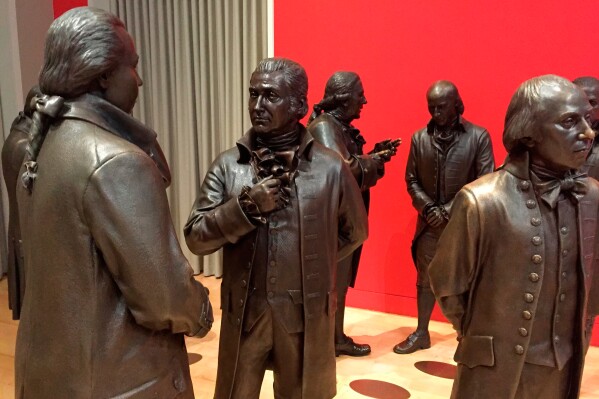
Historian Gregg Frazer’s Insight
Historian Gregg Frazer, a professor at The Master’s University, presents a challenging view of the role of religion in America’s founding. He argues that the founders did not establish a Christian republic, a perspective that disappoints both Christian audiences and those advocating for strict separation between church and state.
Frazer points out that several key founders rejected core Christian doctrines or remained vague enough to prompt ongoing debates among historians. Despite perceptions to the contrary, the founders were neither solely rationalist deists nor anti-religious skeptics. Instead, most possessed some form of religious belief.
Debate Intensifies with Upcoming Anniversary
The approach of the 250th anniversary of the Declaration of Independence has fueled discussions about America’s founding principles, with some Christian activists and authors asserting that the nation was founded on Christian ideals.
President Donald Trump has supported initiatives that align with this narrative, including “America Prays” and statements from officials claiming America was founded as a Christian nation.
Counterarguments and Historical Consensus
Critics, including Americans United for Separation of Church and State, challenge the notion of a Christian founding. They cite historical consensus that America was not founded as a Christian nation in a legal, philosophical, or constitutional sense.
Surveys, like one by Pew Research Center, reveal that 60% of U.S. adults believe the founders intended America to be a Christian nation.
The Pursuit of a Usable Past
John Fea, author of “Was America Founded as a Christian Nation?” highlights the tendency to seek historical narratives that support political or cultural agendas. He notes that founding-era prayers do not encapsulate the broader motives behind the Declaration of Independence.
Influence of Christianity on Founding Principles
Historian Mark David Hall acknowledges that Christianity influenced the founding. While not all leaders held traditional beliefs, many did, shaping the new republic’s formation.
The founders emphasized human dignity, aligned with biblical teachings on humanity created in God’s image, and implemented systems like checks and balances reflecting religious teachings on human sin.
Significant moments saw proclamations for prayer and thanksgiving, showing religion’s role in public life. Faith was deemed important in promoting moral citizens, fostering tolerance without dismissing religious commitments.
Constitution and Religious Freedom
The U.S. Constitution, printed without specific religious references beyond calendar indications, prohibits religious tests for officeholders and guarantees religious freedom through the First Amendment.
Supreme Court rulings have applied these principles broadly, citing Thomas Jefferson’s “wall of separation between church and state.”
Religious Diversity in Colonial America
The founding’s religious complexity is evident in colonial charters that espoused religious missions alongside economic pursuits. Despite religious intolerance, movements like the Great Awakening influenced many colonists.
By the Revolution, a blend of rationalism and Protestant beliefs among educated elites shaped foundational documents like the Declaration of Independence and Constitution.
Misconceptions about Deist Founders
Contrary to popular belief, most founders were not deists. Frazer describes them as “theistic rationalists,” believing in an active God responsive to prayers.
Religion was viewed as essential in shaping virtuous citizens, with demonstrates of interfaith cooperation and support, such as Benjamin Franklin’s contributions to religious infrastructure.
Implications for Modern Interpretations
Frazer cautions against the Christian America narrative, emphasizing dangers to both church and state. Misrepresentations of Christianity dilute its core essence, challenging the authenticity of its principles in the political sphere.