
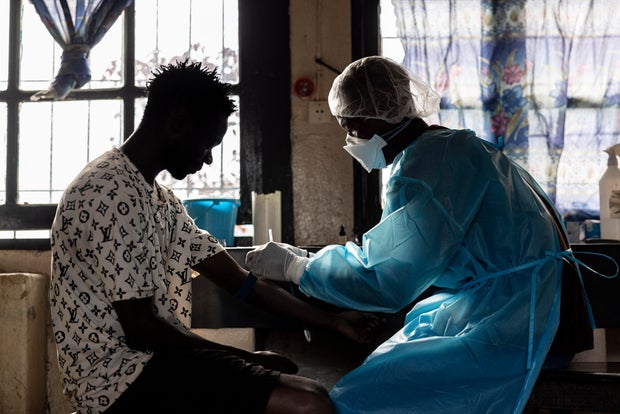
The Red Cross revealed that three volunteers have succumbed to Ebola in the Democratic Republic of Congo. The volunteers were engaged in humanitarian work in Ituri, the area hardest hit by the outbreak.
This outbreak, affecting Congo and its neighbor Uganda, has been classified as an international public health emergency by the World Health Organization.
The volunteers, Alikana Udumusi Augustin, Sezabo Katanabo, and Ajiko Chandiru Viviane, likely caught the virus during duties involved with managing deceased bodies. These activities occurred on March 27, prior to the community’s awareness of the outbreak.
Sadly, one volunteer passed away on May 5, with the other two losing their lives on May 15 and 16. The IFRC mourns these losses and emphasizes the courage and dedication of the Red Cross volunteers globally.
Despite the tragedy, the IFRC, boasting over 17 million volunteers in 191 countries, continues to support those affected by Ebola. Efforts to combat the outbreak remain strong.
The Africa Centres for Disease Control and Prevention recently expanded the list of high-risk countries. Angola, Burundi, and several others are now included.
Uganda reported three new Ebola cases, raising its total to five confirmed cases. The new infections include individuals with direct exposure—the transporter of the first case, a healthcare worker involved in the initial treatment, and a Congolese woman entering Uganda.
In Congo, there are 82 confirmed cases and seven confirmed deaths related to Ebola, with many more suspected cases and fatalities pending confirmation.
Dr. Craig Spencer, an expert who survived Ebola after treating patients in Guinea, expressed particular concern for healthcare workers. Their proximity to patients, especially near death, poses significant risks.
The Bundibugyo strain of ebolavirus, the cause of this outbreak, has no approved vaccines or treatments, exacerbating the situation.
The World Health Organization has elevated Congo’s risk status to a ‘very high’ level, yet the regional and global risk levels remain constant.
Ebola is transmitted through bodily fluids and can lead to severe health complications, including organ failure and severe bleeding.