
Iran has announced that it is currently reviewing the most recent peace proposals from the United States, aimed at resolving the ongoing conflict. This comes as Pakistani Army Chief Field Marshal Asim Munir is scheduled to visit Tehran, according to state media reports.
Nour News, close to Iran’s Supreme National Security Council, quoted Foreign Ministry spokesman Esmaeil Baqaei:
We have received the views of the American side and are currently reviewing them.
Baqaei has stated that current exchanges, mediated by Pakistan between the U.S. and Iran, are founded on Iran’s initial 14-point framework proposal. This framework calls for the definite cessation of the war on multiple fronts, including Lebanon, the release of Iranian assets frozen abroad, and halting what is described as piracy against Iranian commercial vessels.
Iranian lawmaker Fada Hossein Maleki also mentioned on state television that the Pakistani Army chief is expected to bring a new message from the U.S.
Pakistan, playing a leading mediator role, is actively conveying messages as the sides continue indirect discussions, as confirmed by Iran’s ISNA news agency.
A significant development sees Brig. Gen. Ahmad Vahidi, head of the Revolutionary Guard, emerging as a central figure in Iran’s peace talks with the U.S., according to experts. Vahidi, linked with domestic and international attacks, is reportedly in contact with Iran’s Supreme Leader, Ayatollah Mojtaba Khameini, who is hidden after being wounded during the conflict.
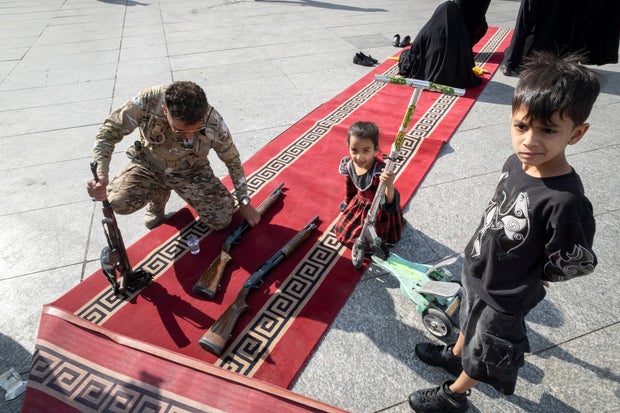
Furthermore, Iranian Revolutionary Guard members are now publicly showcasing weapon-handling skills in Tehran, illustrating the heightened threat as President Trump suggests potential aggression if talks fail.
Ali Mofidi, a 47-year-old Tehran resident, expressed:
This is necessary for all our people to get trained because we are in a war situation these days.
On another front, Iran’s Persian Gulf Strait Authority has released a map delineating its purported control over the Strait of Hormuz, demanding coordination and authorization for transit.
President Trump has indicated his willingness to await Iran’s response in negations, but stresses a limited timeline:
If we don’t get the right answers, it goes very quickly.
A Senate resolution aimed at limiting Trump’s Iran war powers has advanced in what could influence the trajectory of the U.S. stance in the conflict.
The U.N. warns of a potential food price crisis due to the disruption of the Strait of Hormuz, vital for global oil and fertilizer supplies, as tensions affect shipments.
Meanwhile, U.S. Marines have boarded an Iranian-flagged oil tanker suspected of violating blockades, with CENTCOM enforcing maritime restrictions.
Global oil prices have experienced a downturn following Trump’s comments on peace negotiations.
Ultimately, President Trump emphasizes his control over Prime Minister Netanyahu’s decisions on Iran, amid escalating military readiness from Israel’s forces.
Recent strikes between Israel and Lebanon have resulted in significant casualties, marking heightened regional violence that complicates peace efforts.
The Italian government has summoned the Israeli ambassador over footage showing inappropriate treatment of pro-Palestinian activists, stirring international controversy.
Despite the ongoing U.S. blockade, Iran claims coordination for vessel passage through the Strait, asserting control over regional maritime traffic.