
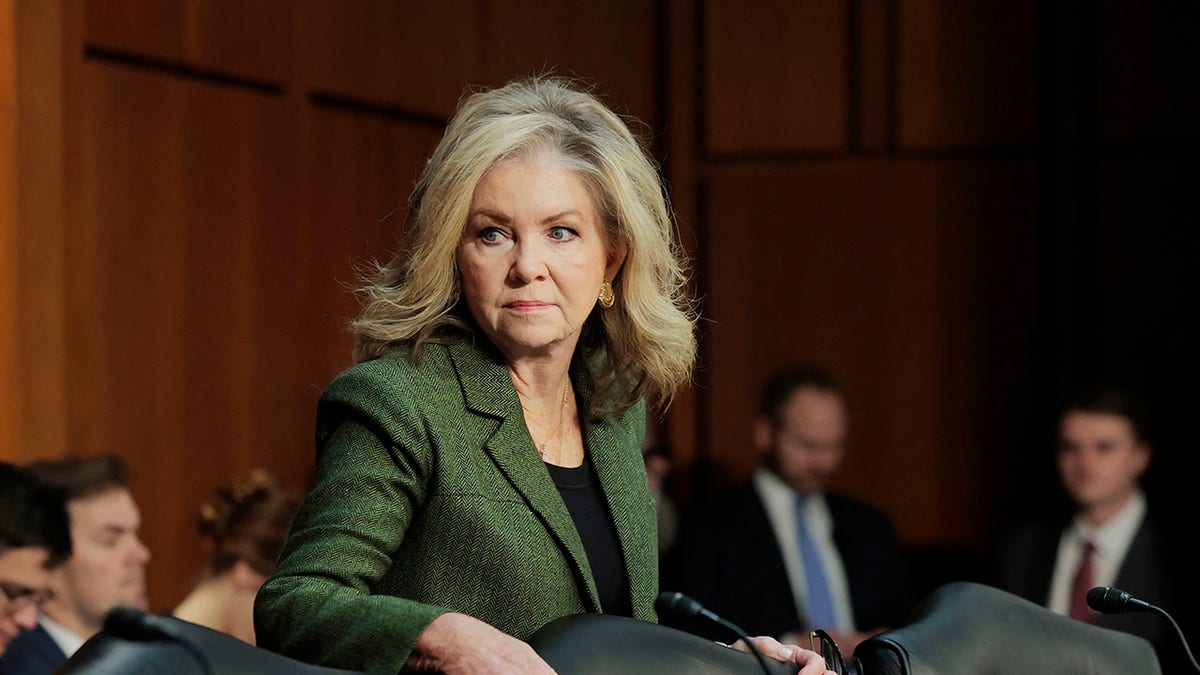
Senator Marsha Blackburn emphasized ongoing congressional scrutiny into the burgeoning world of sports betting and prediction markets. As chair of the Senate Commerce Subcommittee on Consumer Protection, Technology, and Data Privacy, Blackburn highlighted the need to determine the appropriate balance between federal and state oversight. She stressed protecting the integrity of sports as a key priority. This comes amidst concerns that gambling’s influence on American sports could worsen without intervention.
Blackburn remarked on the importance of maintaining fair play in sports, pointing out that the recent hearing, titled “No Sure Bets: Protecting Sports Integrity in America,” served as an initial step in evaluating the risks related to legal sports betting, prediction markets, and gambling addiction.
“One of the things for consideration today was looking at the impact on the integrity of sports and gaming and then saying, all right, how do we make certain that we preserve fair play,” Blackburn stated.
The hearing highlighted the distinction between traditional sports betting regulated by state authorities, and prediction markets, which sometimes fall under federal commodities law. Blackburn noted the complexities involved in distinguishing between these gambling forms, with the American Gaming Association’s President Bill Miller advocating for clearer regulation. Miller depicted prediction markets as “backdoor sports betting operations,” lacking the regulatory frameworks established by states since the 2018 Supreme Court decision to abolish the federal sports betting ban.
Former Representative Patrick McHenry countered Miller’s portrayal, emphasizing the differences between prediction markets and sportsbooks. According to McHenry, in prediction markets, participants trade among themselves, while the platform gains through transaction fees. However, senators like John Curtis found this distinction marginal, viewing the practice as essentially gambling.
In addition to the focus on prediction markets, Blackburn addressed concerns about the exposure of young people to gambling via digital platforms. She highlighted the accessibility of sports betting on mobile devices, emphasizing its pervasiveness, as it is legal in 39 states and Washington, D.C.
Blackburn cited alarming statistics about youth gambling, with over a third of boys aged 11 to 17 participating last year. She criticized the delivery of gambling content through social media algorithms, which often target young audiences.
Gambling policy experts, like Dr. Harry Levant, issued stark warnings about microbetting, a form of rapid in-game wagering. Levant argued that such practices, akin to “a nonstop slot machine,” harm brain function and fan behavior. He warned that technological integrations by sports and gambling companies facilitate this compulsive betting environment.
Sresentative case of manipulation came from a federal investigation involving MLB players Emmanuel Clase and Luis Ortiz, alleged to have engaged in match-fixing. Such incidents underscore the broader risk seen with emerging forms of gambling.
Tennessee has taken proactive steps to address these challenges. As described by Mary Beth Thomas, Executive Director of the Tennessee Sports Wagering Council, the state bans risky bets and investigates suspicious activities.
Blackburn acknowledged these efforts while highlighting the potential need for federal action. She expressed concerns about illicit offshore gambling growing unchecked in the absence of reliable oversight. To guard sports integrity, she asserted that federal standards might be necessary.
Blackburn promised that the recent hearing would not be the final word on the subject: “This was the first of what I think will be several hearings.” She reaffirmed her commitment to ensuring that comprehensive regulations extend to both physical and virtual domains.