
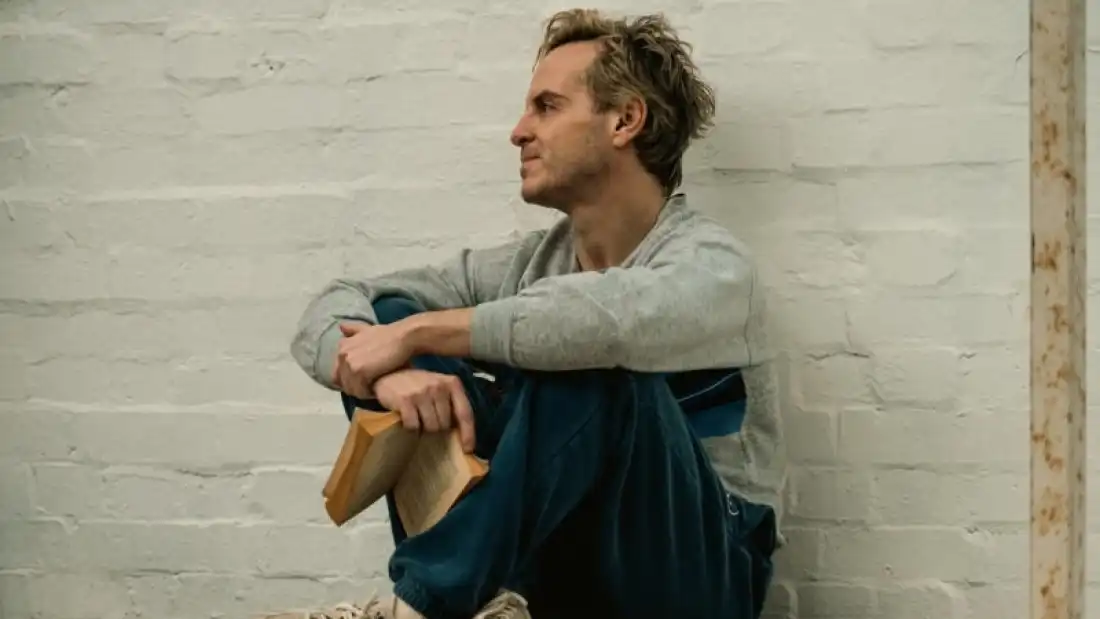
Andrew Scott takes on the role of Scottish actor Ian Charleson in the film Elsinore. The film is set in London in 1989 and captures a unique period in Charleson’s life. Known for his appearance in the Oscar-winning Chariots of Fire, Charleson faces the burden of fame with everyday reminders like cab drivers humming Vangelis’ iconic theme. Yet, his life is overshadowed by greater challenges, specifically living with AIDS during a time when such a diagnosis was often a death sentence.
Despite his health struggles, Charleson receives a significant opportunity when Daniel Day-Lewis steps down from his role as Hamlet at the National Theatre. Charleson, who has a deep affection for the play, assumes the iconic role, determined to succeed despite warnings from his doctor, Margaret Johnson. Played by Olivia Colman, Dr. Johnson warns of the physical strain rehearsals will impose on Charleson.
A notable figure in his life, director Derek Jarman, portrayed by David Dawson, urges Charleson to be open about his sexuality. The casting of Scott, an openly gay actor, as Charleson adds depth to the portrayal. Scott delivers a poignant performance, embodying the challenges of reciting Shakespeare while visibly declining in health. The film, directed by Simon Stone and written by Stephen Beresford, often feels like a montage, merging art and illness in a way that sometimes loses impact.
In contrast, I Play Rocky is a more uplifting narrative. Directed by Peter Farrelly and written by Peter Gamble, the film follows Sylvester Stallone’s struggle to enter the acting and screenwriting world. Anthony Ippolito offers an impressive portrayal of the young Stallone, who battles financial hardships and familial disapproval. Stallone’s determination leads him to write the script for Rocky in just a few days, inspired by a famous boxing match.
The film focuses on Stallone’s negotiations with United Artists, depicting a crucial moment of the journey. The producers, portrayed by P.J. Byrne and Toby Kebbell, initially doubt Stallone but eventually recognize his potential. Tracy Letts stands out as a UA executive with alternative casting ideas, which history would prove wrong. Ultimately, Rocky becomes a massive success, defying expectations, though I Play Rocky presents this outcome as somewhat inevitable.
Both films offer distinct takes on biographical storytelling. Elsinore memorializes an actor’s last role amidst personal turmoil, while I Play Rocky celebrates an iconic rise in Hollywood. Each film, though varied in tone and execution, highlights the significant impact of their real-life subjects.