
Recent developments indicate an increase in Iran’s military actions in the Middle East. These actions aim to assert control over the strategic Strait of Hormuz and provoke the United States into seeking a decisive resolution to ongoing conflicts.
Despite US naval escorts, approximately 8 million barrels of oil manage to transit the strait daily. However, Iran has intensified efforts to disrupt this flow. The United Kingdom Maritime Trade Operations has reported at least six confirmed attacks on tankers in a week, with Iranian sources claiming additional assaults, matching early conflict levels.
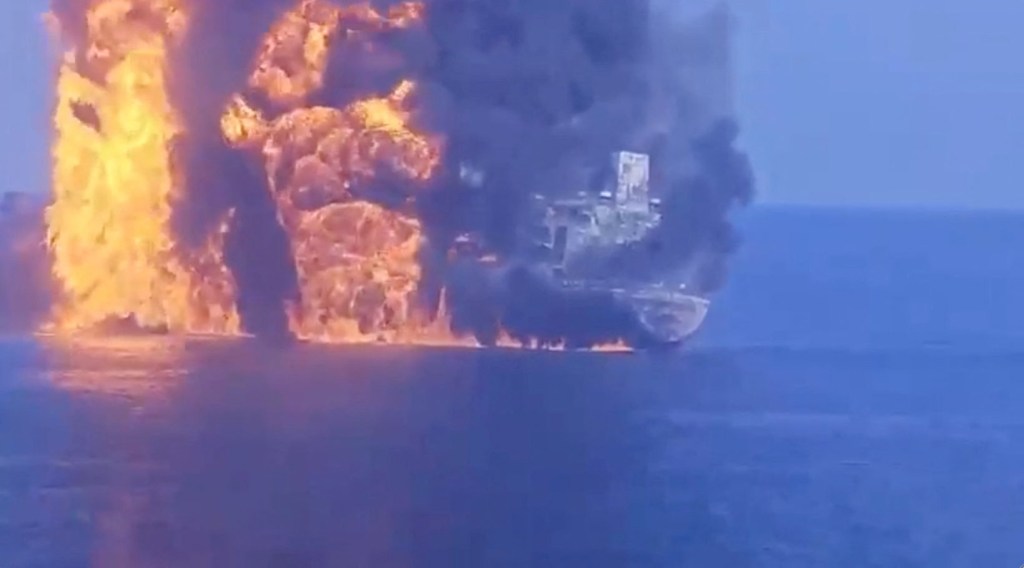
Photographs depict a tanker ablaze in the Strait of Hormuz following an Iranian strike. Further incidents highlight Iran’s deterrent message, warning ships against navigating these waters without its consent, a point emphasized by the Vortexa maritime firm.
In addition to targeting maritime activities, Iran has directed assaults at US bases in Bahrain and Kuwait. These actions represent a significant challenge to existing conditions. While former President Trump favored maintaining a cold war, leveraging economic pressures on Iran, Tehran seems unwilling to delay any longer.
The two sides have very different calculations about the costs of prolonging the confrontation,” noted Hamidreza Azizi, a senior Iran analyst at the International Crisis Group, in conversation with Al Jazeera.
The absent Supreme Leader Mojtaba Khamenei has directed officials to resolve the current stalemate with the US. Economic pressures appear to motivate Iran towards military risks, as indicated by lead Iranian negotiator Mohammad Bagher Ghalibaf during a recent parliamentary address. Ghalibaf emphasized, “We will not remain in a state of ‘neither war nor peace.’”
These strategic moves also demonstrate Iran’s readiness to resume large-scale conflict, as highlighted by Kristian Coates Ulrichsen, a Middle East expert from Rice University. According to Ulrichsen, the attacks on Kuwait and Bahrain signal Iran’s capability and intent to retaliate against US allies, emphasizing regional vulnerabilities.
As the US bolsters its military presence, these incidents remind that it cannot solely control the escalation, underscoring the complex dynamics at play in the Gulf region.