
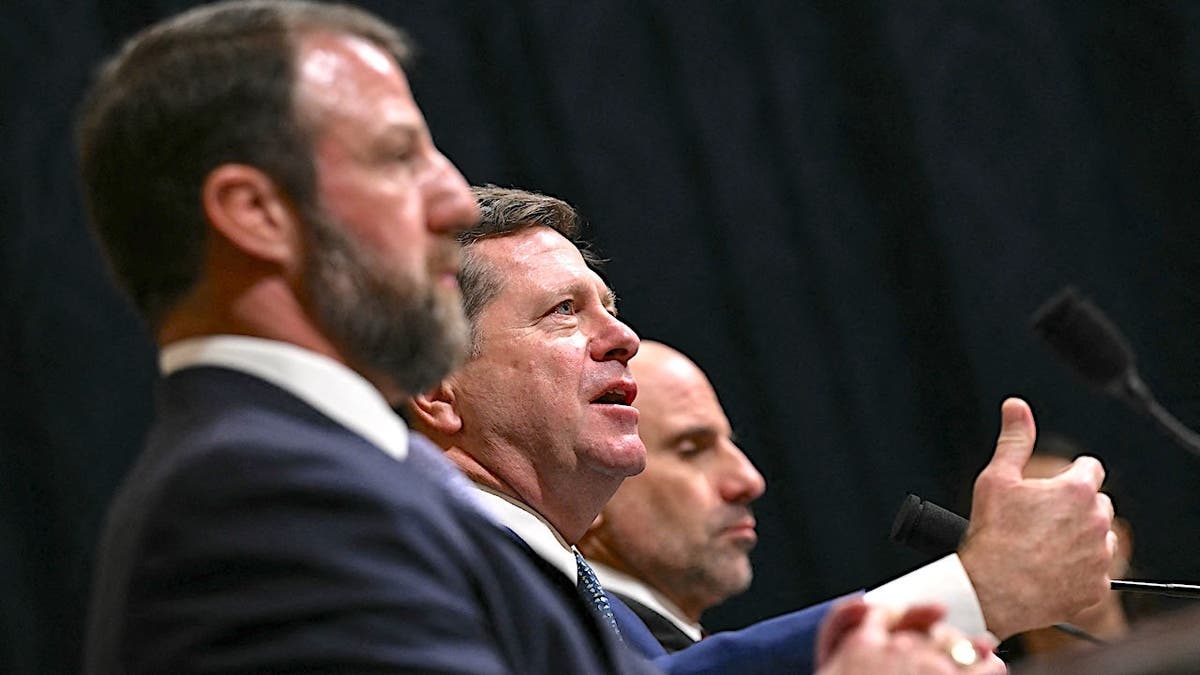
Jay Clayton, Director of National Intelligence, stated that recent service outages in U.S. systems are due to technical and maintenance issues. They are not linked to any coordinated foreign cyberattack. Clayton addressed the House Homeland Security Committee during the ‘Worldwide Threats to the Homeland: 25 Years After 9/11’ hearing.
‘After thorough digital diligence, these outages are separate incidents related to maintenance and technical changes,’ Clayton explained. ‘They are not part of a coordinated or state-sponsored attack.’
Clayton assured that intelligence reviews indicate no foreign interference, despite public concern over the outages’ timing.
Homeland Security Secretary Markwayne Mullin, along with Deputy FBI Director Christopher Raia, joined Clayton in testifying. In response to inquiries by Rep. Dan Goldman, Clayton affirmed that there is no evidence suggesting these events are interconnected.
‘The speed and capability of applications are significantly increasing,’ Clayton noted. ‘Legacy systems are becoming outdated at a fast pace.’
The intelligence community is vigilant and continuously monitors for any malevolent cyber activities targeting U.S. networks or law enforcement.
Beyond the outages, Clayton warned about the rapid advancements in artificial intelligence, or ‘superintelligence.’ This is altering the digital battlefield and escalating the stakes for national defense.
‘Superintelligence is transforming cybersecurity. It’s increasing the speed, scale, and sophistication of cyber operations,’ Clayton stated. ‘This impacts national security, commerce, and military strategies.’
During the hearing, Clayton described a heightened threat environment 25 years after the September 11 attacks, without discussing classified intelligence openly. Full briefings have been shared with key congressional committees.
Clayton highlighted several primary threats:
- Iranian Plotting: There are increasing threats from Iran, both within the U.S. and internationally. The focus is on detecting and deterring these plots.
- Terrorism: Despite counterterrorism efforts, persistent threats remain from individuals inspired by ISIS and al-Qaeda, along with networks used by adversarial nations.
- Surveillance Authorities: Clayton urged Congress to renew Section 702 of the Foreign Intelligence Surveillance Act (FISA). He called it essential for early warnings on foreign threats.
‘No other program matches the speed and effectiveness of FISA 702,’ Clayton emphasized. ‘Letting it expire would be a mistake.’