
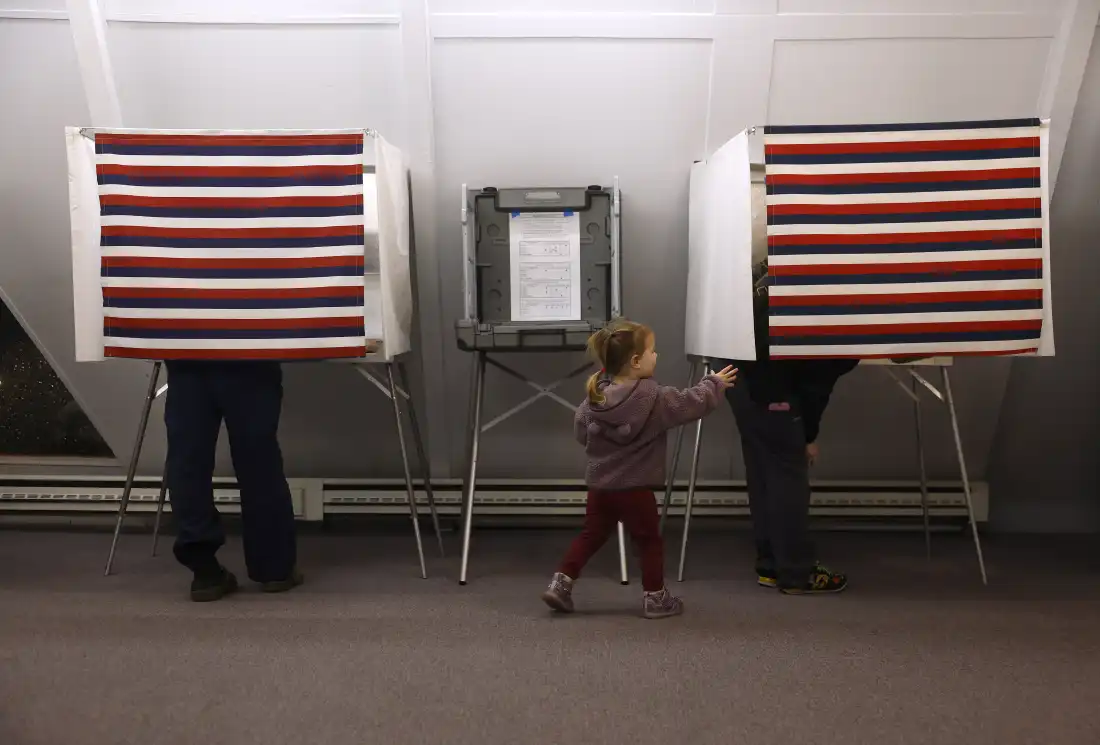
On November 3 in Indian, Alaska, a toddler played hide-and-seek with her parents at Valley Bible Chalet as they cast their votes. With affordability becoming a primary concern for voters in the midterm elections, childcare emerged as an important topic in political debates. Some gubernatorial candidates who pledged to expand childcare programs won their elections, demonstrating its importance.
Democratic Governor-elect Deb Haaland of New Mexico promised to develop the state’s universal childcare initiative. Similarly, Democratic candidate Annie Andrews from South Carolina, set to be the first pediatrician in the Senate, highlighted the need for affordable childcare during her campaign.
It’s not just politicians; voters also showed their support. From Baltimore to San Antonio, ballot measures were approved to direct tax funds toward local childcare initiatives. Julie Kashen, leader of Women’s Economic Futures, noted, “This election felt like a momentum moment for childcare as a significant issue.”
Childcare costs have risen dramatically, with the average exceeding $13,000 per year, placing a financial strain on families. A poll by the First Five Years Fund found 38% of parents with childcare expenses marked it as a top financial concern, behind housing and groceries.
Politicians have responded to this growing concern. Seventy-five percent of gubernatorial candidates offered childcare policies or positions, spanning both major parties, according to the Bank Street College of Education. The Campaign for a Family Friendly Economy PAC, advocating for affordable caregiving policies, spent over $40 million on competitive races.
Childcare is now viewed more as a systemic issue rather than a personal one, according to Melissa Boteach of Zero to Three. She stated, “Twenty years ago, this was a marginal issue. Now, it is seen as a collective problem requiring collective action.” Kashen added that significant national investments like those in WWII and the COVID pandemic highlight the potential for national childcare progress.
How Childcare Issues Fared in the Midterms
In recent months, cities and towns throughout the U.S. echoed this shifting understanding. In Washington, D.C., where childcare already figured prominently in political conversation, “the election took it to the next level,” Ruqiyyah Anbar-Shaheen from DC Action said.
D.C. Democratic Mayor-elect Janeese Lewis George campaigned on capping childcare costs at 7% of household income and backing educator pay equity. Congress races, like Pennsylvania’s 1st District, saw both Republican Brian Fitzpatrick and Democrat Bob Harvie agree on the need for affordable childcare.
Georgia’s Democratic Governor-elect Keisha Lance Bottoms pledged to meet universal pre-K goals, funded partly by casino gambling. Successful ballot measures for childcare funding occurred in places like Boulder County, Colo., and Marin County, Calif. However, setbacks included rejections of childcare funding measures in St. Louis, Mo., and Tempe, Ariz.
Zero to Three’s Boteach anticipates Democrats will counteract what she referred to as “attacks” on childcare by the Trump administration, including Head Start overhauls. Expected new majority leader Katherine Clark voiced a commitment to reversing these policies if Democrats regained Congress control. Senate Minority Leader Chuck Schumer cited childcare affordability among party priorities for the new year.
Democrats also intend to propose expanding the Child Tax Credit to alleviate family tax burdens, though President Trump’s support remains uncertain. Despite previous lack of championing childcare, Kashen notes President Trump’s past mentions of childcare discussions, suggesting possible collaboration.