
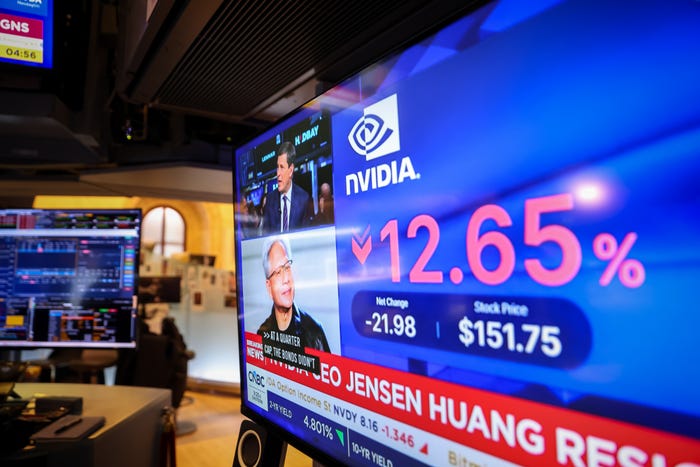
Nvidia’s recent stock market challenges have caused a ripple effect through the Asian AI sector. This shift has influenced some of the major players in the region.
South Korea experienced a notable impact. On Monday, the benchmark Kospi index ended 4% lower. This decline was largely due to significant drops in shares of Samsung Electronics and SK Hynix, which fell 4% and 8% respectively.
In Taiwan, the Taiex index saw a 6% decrease. TSMC, a critical partner for Nvidia in chip production, also faced a 6% decline. Other companies like MediaTek and ASE Technology experienced substantial downfalls.
In Japan, chip stocks took a hit as well. Kioxia experienced an 8% decrease, Tokyo Electron dropped by 7%, and Advantest saw an 11% decline.
Although Hong Kong tech stocks recovered slightly on Monday, they had previously slumped, influenced by concerns over potential US restrictions on chip exports sparked by Nvidia’s difficulties.
The movements in Asia were partly triggered by Nvidia’s own recent struggles. On Friday, Nvidia shares fell 2% to $162.85, marking a nearly 13% loss for the week and shedding about a third of their value since October when founder Jensen Huang announced his resignation as CEO.
Nvidia’s reliance on Asian companies is significant. TSMC in Taiwan manufactures their advanced processors, while high-bandwidth memory is sourced from South Korean companies like SK Hynix and Samsung Electronics. The demand for AI chips and related technology has driven substantial gains in these stock markets.
Investors are now weighing the implications of Nvidia’s uncertainties. There are concerns that this may affect orders and infrastructure investments, challenging the expectations that have previously boosted stock prices. Wall Street anticipates Nvidia’s third-quarter revenue reaching $109 billion, with a projected 90% earnings increase, based on data from LSEG.
Chris Weston from Pepperstone emphasized that market confidence in Nvidia’s projected valuation is crucial. He noted that even strong earnings reports may not stabilize the market if there is uncertainty surrounding future leadership and competitive edge.
The company’s guidance for the future has become critical. Changes in chip orders or delivery plans could impact Asian suppliers. Charu Chanana from Saxo highlighted that a positive earnings report might hold less influence if Nvidia issues cautious guidance about future demand.
Investors are also closely observing the performance and delivery of Nvidia’s Blackwell and Rubin processor lines, as these advancements are vital for the company’s ongoing success.