
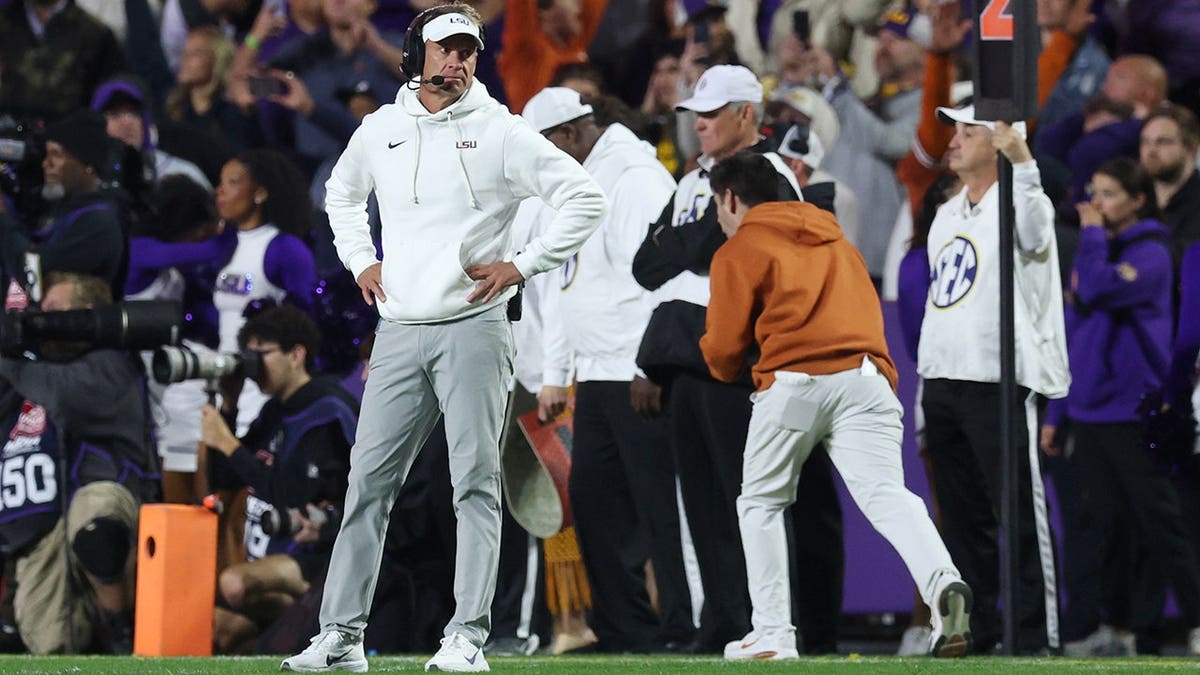
When Lane Kiffin decided to leave Ole Miss for LSU in the late 2025 college football season, his primary goal was to lead his new team in the College Football Playoff. Yet, late in the 2026 season, he faced another year without making the playoffs. LSU experienced their fourth loss of the season against the Texas Longhorns, even with a poor performance from Texas quarterback Arch Manning and a statistical advantage for LSU.
The Tigers’ season was marred by losses similar to this one, where they often outperformed the opposition yet faltered. Bill Connelly, ESPN analyst and creator of the SP+ ranking system, features “postgame win expectancy,” which measures factors under a team’s control such as success rate, yards per play, and turnovers. LSU’s postgame win expectancy against Kentucky was 65.5% and 66.5% against Texas. Despite these figures, they lost both games.
The Louisiana State Tigers, coached by Lane Kiffin, struggled in key moments, as demonstrated during their loss to Texas. Defensively, they recorded four sacks, six tackles for loss, and forced three interceptions from Manning, but errors from Sam Leavitt and missed opportunities in the red zone led to their defeat.
Many longtime college football fans attribute such losses to coaching deficiencies. While losing close games can be somewhat random, frequent occurrences raise questions about the coaching staff’s accountability. After the loss, Kiffin referenced future rosters in his statement, implying improvements are on the horizon. “We’ll have better rosters,” he said, “and that’s no poor reflection upon these players.” He seemed to criticize the current players while assuring enhancements in the upcoming seasons.
No ‘poor reflection’ on the players, he says, but they’re bad, and we’ll have better ones in the coming seasons. How else is anyone listening supposed to take that? Including the players themselves.
This LSU roster required a significant financial investment, reportedly between $40-$50 million, a commitment unavailable to Ole Miss and instrumental in Kiffin’s move to Baton Rouge. However, Kiffin appeared to shift the blame to these players for their underperformance and his unmet expectations during his tenure.
Though he acknowledged his responsibility for some failures, saying, “I get it. Underperformance. It doesn’t matter if the games have been close or if they go down to the last six seconds. I was brought here to win, and we need to win more than that.” He further mentioned that building a competitive roster takes time.
During their matchup against Texas, LSU demonstrated strong defensive plays, yet their offensive performance late in the game was lacking. In the fourth quarter, the Tigers’ offensive drives yielded minimal yardage, detracting from LSU’s earlier lead; an issue reflecting on Kiffin’s offensive strategies.
The expenditure on Kiffin alone included a nearly $90 million contract, along with substantial salaries for assistant coaches and staff, raising expectations for immediate results. This financial commitment heightens the urgency for LSU to achieve success soon.
As LSU assesses its season’s shortcomings, the question remains how many opportunities Kiffin will have to turn the team’s fortunes around. The investments made in Kiffin and the athletic program demand performance that matches their high financial stakes. Without swift improvements, LSU’s $200 million commitment might lead to amplified issues in the future.