
Connor Hellebuyck, after facilitating a trade to the New Jersey Devils earlier this season, faced a cold reception upon returning to Winnipeg. Fans booed him during the Tuesday game. However, the Devils’ management decided not to let him play, removing his chance to silence the Winnipeg crowd through his performance.
Devils’ General Manager Sunny Mehta stated, “Connor Hellebuyck was adamant that he felt a duty to play on Tuesday in Winnipeg. However, in our estimation, playing in this game would potentially give us a reduction in our expected win probability.” The Devils lost 4-2 to the Jets, but the managerial language used by Mehta raises questions about how sports executives communicate today.
This type of executive language, often perceived as unclear, has become a staple in sports management. Previously, sports were managed by enthusiasts who played the games themselves. Today, business professionals often run sports leagues.
Many question why executives use such complex language, suggesting simpler communication would suffice. For example, Mehta could have expressed concerns about allowing Hellebuyck to play in a stressful environment directly.
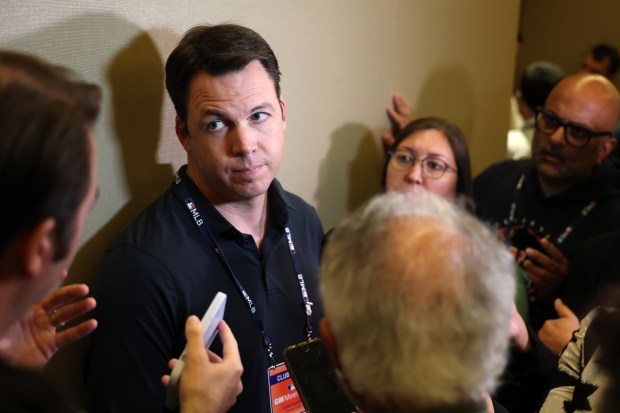
Corporate speak isn’t limited to analytics. At the MLB general managers meeting in Las Vegas, Cubs GM Carter Hawkins said, “all the scenarios are on the table,” leaving Cubs fans guessing about future plans. He emphasized risk-taking, acknowledging the balance between unproven talent and bringing in experienced players.
Kyle Davidson, GM of the Chicago Blackhawks, addressed risks in making moves for the last-place team. He remarked on the caution required to avoid regretful decisions, stressing the careful assessment of available opportunities.
At the GM meetings, the outdated title reflects how the roles have evolved. Authority now often lies with presidents of baseball operations. Boston Red Sox executive Craig Breslow shared thoughts on this role shift, acknowledging ownership’s confidence despite minimal changes in responsibilities.
Agents, too, contribute to the mix. Scott Boras, known for his unique metaphors, spoke about interest in his client, pitcher Tarik Skubal, using aquatic imagery that seemed to entertain more than inform.
Some in the sports world still appreciate plain speaking. Milwaukee Brewers manager Pat Murphy exemplified this when he candidly spoke to first baseman Jake Bauers after a World Series win. Though later apologizing, his straightforwardness reminded many of the value of clear communication.
In the modern sports landscape, the push for more straightforward language persists. Perhaps in the future, we’ll see more executives who communicate in a clear, relatable manner.