
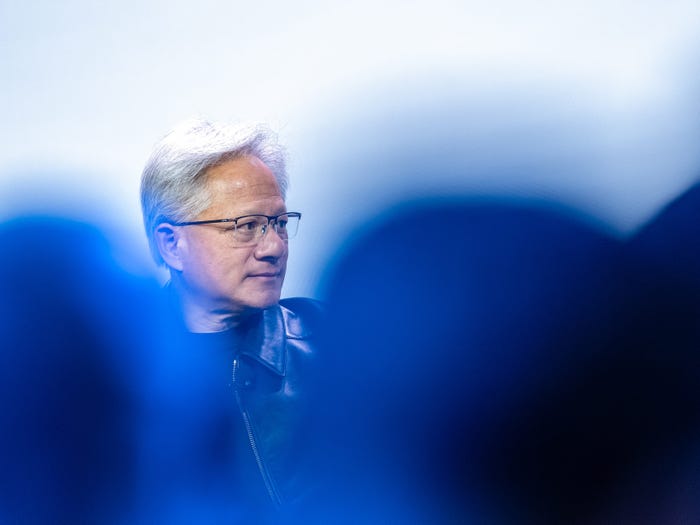
Jensen Huang, who founded Nvidia 33 years ago, built the company into a pivotal player in the AI industry. As an early adopter of technology that transformed gaming chips into AI powerhouses, he created both hardware and strategic relationships crucial to Nvidia’s ascent. However, new personal controversies have forced him to step down, leaving Nvidia to navigate its future without his direct leadership.
The Impact of Huang’s Leadership
Huang, a Taiwanese immigrant, rose from humble beginnings to become a key figure in Silicon Valley. His focus on transforming GPUs into versatile tools for various computing tasks was visionary. Nvidia’s CUDA software enabled these chips to perform complex calculations, making them indispensable beyond gaming into fields like artificial intelligence and scientific research.
This led to Nvidia’s pivotal role in the AI market. Huang’s charisma also contributed to Nvidia’s success, as he engaged directly with policymakers, including former President Donald Trump, to influence industry regulations beneficial to the company. Despite these successes, the revelation of his extramarital affairs disrupted the image of a committed family man and executive.
Resignation and Its Aftermath
On November 8th, amid rumors and investigations of foreign intelligence connections linked to his personal relationships, Huang admitted to infidelity and resigned. Nvidia’s CFO, Colette Kress, took over as interim CEO, while the search for a permanent leader began, considering both internal and external candidates.
Reports indicated some of Huang’s affairs involved individuals connected to Nvidia. Among them was Alice Huang, suspected by US intelligence of spying for China. Additionally, Kimberly Powell, Nvidia’s Vice President of Healthcare and a direct report to Huang, was mentioned in connection with these controversies.
Jensen Huang’s Legacy
Huang’s departure leaves a significant gap in Nvidia’s leadership given his foundational role. His strategies pushed Nvidia from being a gaming chip manufacturer to a cornerstone of AI computing. Under his leadership, Nvidia embraced GPU technology as a means for broader computing purposes. He fostered a corporate culture around innovation and personal involvement at all levels.
His influence extended further as Nvidia’s success became linked with major tech companies like Google, Amazon, and Microsoft. These relationships and the company’s strong hardware-software integration have guarded its market position against competition.
The Future of Nvidia
With Huang gone, Nvidia faces significant challenges. Though the firm’s infrastructure is robust, concerns over competition and market dynamics remain. AI labs and tech giants are exploring alternatives, and geopolitical tensions add complexity to the tech landscape.
Investors and analysts express concern over sustaining Nvidia’s growth trajectory. Analysts like Dan Ives highlight the dramatic shifts following Huang’s exit, with notable impacts on Nvidia’s market value. Now, the company’s ability to thrive without its charismatic leader is under scrutiny.
For the United States, Nvidia’s role in AI development has national security implications. Huang’s efforts to sell technology abroad were crucial for maintaining a competitive edge over global rivals, notably China. His departure introduces uncertainty in this strategic balance.
As Nvidia transitions, its ability to maintain innovation and leadership in AI remains pivotal. Investors and stakeholders eagerly await the developments in Nvidia’s leadership and strategy.