
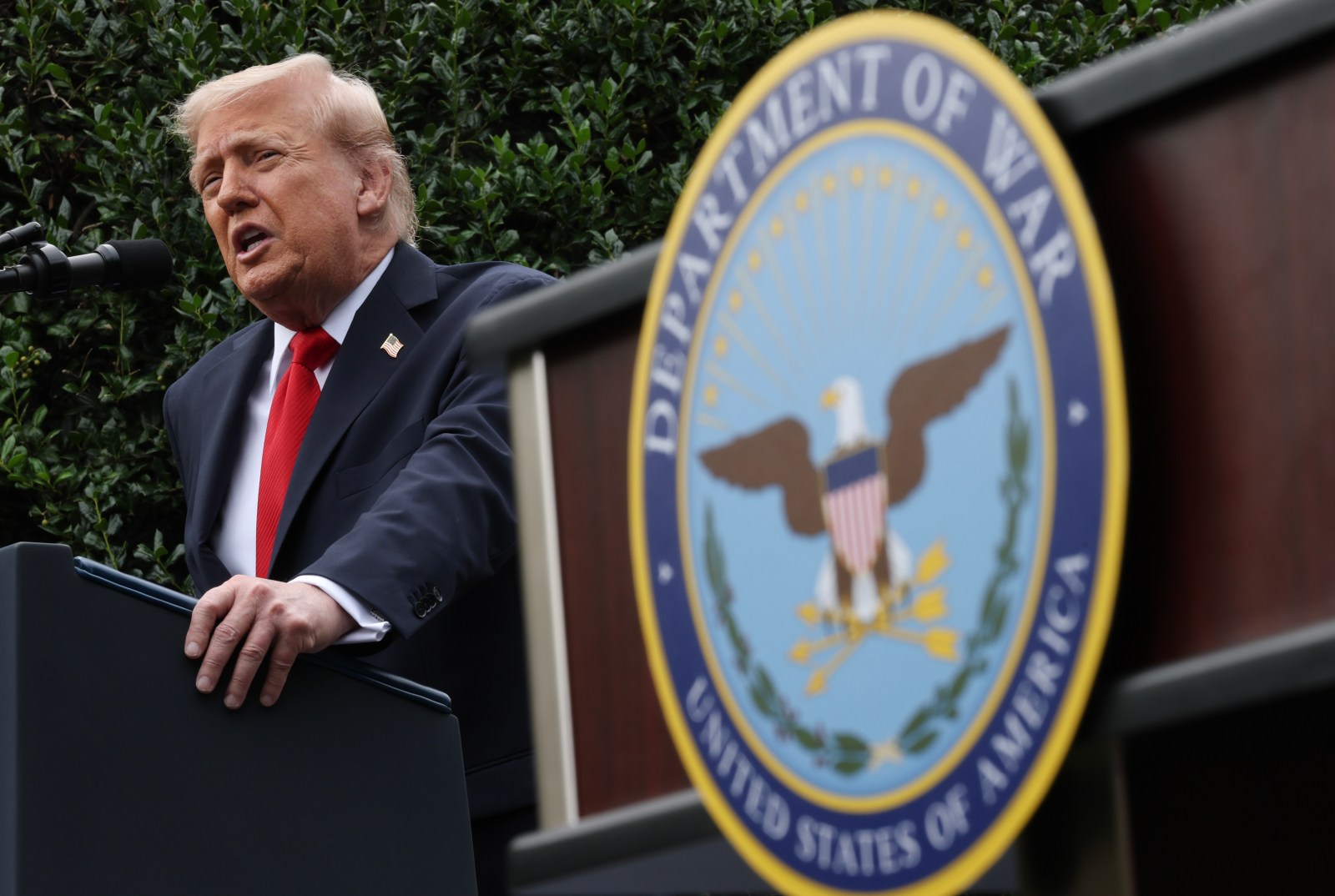
President Donald Trump on Thursday called on Senate Republicans to quickly pass a $350 billion military spending bill before Democrats assume control of Congress in January. He accused the incoming majority of planning to block what he described as a crucial investment in national security.
Trump expressed his views on Truth Social, saying, “I rebuilt our Military in my First Term, and we’re doing it AGAIN, bigger and better than ever before! They want to leave our Warriors weak, and unguarded, but the American People want their Warriors SAFE and STRONG.” His comments suggest that Democrats oppose the funding. However, the main obstacles have come from within his own party.
The proposal includes $47 billion for munitions production, $17 billion for the Golden Dome missile defense system, and over $48 billion for critical minerals. Defense Secretary Pete Hegseth has pressured lawmakers to pass this bill, arguing it would bolster the defense industrial base. This is crucial as the military has used significant munitions in the war with Iran, leading to “strategic inventory shortfalls” as per a Congressional Research Service report.
So far, Congress has made little progress on the proposal. In July, House Republicans revealed a reconciliation framework offering $60 billion for defense, $290 billion short of the White House request. The House narrowly adopted a $95 billion budget resolution, but the Senate has not voted before the midterms.
The Resistance Inside the GOP
Republicans seek to use budget reconciliation to pass spending bills with a simple majority, avoiding the Senate filibuster. But GOP members have yet to reach agreement. The first opposition came in June. Kentucky Senator Mitch McConnell stated at a hearing, “It’s safe to conclude there will not be another reconciliation bill.” Maine Senator Susan Collins and Texas Senator John Cornyn also expressed concerns.
After the midterms, the pressure increased. During leadership elections, conservatives challenged John Thune over the bill. Thune committed to striving for a budget resolution and defense package in a lame-duck session. Despite this, the vote count remains uncertain. Kentucky Senator Rand Paul and Missouri Senator Josh Hawley indicated opposition. Meanwhile, Mississippi Senator Roger Wicker supports the reconciliation.
How It Compares With Health and Education Spending
The $350 billion would supplement a growing defense budget. Trump’s 2027 proposal suggests a 44% increase in military spending alongside a $73 billion cut in domestic spending. The Department of Education’s budget would reduce to $76.5 billion, and the Department of Health and Human Services would receive $111.1 billion, a 12.5% cut. Collectively, the reconciliation request exceeds half of the proposed $660 billion for nondefense agencies.
Medicare and Medicaid operate under mandatory spending and face cuts too. The One Big Beautiful Bill Act, another reconciliation measure, slashes nearly $1 trillion from Medicaid over a decade, projected to leave 10 million more Americans uninsured by 2034. Congress largely ignored Trump’s proposed domestic cuts for 2026, granting NIH an increase instead.
Where Democrats Stand
Democrats have opposed increased defense spending and the war in Iran. In July, nearly all Senate Democrats voted against advancing the defense policy bill. Rhode Island Senator Jack Reed opposed enabling an unauthorized Iran war, although GOP Senator Wicker argued the bill omits key elements.
Democrats emphasize the stark contrast in spending priorities. Connecticut Representative Rosa DeLauro noted the defense increase contrasts with domestic cuts. Delaware Senator Chris Coons expressed doubt about the reconciliation package’s enactment. The process bypasses Democrats, but with their upcoming control, Republicans feel pressured to act quickly.
Some Republicans consider attaching defense funds to a temporary spending bill. However, agreement from Democrats remains uncertain. Both parties’ aides expect funding to extend into 2027.