
A credibility crisis for the Justice Department has intensified after a federal judge in Chicago criticized the government’s handling of an evidentiary hearing for the “Broadview Six” case. U.S. District Judge April Perry deemed the Justice Department’s confusion about the upcoming hearing as “immaterial” and accused them of failing to comply with her discovery orders.
The case has sparked significant attention, with senior Justice Department officials, including Associate Attorney General Stanley Woodward and U.S. Attorney Andrew Boutros, involved in a public dispute over the proceedings. The hearing, scheduled for Monday, requires Boutros and his assistants to testify under oath about their conduct in handling the Broadview Six case, a situation that has drawn skepticism from veteran Chicago attorneys.
Efforts to limit or derail the hearing have been unsuccessful. There are concerns that the hearing may become a spectacle at the Dirksen U.S. Courthouse, with potential outcomes including Boutros being instructed by higher-ups not to answer certain questions or possibly invoking the Fifth Amendment.
The situation escalated when Woodward filed a motion arguing that communications between the Justice Department and local prosecutors in the Broadview case should remain confidential. Judge Perry responded to this by stating that the privilege log submitted was “noncompliant” and did not meet her requirements. She had requested details about the communications, which were not provided.
“As the Court explained in detail…the point of requesting the 10/14/2025 email and attachment was to provide corroboration for U.S. Attorney Boutros’ claim that he had not read them,” Perry noted.
In response to the judge’s orders, Woodward filed another motion arguing that Perry had exceeded her authority by mandating prosecutors to testify. He suggested that Perry was potentially creating a “Catch-22” for the prosecutors: testifying could risk prosecution, while asserting their Fifth Amendment rights could antagonize the court.
Richard Kling, a seasoned defense attorney in Chicago, expressed that he had never witnessed such a scenario, describing it as “extraordinary.”
Perry has outlined the process for the Monday hearing. Witnesses will make an initial oral statement without interruption, though they can submit written statements signed under oath instead. Lawyers can confer with represented witnesses before they answer follow-up questions. Witnesses without attorneys may add additional remarks after questioning.
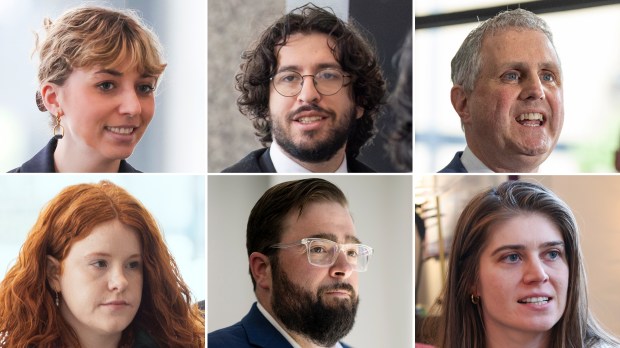
The Broadview Six case arose from charges against protesters during a deportation push under the Trump administration. The charges alleged that the defendants obstructed an ICE agent’s vehicle. Boutros dropped charges in May after it was uncovered that prosecutor Sheri Mecklenburg had engaged in misconduct before the grand jury.
Even with the charges dropped, controversy continued. Defense attorneys claimed political motivation behind the indictments, which Boutros’ office denied. The DOJ’s actions, including offering redacted information during hearings, prompted further scrutiny.
Judge Perry has highlighted flaws in the prosecution but has not definitively found misconduct. She mentioned that whether misconduct was intentional or merely embarrassing is irrelevant to the court’s concerns.
In the fallout, Boutros had vowed to rebuild trust with the judiciary. However, recent DOJ filings opposing Perry’s efforts imply a reluctance towards transparency and accountability, as noted by Christopher Parente, attorney for one of the dismissed defendants.