
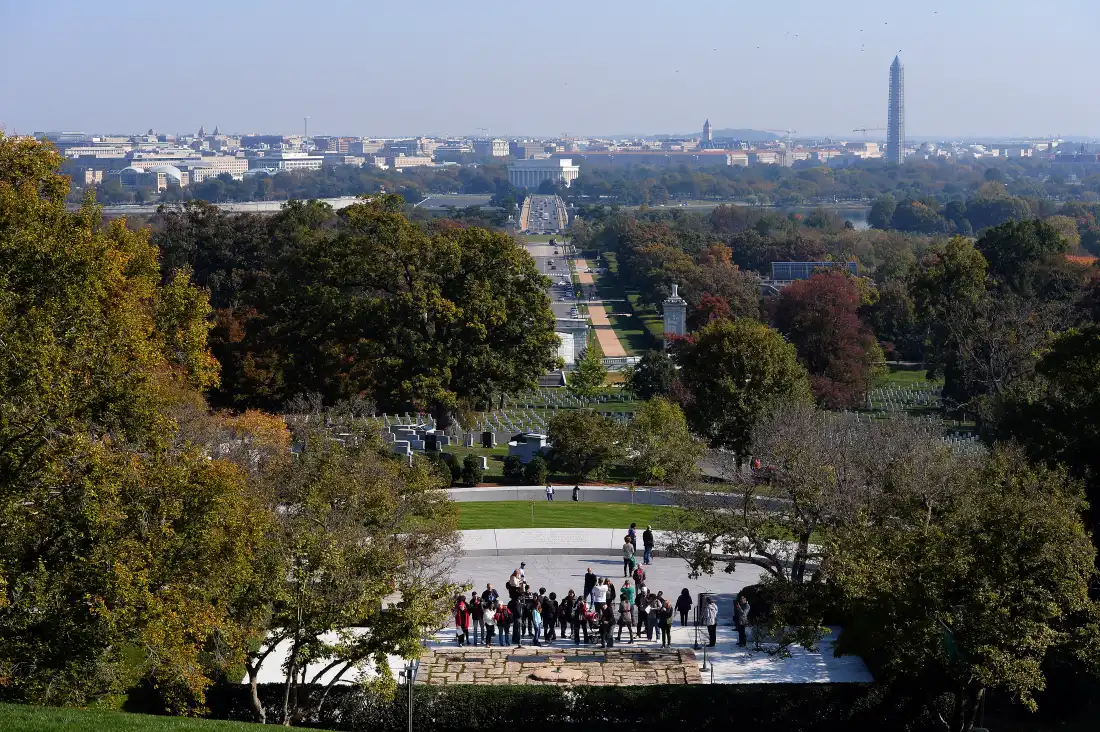
The gravesite of former President John F. Kennedy at Arlington National Cemetery shares an axis with the Lincoln Memorial. Kennedy’s descendants argue that Trump’s proposed 250-foot arch would not only obstruct the view between these monuments but also overshadow Kennedy’s grave.
Nine members of the Kennedy family have filed a federal lawsuit to block the construction of the structure, citing obstruction to their relatives’ gravesites, including the John F. Kennedy Eternal Flame at Arlington National Cemetery. Rory Kennedy and Maxwell Kennedy emphasized the symbolic implications of the arch overshadowing the graves, undermining democratic principles. The plaintiffs include children of Sen. Robert F. Kennedy and Ethel Kennedy and a son of Sen. Edward M. Kennedy, all buried at Arlington.
Notably absent from the lawsuit is Health and Human Services Secretary Robert F. Kennedy Jr., who did not join his siblings against his administration. The White House, through spokesperson Davis Ingle, expressed regret over the litigation, asserting that the monument intends to honor heroes resting in Arlington Cemetery. The administration remains confident in their legal position.
The suit adds a personal dimension to ongoing legal challenges against the arch, viewed as a permanent insult to the Kennedy gravesites. The family insists the arch would prevent them from appreciating the site as they have before.
The Kennedy family seeks to join an existing federal lawsuit against the arch, backed by Vietnam War veterans and D.C. and Virginia governments, among others. The Trump administration has expedited the arch’s approval, receiving a final go-ahead from the National Capital Planning Commission, triggering a two-week block from District Court Judge Tanya Chutkan as legal evaluations continue.
Key objections hinge on the legality of the arch’s construction without congressional approval. The Trump administration’s reliance on a century-old authorization for two columns faces skepticism. The administration also questioned plaintiffs’ standing, yet Judge Chutkan affirmed D.C. and Virginia’s standing based on potential financial and logistical impacts. Georgetown law professor David Super opined that Kennedy involvement bolsters the plaintiffs’ case.
The Trump administration’s proposal of the arch with its own eternal flame remains controversial. The Kennedy family argues this would disrupt the experience of visiting the gravesites, echoing similar concerns by veterans and families.
Arlington National Cemetery, housing over 400,000 service members and relatives, is central to the dispute. The cemetery’s iconic JFK gravesite, featuring an eternal flame, draws visitors alongside the Tomb of the Unknown Soldier. The Kennedy family selected Arlington for JFK’s burial for public accessibility and its significance.
The Kennedy complaint references a Washington Post analysis indicating the arch’s shadow over tens of thousands of graves. It would darken JFK’s memorial on numerous days annually affecting the eternal flame’s visibility.
The Trump administration asserts that the arch honors military heritage and improves the visitor experience. However, critics argue the construction would infringe on the cemetery’s solemnity and disrupt daily funerals. Veterans advocate for better resource allocation over monument construction.
The administration’s late-stage argument rebranding the arch as a military structure failed to convince the judge, especially in light of security concerns raised by retired U.S. Army Brig. Gen. Steven Anderson. He warned that such a structure near critical infrastructure could pose significant risks.
Protestors and various documents support the call for a permanent ban on the arch. With potential Congressional intervention complicated by Trump’s veto power, the arch’s future might rest with the Supreme Court.