
During a recent episode of OutKick’s “Don’t @ Me with Dan Dakich,” host Dan Dakich posed a question about the biggest storyline in the WNBA this season, wondering if it would be about basketball. The answer was an easy ‘no.’ Alongside basketball coverage, other narratives often take center stage.
This content includes affiliate links to legal sports betting partners; sign-ups or wagers may provide compensation to FOX News. This material is produced independently from the FOX newsroom.
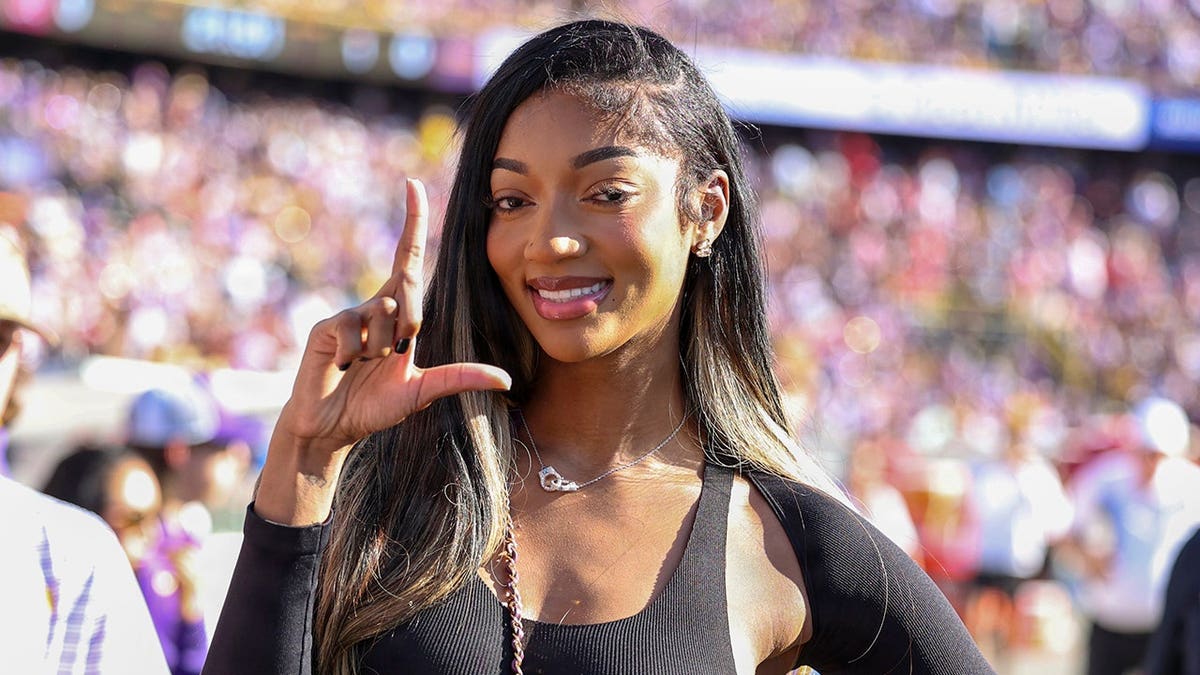
Angel Reese’s Finals performance spurred discussions, with criticism sometimes deemed an accusation of racism.
Having covered the WNBA Finals between flights from San Francisco to Atlanta, the winner was less significant. The focus leaned towards why teams left the court before the national anthem and the players’, coaches’, and league’s sentiments on it.
Calls for Change in WNBA Coverage
In July, ESPN’s Chiney Ogwumike advocated on “First Take” for shifts in media approaches to covering Caitlin Clark and the WNBA. She emphasized showcasing the remarkable basketball celebrated in the WNBA’s 30th year.
But is the gameplay what the WNBA media encourages us to prioritize?
Examining Basketball Performance
Gabby Williams and Angel Reese headed into Game 7 as top contenders for the WNBA Finals MVP. Yet, through six games, their combined shooting stood at 34.4%. To compare, the lowest NBA Finals MVP field goal percentage belonged to Kobe Bryant with 40.5% in 2010.
At Game 7’s half-time, Atlanta led 30–24. Together, the teams shot 31.8% with Reese and Williams combining for seven points. Reese scored five, and Williams made two.
Then, in the second half, Williams scored 28 points, driving Golden State to a 68–63 victory and securing its first WNBA championship. Her performance concluded with 30 points and four blocks, earning her the MVP, despite a 32.6% shooting average for the series. Reese’s Finals statistics included 40.5% overall shooting and 41.8% in the paint, making 13 rebound averages notable despite missing 28 of 53 layups.
This raises the question: is this the sort of basketball focus sought by the WNBA media?
The Role of Drama
Drama often captivates audiences. After Game 3, Reese’s “too small” taunt towards Golden State riled up attention. She had tallied 21 points with 12 rebounds, leaving Atlanta in a 2–1 lead. Yet, following games saw her shooting drop to 4-for-20, complete with officiating complaints. By Game 6, the “too small” remark risked elimination.
This wasn’t Reese’s first encounter with this kind of dispute. In the 2023 national championship, Reese taunted Caitlin Clark with gestures, now widely seen as part of a larger rivalry. Clark’s Iowa team ousted Reese’s LSU in the Elite Eight, drawing significant viewership.
In August, ESPN broadcasted a match between Clark’s Fever and Reese’s Dream, attracting 2.6 million viewers, ESPN’s largest WNBA audience to date. This popularity, fueled by rivalries from their college days, exemplifies drama’s draw.
The WNBA reported 3.3 million viewers for Game 7, a promising number for the league, although it merits deeper context previously discussed in other columns. With Gabby Williams proving a game-changer in the finals, audiences could find new heroes to cheer.
Inviting viewership requires less emphasis on dictating preferences. Instead, fans naturally gravitate where narratives, including rivalries and drama, generate interest.
Reporter Dan Zaksheske contributes to OutKick.