
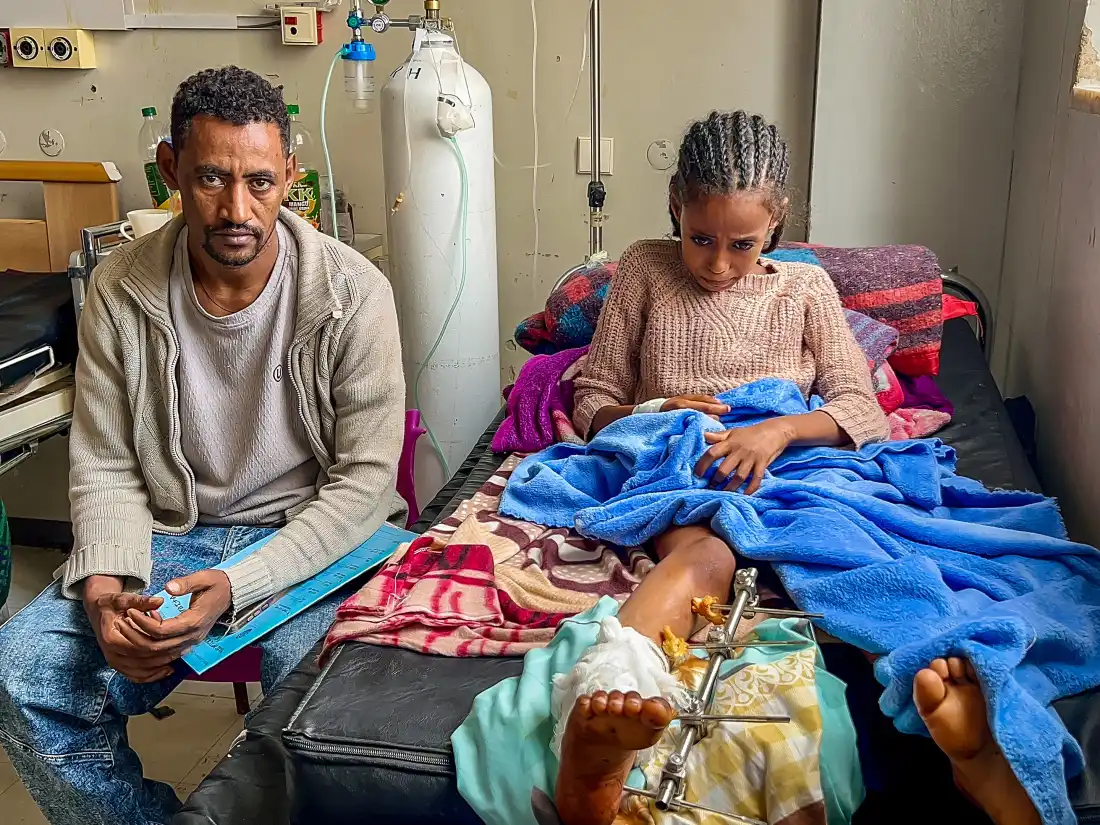
Betelhem, a ten-year-old girl, rests on a hospital bed next to her father at Ayder Referral Hospital in Mekelle, Ethiopia. She suffered injuries from intense artillery shelling in Alamata. Fighting erupted between the rebel Tigray People’s Liberation Front and federal forces on September 23, raising fears of a resurgence of the civil war that occurred between 2020 and 2022. This conflict is heavily impacting the already strained healthcare system.
A surgeon in Ethiopia provided insight into the situation, recalling the chaos and disorder that lasted for about a week. The disruption of cell networks and electricity further complicated matters. On September 24, a ceasefire agreement, which had held for two years, began to disintegrate. As injured individuals arrived from nearby areas, the medical teams in Mekelle, the capital of the Tigray region, did their best to provide care. The surgeon, preferring anonymity due to potential repercussions, described the emergency room as overcrowded with patients suffering from war-related injuries.
Violence has persisted, leading to concerns that Ethiopia could face another civil war. The Ethiopian military accused neighboring countries, including Sudan, Egypt, and Eritrea, of supporting Tigrayan militants who have allied with other rebel groups aiming to remove Prime Minister Abiy Ahmed from power. Drone strikes in late October resulted in at least 15 deaths, including children. The World Health Organization’s Director-General, Tedros Adhanom Ghebreyesus, commented on social media that the worsening conflict in northern Ethiopia threatens the already fragile health system.
During the early days of renewed fighting, the surgeon operated on victims of various attacks. Despite the scale of the conflict, he noted the difficulty in anticipating patient numbers due to disrupted communications. Earlier signs indicated a potential resurgence of conflict after Tigrayan rebels expelled regional leaders in May, leading the Ethiopian government to cut funds to Tigray, affecting hospitals under regional administration.
The ongoing violence in Ethiopia holds personal significance for WHO’s Tedros, a Tigrayan himself and former Ethiopian health minister. In a social media post, he highlighted the growing shortages in healthcare staff, medicine, and ambulances. Meanwhile, WHO and the U.N. have initiated efforts to supply medical aid to affected areas.
Targeted attacks on healthcare, deemed war crimes, have become increasingly concerning in conflict zones worldwide. WHO data from 2026 reveals over 960 deaths from assaults on healthcare facilities in 19 countries, with the most damaging attack occurring during a Pakistani airstrike in Afghanistan.
Global health initiatives have been further hindered by funding cuts, including the dismantling of USAID after Donald Trump assumed office in 2025. According to Lindsey Green, a researcher with Physicians for Human Rights, ongoing attacks on healthcare undermine the principle that healthcare should remain protected in conflict settings.
The Tigray war, spanning two years, claimed around 600,000 lives. Most healthcare facilities were only partially functional due to an aid blockade by the Ethiopian government, affecting a region with over 7 million residents. A peace agreement in 2022 led to a reduction in hostilities, yet assaults on health services persisted. Physicians for Human Rights documented these incidents in a report. They confirmed attacks by both rebels and government forces, often acting in retaliation or against medical staff aiding adversaries.
NPR attempted to contact Ethiopia’s Foreign Ministry and the Prime Minister’s Office for comments but received no responses. Healthcare professionals in northern Ethiopia report the devastating impact of the conflict, paired with aid cuts, leaving the area without recovery chances. A health worker in Tigray reported that over 100 women died in childbirth in the past year due to the dire health situation.
An independent study showed the maternal mortality rate during the Tigray war increased by five times compared to prewar levels. Research indicated 83% of healthcare facilities could not support pregnant women adequately. Systemic rape and sexual violence frequently occurred as methods of war, according to testimonies from health workers.
Ayoda Werede, a physician with Health Professionals for Tigray, conveyed that although the Ethiopian military has not recently targeted health centers, unidentified groups have looted supplies during the latest conflict outbreak. These actions exacerbate an already overstretched healthcare system. With many doctors leaving Tigray, the situation worsens, with little hope for security or improvement.