
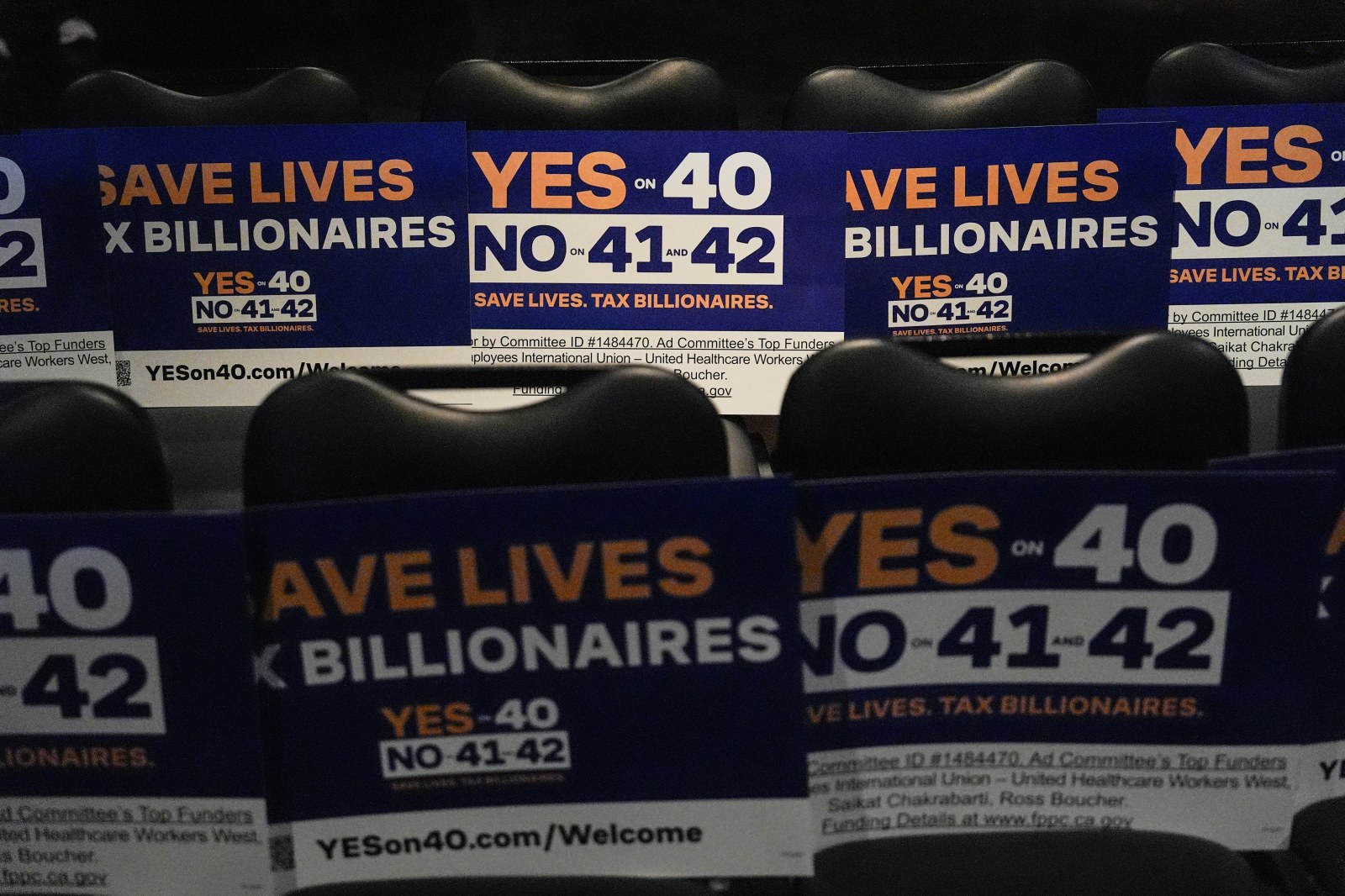
California voters turned down Proposition 40, which aimed to impose a tax on billionaires’ net worth. The Associated Press confirmed the rejection six days post-Election Day.
Political Division and Outcome
Governor Gavin Newsom opposed the measure, citing concerns about driving away affluent residents. Progressive figures like Senator Bernie Sanders and Representative Ro Khanna supported it.
The semi-official count showed 5,789,026 voters (52.9%) against the proposition, while 5,159,356 (47.1%) supported it.
Financial Dynamics
Opponents outspent supporters significantly. The opposition group, Building a Better California, amassed over $333 million, with Sergey Brin contributing more than $100 million.
The proposition would have taxed billionaires residing in California as of January 1, 2026, at a one-time rate of 5% of their net worth. Most funds would support healthcare, with education and food assistance also benefiting.
The measure’s sponsors, SEIU-United Healthcare Workers West, estimated $100 billion revenue, whereas the Legislative Analyst’s Office predicted potential declines in billionaire-paid state income taxes.
Controversy Among Economists
Economic projections varied with the Hoover Institution estimating $30 billion from the tax, factoring in the departure of nearly 30% of the tax base from California. In contrast, supporters argued for a potential $100 billion revenue.
A National Bureau of Economic Research paper cited that billionaires contribute about 0.2% of their wealth annually to state income tax.
Votes, Countermeasures, and Departures
Building a Better California also proposed Propositions 41 and 42 to counteract the wealth tax. Proposition 42, if enacted, would ban new financial asset taxes and many retroactive taxes.
Some billionaires, like Sergey Brin, had already left California by the residency deadline, influencing outcomes. Mark Zuckerberg opted to remain in California, securing non-voting shares to manage tax obligations without altering company control.
Democratic Divide
Sanders highlighted wealth inequality in his endorsement of the tax, whereas Newsom proposed a federal wealth tax instead, citing fundamental disagreement on Proposition 40.
Future Implications
Proposition 42, if passed, could necessitate constitutional amendments for future wealth taxes. Labor leaders considered the campaign a precursor to broader efforts, with counting still ongoing and results pending certification.
Newsweek sought comments from involved parties amid the continued tallying of votes.