
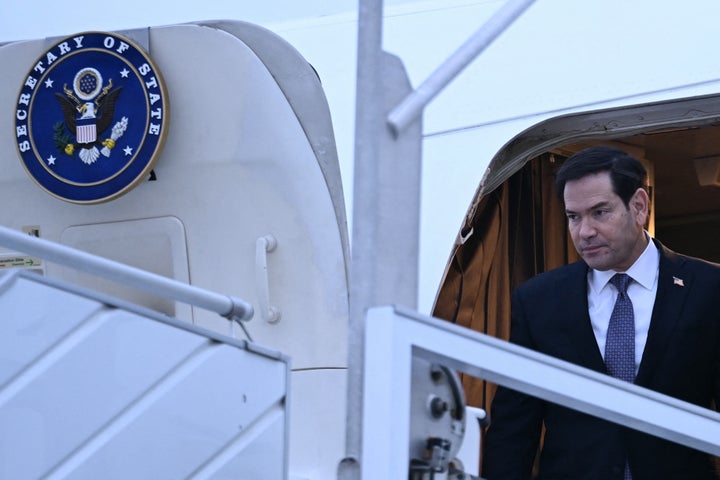
Foreign ministers from the Group of Seven (G7) industrialized democracies convened in Paris for two days to address ongoing global challenges. This meeting followed the significant electoral losses of U.S. President Donald Trump’s Republican Party in the recent midterm elections. U.S. Secretary of State Marco Rubio is expected to face inquiries regarding potential changes in the U.S. stance on several critical issues. These include the Russia-Ukraine conflict, the Iranian situation, energy security, and advancements in artificial intelligence. The discussions, involving top diplomats from the U.S., Britain, Canada, France, Germany, Italy, and Japan, occurred on Monday and Tuesday.
For Rubio, this marks his first international engagement since the midterms, which notably shifted the U.S. political landscape by handing control of Congress to the Democrats. The G7 talks also occurred amid significant protests across Europe, including in Paris.
U.S. Politics Likely to Surface at Allies’ Meeting
Marco Rubio, the U.S. Secretary of State, arrived at Le Bourget airport ahead of the G7 summit. He addressed the curiosity of allies regarding post-election U.S. policy direction, remarking that similar political divisions exist in many countries. Canadian Foreign Minister Anita Anand, who has faced previous criticism from Trump, acknowledged the uncertainty surrounding U.S. policy changes. She highlighted the influence of the recent changes in Congressional leadership.
Despite these shifts, Trump’s strategy appears unchanged, with Stephen Miller appointed as chief of staff, supporting hardline positions domestically and internationally. Rubio is perceived as a counterbalance to Trump’s often direct approach, though speculation about him leaving for a potential 2028 presidential run persists, which Rubio has denied.
Wars in Iran and Ukraine as Major Topics
German Foreign Minister Johann Wadephul joined the discussions, emphasizing the necessity of European involvement in Ukraine-related negotiations. Trump’s administration aims to collaborate with Europe to resolve the war in Ukraine, sending envoys for talks in the United Arab Emirates. Rubio stated that security assurances for Ukraine and Europe are key topics, with some progress but no final decisions yet.
European participation in negotiations remains crucial, according to Wadephul, who acknowledged the U.S. efforts while asserting the need for Europe’s involvement. Meanwhile, Anand highlighted the importance of upcoming Abu Dhabi talks for advancing peace proposals.
In parallel, Qatari mediators have suggested an interim resolution for the Iran conflict, which has impacted fuel stability. Rubio noted the diplomatic approach’s current inefficacy due to Iran’s demands but reiterated Trump’s preference for diplomacy.
Uncertainty About Consensus Among Allies
Egyptian Foreign Minister Badr Abdelatty joined the summit, where France has also included Brazil, Egypt, Saudi Arabia, and Ukraine in certain discussions. Additional focus areas include Africa, China, Cuba, and Haiti, with separate meetings planned on artificial intelligence and support for Ukraine.
Upon arriving in Paris, Rubio emphasized accountability at the United Nations. This stance aligns with the administration’s demand for UN reforms, evidenced by its withdrawal from various multilateral organizations.
Trump’s approach has at times destabilized G7 partnerships, particularly over support for Ukraine, NATO, and opposition to the International Criminal Court (ICC). While all G7 members except Japan belong to NATO, the administration is working to dismantle the ICC, targeting organizations and individuals within it, claiming overreach into American affairs.