
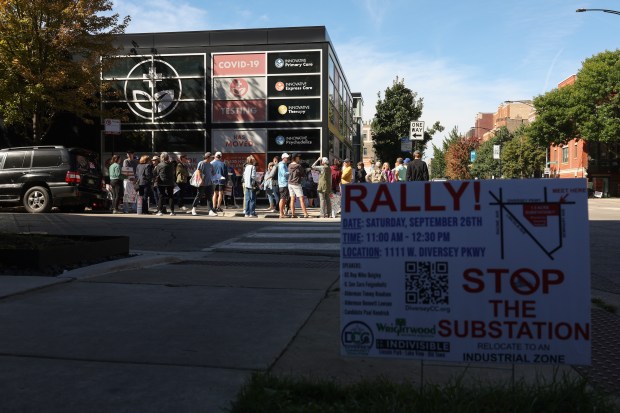
Residents in the North Siders area are confronting a pressing issue: the need for a new electrical substation. The existing grid is struggling, and while there is recognition of the necessity for new infrastructure, locals like Mary Driscoll argue it should be placed elsewhere. Born out of this debate is the Diversey Community Coalition (DCC), which opposes ComEd’s planned substation on Diversey Parkway.
Driscoll, a long-time resident, differentiates their fight from exclusionary politics, emphasizing it’s not about a ‘Not In My Backyard’ stance. Instead, by advocating for ‘Transit-oriented Housing In My Backyard,’ or THIMBYism, the DCC calls for transformative housing developments over industrial expansion.
The DCC, alongside local children like Emilia and Henry Rosenberg, voices concerns over potential noise, pollution, and safety risks of the substation. They argue for building housing that they claim could economically benefit the community by generating $5 million in annual spending. However, these projections were made without consulting developers or real estate experts.
ComEd, which owns the targeted land after a purchase in 2021, insists the substation is crucial to prevent power failures. The site’s current zoning laws support ComEd’s plan, pending approval from the Illinois Commerce Commission (ICC). Even while ComEd’s vice president, Keisha Parker, states a willingness to adapt the substation’s design to community preferences, the necessity of the location remains due to existing underground infrastructure.
The neighborhood cannot avoid the infrastructure needed to sustain its electricity supply.
The DCC has suggested alternative sites, applying over 100 hours of research to propose 14 new locations. Yet, ComEd deems these unviable, citing increased costs that would burden customers citywide.
Within a competitive housing market, real estate broker Andy Ogorzaly points to a historical decrease in Lincoln Park’s population as multiunit buildings give way to luxury homes. With an impending decision from the ICC, the DCC draws optimism from a recommendation questioning ComEd’s project justification. But ComEd asserts the Diversey location remains ideal, with emphasis placed on the project scale rather than necessity.
The complexity of desires versus needs shapes this local battle. Proposals suggest a layer of community introspection into what truly belongs in their midst. Formerly, this was about rejecting an unwanted structure; now, it is about defining what they desire to embrace.