
Fog covers Norway’s rugged coastline as a British helicopter navigates the cold waters below. The days grow colder, with worsening weather and less sunlight in the High North.
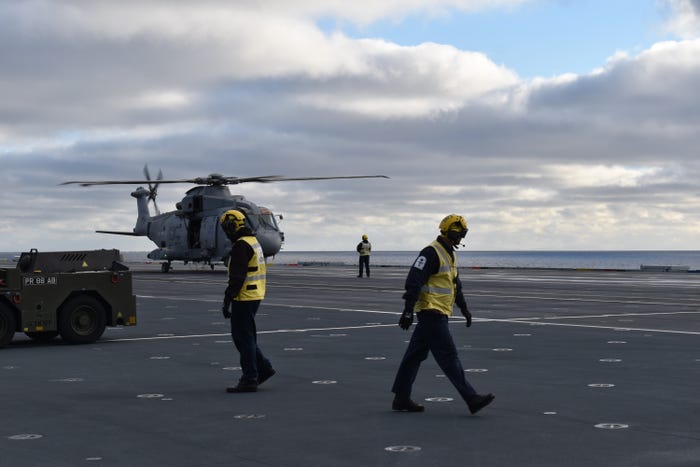
Onboard a Royal Navy helicopter, the Merlin Mk4 touches down on HMS Prince of Wales’ deck. Sailors in protective gear prepare F-35 stealth fighters while winds gust across the flight deck. By afternoon, the sun dips toward the horizon, complicating tasks as darkness falls.
Business Insider visited the Prince of Wales in the Norwegian Sea. The ship’s deployment marks the second phase of Operation Firecrest, a deterrence mission in the Arctic and North Atlantic.
NATO is increasing focus on its northern flank due to rising Russian military activity. Operating there, particularly in fall and winter as temperatures drop and daylight decreases, poses challenges for allied forces.
The High North presents a “complex environment,” said Capt. Ben Power, the Prince of Wales’ commanding officer. The crew must be prepared for ice, low-pressure systems, and fog while trained to operate without radar or radio. These skills improve “warfighting proficiency,” according to Power.
NATO expands patrols across the Arctic and North Atlantic to monitor Russian naval activities. Submarines from Murmansk in the Barents Sea travel south through strategic chokepoints like the GIUK gap. A strong NATO presence here is vital.
“Russian activity has increased in all domains, above and beneath the sea,” Power stated. He noted Russia’s capability remains a credible threat.
Western naval officers noted poor visibility and rough seas affect operations. Training in harsh conditions is crucial. Speaking on the Prince of Wales, Commodore Richard Hewitt praised the crew’s ability to handle challenges in the High North.
Earlier in the year, the Prince of Wales aided Operation Firecrest’s first phase, supporting Arctic Sentry, a NATO mission for High North security through exercises and patrols.
“This year has focused on the High North,” Hewitt said. “I expect this to continue in the North Atlantic.”