
Advancements in AI and robotics are reshaping what robots can achieve. At Chicago’s Automate Show, humanoid robots displayed these innovations. Jeff Burnstein, President of the Association for Advancing Automation, highlighted AI’s role in enabling robots to perform varied tasks in settings like hospitals, factories, and warehouses. Boosting competitiveness through robotics creates new jobs.
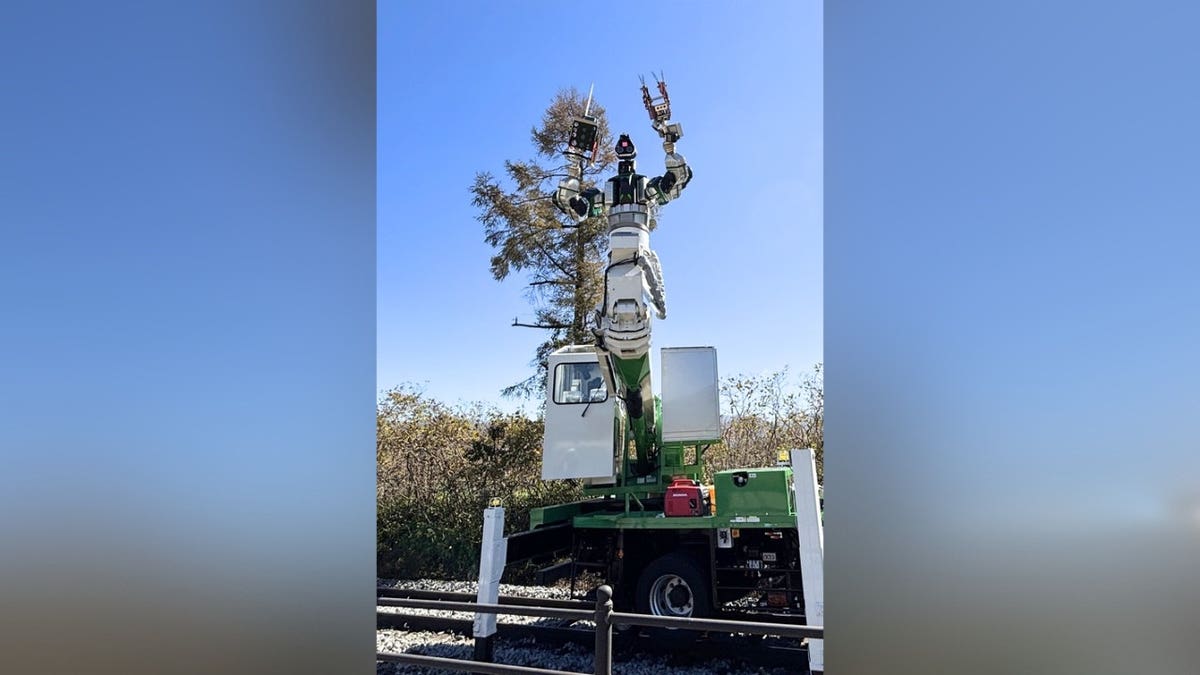
Imagine seeing a humanoid robot wielding a chainsaw near train tracks. In Japan, such scenes are becoming common. A massive chainsaw-equipped robot is clearing branches that obstruct train paths. While intimidating, this solution addresses a clear need.
Robotic Chainsaw in Action
In Japan, JR East railway company has deployed a chainsaw robot for hazardous maintenance jobs. This robot handles tasks that usually require workers to use heavy cutting tools at height. The robot performs the physical labor while an operator controls its movements from a safe distance.
The robot operates along JR East’s Koumi Line, where it trims branches threatening train operations. Using one arm to secure a branch and another to operate a chainsaw, the robot extends from a boom on a maintenance vehicle, reaching high above tracks. This eliminates the need for workers to climb and operate cutting equipment dangerously above ground.
The ZIZAI ZX-3 Robot
Named ZIZAI ZX-3 and manufactured by Nippon Signal, this robot began full operations on the Koumi Line in October, building on experience from similar systems used by JR West since July 2024. While the robot undertakes the perilous tasks, a human operator remains essential for guiding its actions, ensuring safety around railway tracks.
Nippon Signal aims to enhance the ZX-3 with additional tools for various maintenance functions in future projects. Despite robotic advances, workers’ skills are still crucial, now exercised from safer locations.
Robotic Benefits and Future Possibilities
Maintaining clear train tracks demands significant effort. Overgrown branches pose risks to passing trains, requiring heavy equipment operation at heights. JR East confronts these safety challenges while facing worker shortages, prompting a shift to robotic solutions.
The robot provides safety and efficiency, accessing challenging areas without placing human operators at risk. Since 2022, JR East has moved some maintenance to daytime, at times suspending train services, improving worker conditions.
JR East is investing in AI to optimize railway operations, including using robots for inspections. Although the ZX-3 relies on human control, AI might allow future robots to autonomously manage maintenance tasks.
Implications for Infrastructure Maintenance
This robotic advancement could redefine infrastructure maintenance beyond railways. Similar technology might assist in maintaining power lines or in construction, where accessing difficult areas presents safety hazards.
As robotics progress, companies will require skilled operators to manage these machines, altering traditional maintenance jobs. Although robots minimize certain dangers, they introduce new safety concerns. Reliable controls and supervision remain essential for robotics in hazardous tasks.
The ZX-3 exemplifies how robots facilitate hazardous work, keeping humans safe from direct danger.