
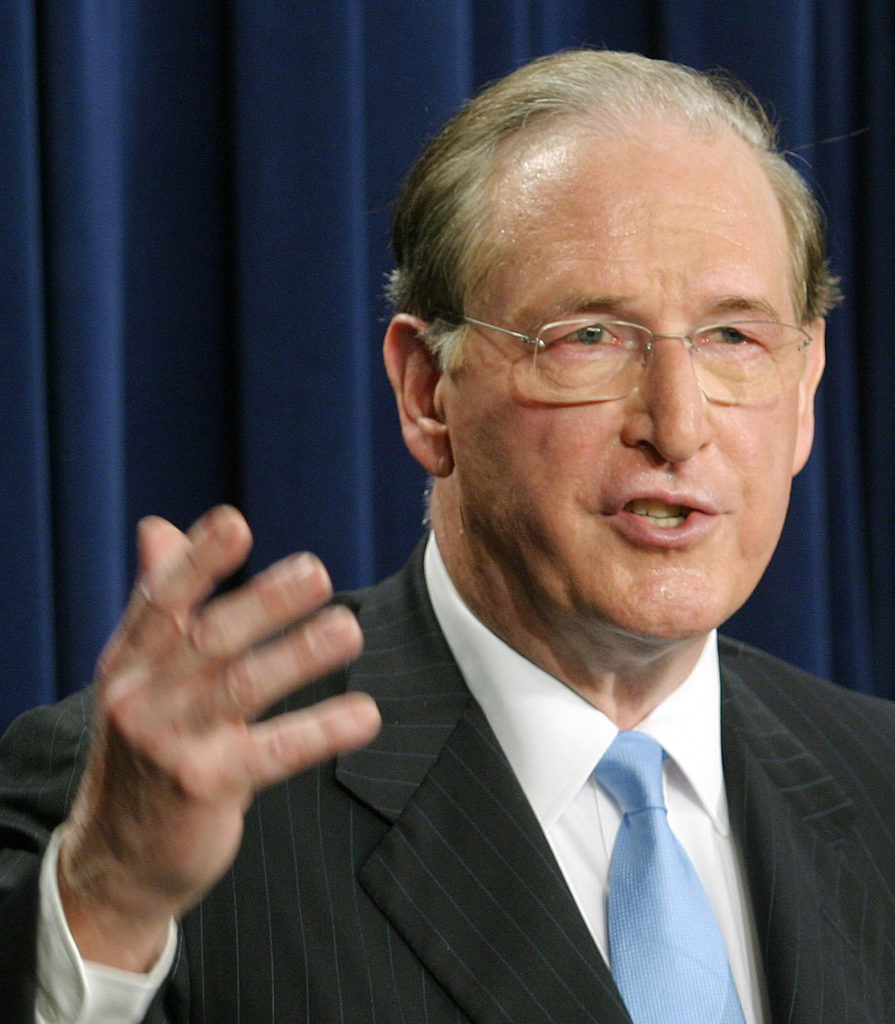
Jay Rockefeller, a notable figure in American politics, passed away at the age of 89. Rockefeller, a former governor and U.S. senator from West Virginia, died at his home in Washington. Mary Stewart from WETA confirmed his death. His wife, Sharon, serves as the president and CEO of the public broadcasting station.
Rockefeller was part of one of the wealthiest families in the U.S., but dedicated half of his life to public service in West Virginia, one of the nation’s poorest states. He initially arrived in the state in 1964, working in an anti-poverty program. Twelve years later, he became governor and eventually spent 30 years in the U.S. Senate. In reflecting on his career, Rockefeller stated he couldn’t imagine a more fulfilling one when he retired in 2015.
A New Path Away from Family Traditions
John D. Rockefeller IV was born into the illustrious Rockefeller family in New York City. His great-grandfather founded Standard Oil, and his father, John D. Rockefeller III, was a noted philanthropist. Within his family, his uncles Winthrop and Nelson served as Republican governors, while David Rockefeller led Chase Manhattan Bank.
In contrast, Rockefeller followed a different path. At 27, he moved to Emmons, West Virginia, joining a service program that influenced his future pursuits. According to Rockefeller, this experience shaped his political and personal principles.
Though initially planning a short stay, he decided to run for office, breaking family tradition by becoming a Democrat and joining the West Virginia House of Delegates in 1966. Despite challenges, he rose from state legislator to secretary of state and then governor, overcoming perceptions of political opportunism.
Political Challenges and Successes
Rockefeller experienced a major setback in 1972, losing the governor’s race to Republican Arch A. Moore Jr. Despite this, he decided to remain in West Virginia, an important choice in his career. He later became the president of West Virginia Wesleyan College, winning public approval and eventually a landslide victory in the 1976 governor’s race against Republican Cecil Underwood.
As governor, Rockefeller focused on infrastructure improvements, including roads, sewers, and bridges. Though not glamorous, these were essential improvements for the state. Current Governor Patrick Morrissey acknowledged Rockefeller’s lasting impact on West Virginia, particularly in healthcare, veteran support, and coal miner protection.
National Influence and Legacy
In 1980, Rockefeller ran again against Arch Moore and later won a U.S. Senate seat in 1984. Despite a political climate favoring Republicans that year, Rockefeller secured his position as a senator. Over his career, he spent at least $21 million of his own fortune on political campaigns, winning five Senate terms.
In the Senate, he stood in the shadow of Senator Robert C. Byrd but carved out his own path. As chairman of the Senate Committee on Commerce, Science, and Transportation, he prioritized consumer rights and broadband infrastructure. He also crafted legislation for the Children’s Health Insurance Program to aid low-income families.
Rockefeller occasionally clashed with party lines, differing with the Democratic Obama administration’s mining regulations, protecting West Virginia’s coal industry. His time in Japan during his college years helped him attract Japanese business to the state, notably facilitating Toyota’s decision to build a plant in Buffalo, West Virginia.