
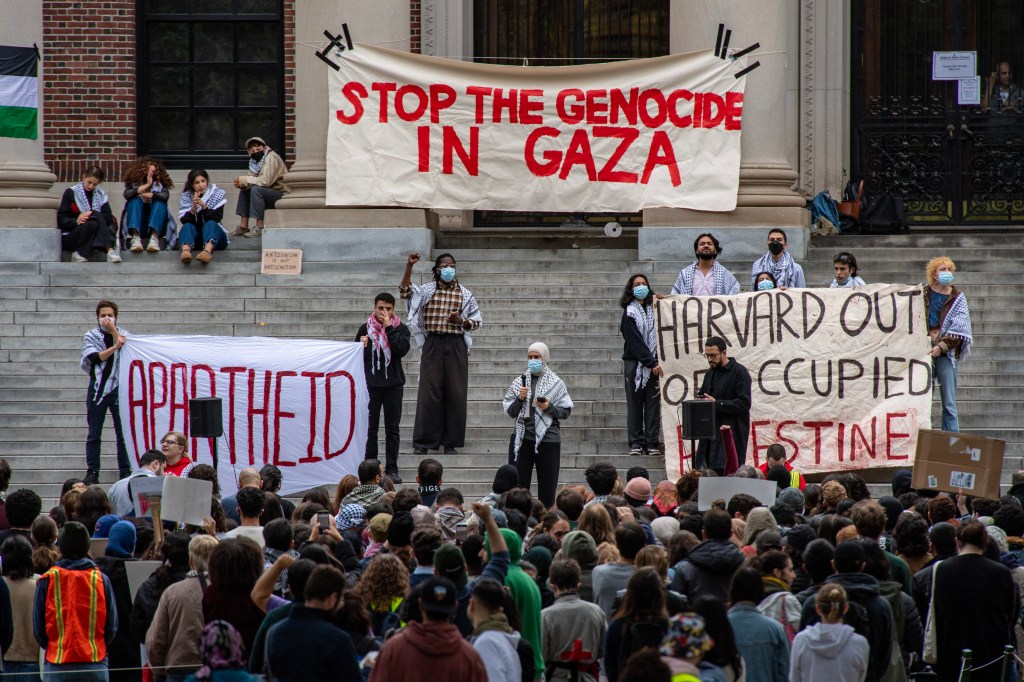
Since October 7, 2023, Harvard University has faced significant challenges. Pro-Palestine protests disrupted campus life, President Claudine Gay faced plagiarism charges, and the Supreme Court struck down its affirmative action policies. In addition, the university was criticized for poor free expression on campus, and grade inflation was rampant. The Trump administration also scrutinized Harvard’s federal funding. These issues led to declining trust from students, faculty, donors, and the public.
In response, Harvard has implemented various policies to restore trust and improve campus life. These efforts include promoting academic freedom, addressing grade inflation, encouraging dialogue, and adapting to learning challenges posed by AI. Positive changes are visible, according to faculty members.
Psychology professor Steven Pinker noted that the new leadership under President Alan Garber, who assumed office in January 2024, is focused on academic excellence. Garber’s approach differs from previous administrations by actively addressing the university’s goals and issues.
Under Garber, Harvard formed an Open Inquiry and Constructive Dialogue Working Group. The university updated protest policies to bar demonstrations in libraries, classrooms, dorms, and dining halls. Institutional neutrality on contentious issues was established unless directly relevant to campus life.
The Arts and Sciences faculty introduced viewpoint-neutral teaching policies. These policies make it clear that students’ grades should not be influenced by their political views, and faculty members and professors should not face bias based on their outside opinions. Fall 2025 marked the start of student evaluations to hold professors accountable for encouraging diverse viewpoints.
Biostatistics professor Santiago Romero-Brufau observed improved openness in classroom discussions, attributed to policies like Chatham House rules. These rules permit open conversation but protect participants’ identities, reducing self-censorship.
Philosophy professor Ned Hall echoed these sentiments, stating that students embrace dialogues on controversial topics. Hall was among faculty who established the Council on Academic Freedom in April 2023, emphasizing the need for open inquiry at Harvard.
Harvard improved its national free speech ranking, advancing from last place in 2023 to 71st out of 261 schools. The university is now among the top 25 schools for political tolerance, a shift recognized by the Foundation for Individual Rights and Expression (FIRE).
FIRE’s Director of Policy Reform, Laura Beltz, noted the challenge of maintaining these changes as new students arrive. Harvard plans to ensure continuity through initiatives like a required application essay on handling disagreements and an orientation module on intellectual engagement.
Grade inflation also faced scrutiny. In 2024, Dean Amanda Claybaugh’s committee proposed a 20% cap on A grades, set to begin in fall 2027. This measure aims to combat grade inflation effectively.
Professors have adjusted to these changes by taking attendance in large lectures, emphasizing academic involvement. Additionally, Harvard has addressed AI-related challenges. The Derek Bok Center developed initiatives to create AI-resistant assignments, recommending in-person or oral exams.
Steven Pinker described these changes as fostering academic renewal. He highlighted a renewed focus on academics, viewing education as the primary purpose of attending the university over extracurricular activities.