
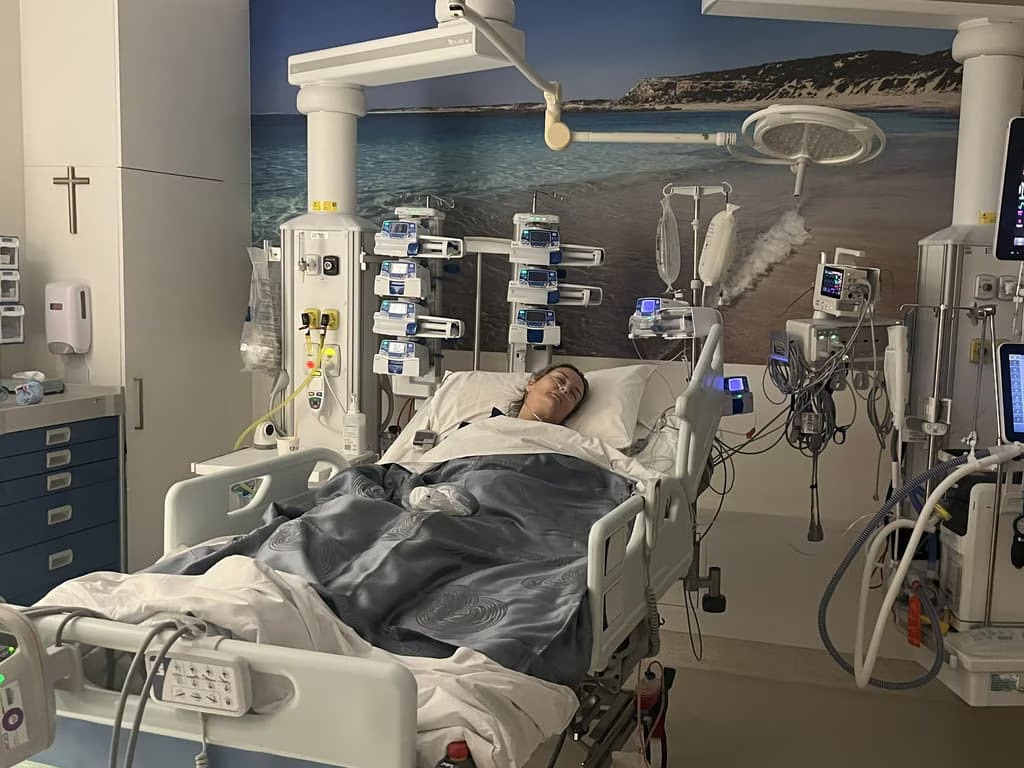
A 40-year-old mother from Adelaide, Helen Worthington, faces a life-threatening challenge after suddenly being diagnosed with Stage 4 bowel cancer. A primary school teacher, Helen experienced an unexpected abdominal discomfort in the early hours of August 27 of the previous year. Initially guessing it might be a minor issue like gastroenteritis, Helen soon discovered the grave reality.
Feeling persistent sharp pain, Helen sought medical assistance later that morning, heading to an emergency department when she couldn’t secure a GP appointment. Apologizing for possibly wasting resources, she expressed her reluctance to ‘make a fuss.’ Despite her usual good health and expectations of a minor ailment, doctors performed thorough checks.
Doctors initially considered simple explanations for Helen’s symptoms but investigated further. This led to a severe revelation: she had Stage 4 bowel cancer, a rapid escalation from her original thoughts of gastritis. To her shock, Helen learned the cancer had also spread to her liver. Previously symptom-free, Helen was stunned by the diagnosis.
Breaking the News to Family
Shortly after the diagnosis, Helen underwent emergency surgery to remove the affected bowel area and began chemotherapy. The hardest moment came when she shared the heartbreaking news with her 12-year-old daughter, Molly, without promises of recovery due to uncertainty about her prognosis. Her cancer shows a BRAF V600E mutation, suggesting a more aggressive form. Helen has completed 27 rounds of chemotherapy, continuing treatment as long as effective and tolerable.
The Role of Exercise in Cancer Treatment
An unexpected aid during her treatment has been medically prescribed exercise. Initially skeptical, Helen was encouraged by her sister-in-law, an oncology physiotherapist, to integrate exercise into her regimen. This choice has become crucial for her physical and mental well-being. While chemotherapy took its toll, exercise unexpectedly allowed Helen to build muscle.
The Clinical Oncology Society of Australia advocates for incorporating exercise into standard cancer care. It recommends cancer patients engage in at least 150 minutes of moderate aerobic exercise or 75 minutes of vigorous activity weekly, with additional strength training sessions. These practices can reduce treatment side effects and improve outcomes.
Helen, empowered by exercise, finds control over her strength and fitness, areas she can influence amidst the uncontrollable aspects of her illness. This strategy supports her physically and provides a mental outlet during an unpredictable journey.
Access and Advocacy for Exercise in Cancer Care
Despite its benefits, access to exercise programs for cancer patients remains inconsistent. Lauren Whiting, an oncology physiotherapist, emphasizes the need for structured systems to incorporate exercise into routine cancer care, covering referral pathways, funding, trained clinicians, and appropriate infrastructure.
Deloitte Access Economics highlighted that investing in exercise physiology for cancer care yields significant economic benefits, yet challenges remain in expanding access.