
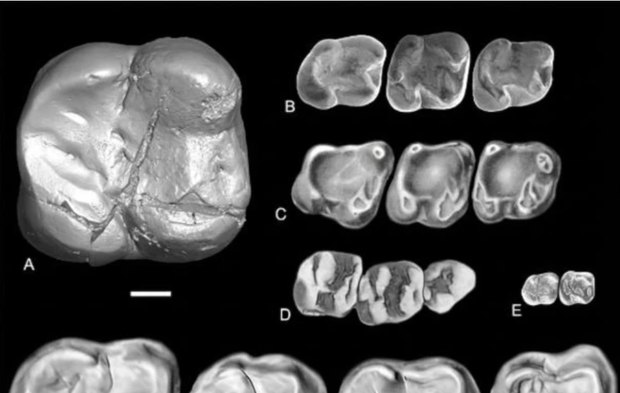
Scientists have identified a massive rodent species that lived 33 to 35 million years ago in present-day southern Thailand. This rodent, weighing about 66 pounds, is one of the largest known from the Paleogene period. The discovery was made from two fossilized teeth, a molar and an incisor, found in the Krabi province in a coal mine.
The findings were published in the journal Scientific Reports. The incisor discovered by Pannipa Tian from Thailand’s Department of Mineral Resources at first seemed too large to be a tooth. Initially mistaking it for a bone, she showed it to her supervisor, who recognized it as part of a ‘giant rat’. The cream-colored tooth contrasted with the surrounding coal, and on the same day, another team member discovered the dark-colored molar.
The Krabi basin has been known for yielding fossils of ancient primates, carnivores, and hoofed mammals. At the time of the teeth’s discovery in 2004, technology and evidence were insufficient to identify the species. However, collaborations with researchers from Thailand, France, and Canada later facilitated the identification. The animal was approximately half the size of a large capybara, the world’s biggest living rodent.
Though similar in size, this prehistoric rodent belonged to the now-extinct Ischyromyidae family, one of the earlier groups of rodents. This suggests a significant early diversity in rodent evolution in what is now Thailand before spreading out geographically. Named Yakamys sirindhornae in recognition of Princess Sirindhorn of Thailand for her support in scientific research, many details about the rodent, such as its appearance, diet, and behavior, remain a mystery.
Other sizeable prehistoric rodents have been uncovered in recent years. In 2020, a human-sized rat species was found in the Amazon rainforest. And years prior, fossils of a 1-ton rodent species were discovered in South America, suggesting the long history of large rodents worldwide.