
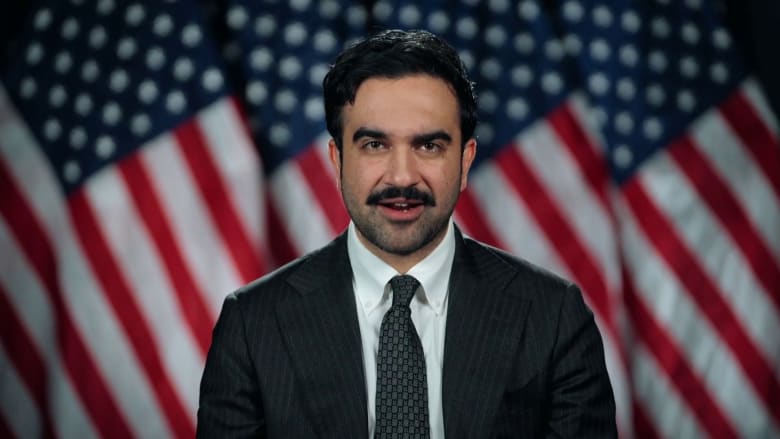
Zohran Mamdani, the Mayor of New York City, expressed his belief that recent election victories pave the way for a progressive presidential candidate in 2028. During an interview on “Meet the Press NOW,” Mamdani highlighted the successes of Sen.-elect James Talarico, D-Texas, Sen.-elect Annie Andrews, D-S.C., and Gov.-elect Keisha Lance Bottoms, D-Ga., as emblematic of a progressive political movement.
Mamdani also addressed Vice President JD Vance’s comments on the Republican losses, attributing them to the war in Iran. He emphasized that this was a conflict initiated by Republicans, suggesting that they should take measures to address its consequences.
While Mamdani avoided commenting on impeachment, he supported Congressional actions to combat corruption in Washington. Mamdani reiterated his endorsement of House Minority Leader Hakeem Jeffries, D-N.Y., and Senate Minority Leader Chuck Schumer, D-N.Y., but did not explicitly encourage others to support them as Democratic leaders in Congress.
Connie Chan, endorsed by Rep. Nancy Pelosi, conceded to Scott Wiener in California’s 11th Congressional District. Despite Pelosi’s backing, Chan acknowledged that the narrowing victory margin left no clear path for her win. Pelisi, a former House Speaker, endorsed Chan earlier in the year.
Billionaire Leon Black has filed a defamation suit against Rep. Robert Garcia, alleging false statements were made about his involvement with Jeffrey Epstein’s crimes. Black’s refusal to comply with related subpoenas led to this legal confrontation. Previous comments by Garcia accused Black of funding Epstein’s illicit activities, which Black has denied.
Former President Trump’s advisors gathered at Camp David to strategize for the midterms. Efforts to mitigate the usual midterm losses faced obstacles due to Trump’s political record. Trump’s contemplation of replacements for Defense Secretary Pete Hegseth came amid these midterm assessments.
In legislative pursuit, Trump urged for the passage of a daylight saving time bill after Democratic victories. Calling it the “Sunshine Protection Act,” Trump maintained that permanently adopting daylight saving time remains a priority despite its legislative stagnation.
Alabama has elected its first transgender legislator, Democrat Allison Montgomery, thus marking a notable shift in a historically conservative region. Montgomery emphasized the importance of policy-driven campaigns, countering perceptions about governance raised during the election.
Democratic National Committee Chair Ken Martin projected that Jeffries and Schumer would continue leading the Congressional Democratic efforts. Martin commended their campaign handling and indicated strong confidence in their future roles.
Musk’s decision to relocate to Texas to escape Democratic oversight now faces an interesting twist as a blue wave has emerged in the state’s top offices. This scenario poses questions about future regulatory and political landscapes that Musk’s firms will navigate.
In Louisiana, a House race heads to a runoff. Patricia Moore and Gabe Firment will compete further, resulting from a divided political arena where no candidate reached the necessary vote threshold. The implications of racial gerrymandering adjustments show the changes in political strategy this year.
Trump announced “Anti-Communism Week” in line with previous midterm warnings centered around Democratic ideologies. This proclamation reflects Trump’s consistent emphasis on opposing communism within his political rhetoric.
With Democrats gaining Senate control, Trump’s future judicial appointments face increased scrutiny and potential hindrance. Should the Supreme Court face any vacancies, the Democratic Senate’s influence becomes more pronounced.
Vice President JD Vance’s political direction post-midterms indicates his broader 2028 presidential considerations amid Republican defeats. Trump’s former administration strategies face reevaluation following the wave of Democratic successes.
An existing lawsuit dismissal by The Wall Street Journal involving Trump is being contested, reflecting ongoing legal battles post-midterms. Similarly, intricate Senate vote processes echo anticipated results requiring potential recounts in Mississippi.
Voters in Colorado rejected law enforcement coordination measures, reflecting views on privacy and local governance issues. Trump continues advocating for investigations amid these multifaceted election outcomes across multiple states.
In summary, Democratic victories continue shaping this political epoch, affecting diverse areas from local to federal levels. These developments hint at a rapidly transforming political narrative moving toward the 2028 presidential race.