
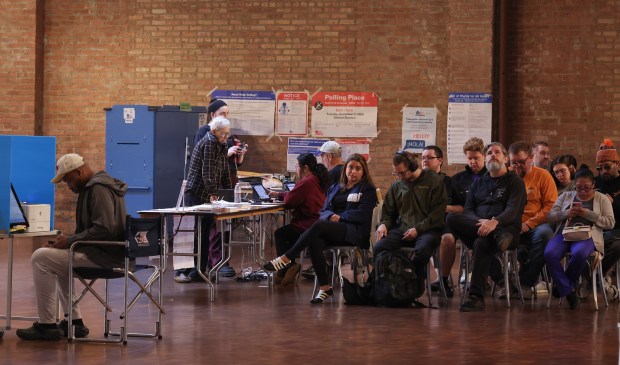
Chicago election officials acknowledged a coding mistake that led to a shortage of ballots in some precincts, which violated state law. This issue resulted from printing far fewer ballots than required for certain areas.
In their statement, the Chicago Board of Election Commissioners apologized for the error. They are still assessing the number of precincts impacted. Many voters reported delays and multiple trips to polling places to cast their votes.
An Avondale voter recounted returning to his precinct three times over several hours before he could vote. An election judge noted that some ballots ran out only a few hours into the election, causing significant disruptions.
In Logan Square, ballots ran out by 9 a.m., affecting voting for at least four hours. Daniel La Spata, the precinct’s alderperson, expressed concern about such errors occurring so early in the day.
State law mandates that officials print at least 10% more ballots than the total registered voters in each precinct. This law ensures an ample supply of ballots and requires additional reserves at an election agency’s main office for emergencies.
The ballot shortage stemmed from confusion over split precincts. These are precincts where political jurisdictions are divided, necessitating different ballot styles. The error involved transposing the quantities of different ballot styles in coding, resulting in some precincts having insufficient ballots for certain races.
Chicago has 1,291 precincts, with 491 being split, where such an error could occur. Some voters managed to vote without issue, while others in the same precinct faced ballot shortages, particularly if they arrived later in the day.
While touch-screen voting machines provided a temporary solution, lines for these devices expanded, causing more voter frustration. Some voters sought alternative polling sites, only to find long lines elsewhere, such as the downtown supersite, where the wait exceeded three hours.
The election board attempted to print and distribute extra ballots and touch-screen machines quickly. However, precincts often lacked sufficient resources for hours.
In its statement, the board emphasized that this was the first occurrence of such an error. Safeguards are now in place to prevent its recurrence. Thus far, the board continues to investigate the full extent of the affected precincts.
“The Chicago Board of Elections apologizes to voters for the error that slowed the lines at certain precincts,” the statement read. “We applaud the dedication of the voters who stuck with us through the delay, and we thank them for their patience and fortitude in casting their votes.”
Reporters Jane Miller and A.D. Quig from the Chicago Tribune contributed to this article.