
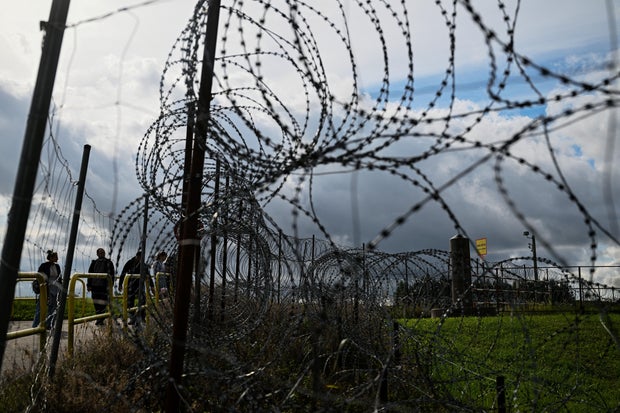
Poland has intensified a security operation along its border with the Russian exclave of Kaliningrad. This move comes amid concerns about possible sabotage or provocations targeting the NATO member. The operation involves deploying additional police and counterterrorism units alongside troops from the elite military special forces unit GROM.
According to national police chief Marek Boroń, the operation will continue from Monday until at least November 8. Intelligence agencies have warned of potential sabotage operations and provocations expected in early November near the Kaliningrad border. This includes the possibility of armed group incursions.
The warnings prompted Poland’s domestic security agencies to remain on high alert, even before deploying extra security forces in northeast regions such as Warmia-Masuria and Podlaskie. Tourists near the Polish-Lithuanian border with Kaliningrad observed these increased security measures, referring to a razor-wire fence along the border.
Prime Minister Donald Tusk reported unusual movements near Kaliningrad, with people seen holding flashlights close to the border. “The swift mobilization of Polish security may have thwarted a provocation this week,” Tusk asserted. He acknowledged ongoing intelligence concerns over possible diversions or provocations against the EU, including armed intrusions.
A special command center has been set up at Polish national police headquarters, focusing on protecting citizens, early detection of suspicious activities, and safeguarding critical infrastructure. Kaliningrad holds military importance for Russia, bordered only by NATO members Poland and Lithuania, along with the Baltic Sea. The region is believed to host Russian security agencies, including FSB and GRU.
The Suwałki Corridor, east of Kaliningrad, serves as the strategic bridge connecting Baltic NATO states with the alliance. It shares a border hemmed in by Russian and Belarusian territories.
Though Polish authorities have not released evidence of specific sabotage plans from Kaliningrad, the alert follows months of sabotage incidents across Europe. Suspicion often falls on Russia for events like air incursions. In a joint conference with Lithuania’s prime minister on October 13, Tusk mentioned his discussion with NATO Supreme Allied Commander Alexus Grynkewich, which reinforced concerns over sabotage threats, including possible attacks on aircraft or border crossings.
MI5’s head, Sir Ken McCallum, highlighted Russia as the primary aggressor. He warned that Russian military and intelligence keep intensifying attempts at hybrid warfare while careful to avoid breaching NATO’s Article 5, triggering collective defense. Russia prefers tactics that avoid, but closely approach, conventional conflict.
Incidents attributed to Russia recently include an August fire at a Polish factory producing military components and a September arson at a Starlink satellite station. Russian drones have intruded NATO airspace during the Ukraine war. This week, the U.K. intercepted a Russian ship off Scotland, tracking its surveillance activity during a NATO exercise.