
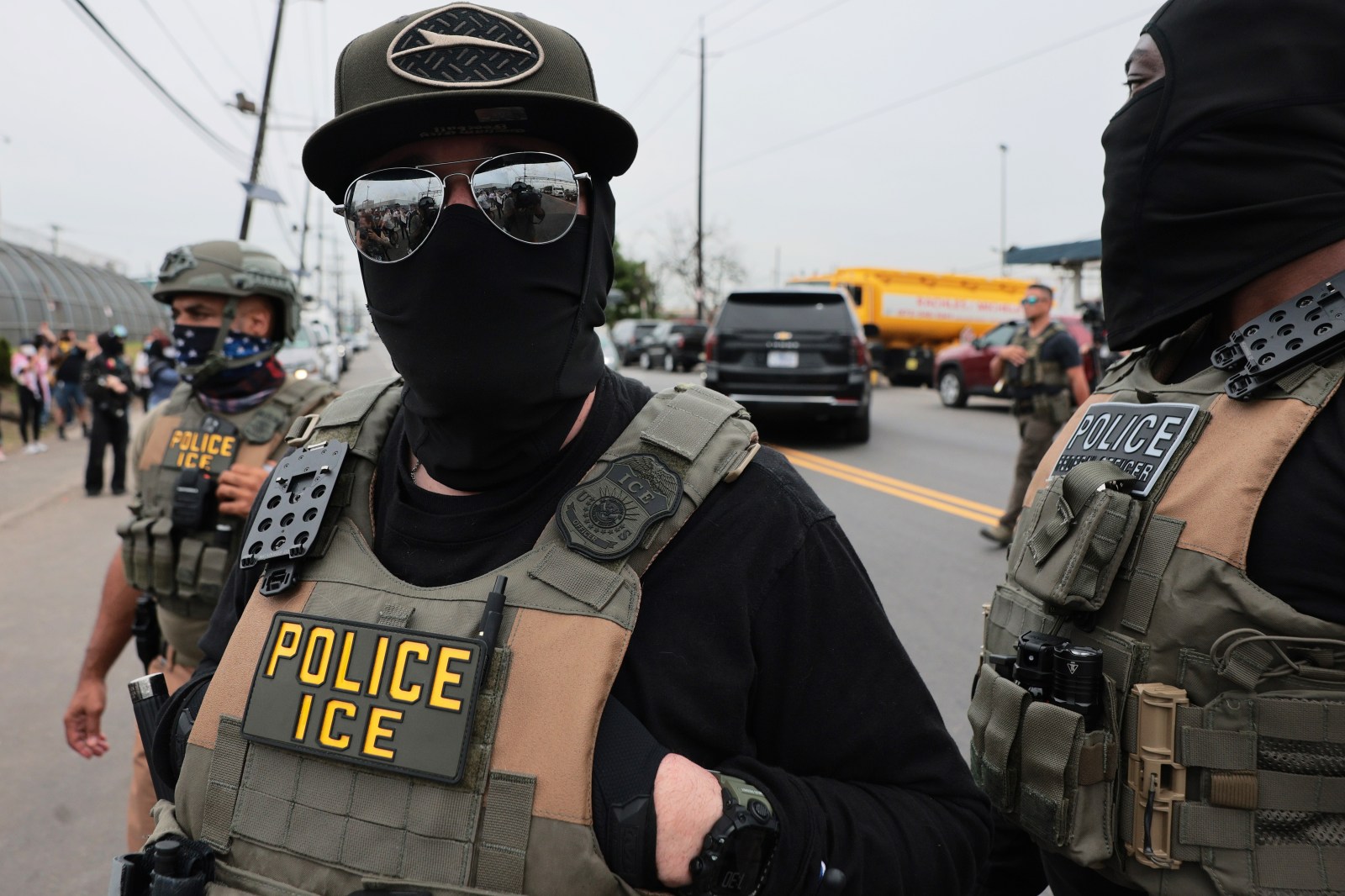
U.S. District Judge Mustafa T. Kasubhai of Oregon has expressed the need for increased scrutiny of ICE agents following the discovery of falsified arrest records. Judge Kasubhai, appointed by President Biden, emphasized the importance of live testimony from government officers in cases where their reports are disputed. He asserted that written statements alone are inadequate when witnesses are dishonest.
“Evaluating live testimony is a time-tested method for truth finding,” Kasubhai wrote. “Written declarations are convenient, but insufficient on their own when witnesses are willing to lie.”
The judge’s comments were part of an order enforcing a prior injunction against the Department of Homeland Security (DHS) and Immigration and Customs Enforcement (ICE) concerning warrantless immigration arrests in Oregon. The case brought attention to ICE’s practices of arrests without judicial or administrative warrants. Kasubhai’s earlier order required that officers must determine, based on individual circumstances, that a person was likely to escape before proceeding with a warrantless arrest.
The Trump administration’s immigration policies have frequently clashed with federal courts, accusing judges who block its policies of activism. However, judges, including Kasubhai, have imposed restrictions on ICE due to lawsuits and allegations of racial profiling and unconstitutional actions.
Kasubhai highlighted a specific case where ICE’s deportation officer, identified as J.G., input false information in an arrest report. J.G. claimed H-D-G-H- was identified before the arrest and a warrant was issued. Under oath, J.G. admitted no warrant had been issued at the time, acknowledging parts of the arrest account were copied from other reports.
The judge declared the discrepancies were not mere mistakes, stating, “He lied in an official record to facilitate the impression he was conducting a lawful warrant-based arrest.” Kasubhai stressed the importance of questioning officers under oath to uncover such issues.
“This case underscores what happens if people were not called to testify under oath in a courtroom, if as a society we do not demand that government agents explain their actions, and if the public fails to shine a spotlight on what is happening under cover,” Kasubhai noted.
Judge Kasubhai announced he would no longer assume ICE agents acted properly, previously known as the “presumption of regularity.” The evidence in this case has shown this presumption no longer applies. He stressed that credibility must be earned through integrity.
Kasubhai pointed out that concerns over ICE’s misrepresentations are occurring nationwide, referencing a Massachusetts judge’s similar stance in recent months. He found ICE’s arrest records troubling as well, noting discrepancies in reports and misrepresentations in I-213 forms.
Despite identifying issues, the judge acknowledged not all disputed cases were unlawful. In one instance, officers had reasonable suspicion to detain a person they initially misidentified.
Contact Newsweek editors on this story: Matthew Cannon and Shakeema Edwards.