
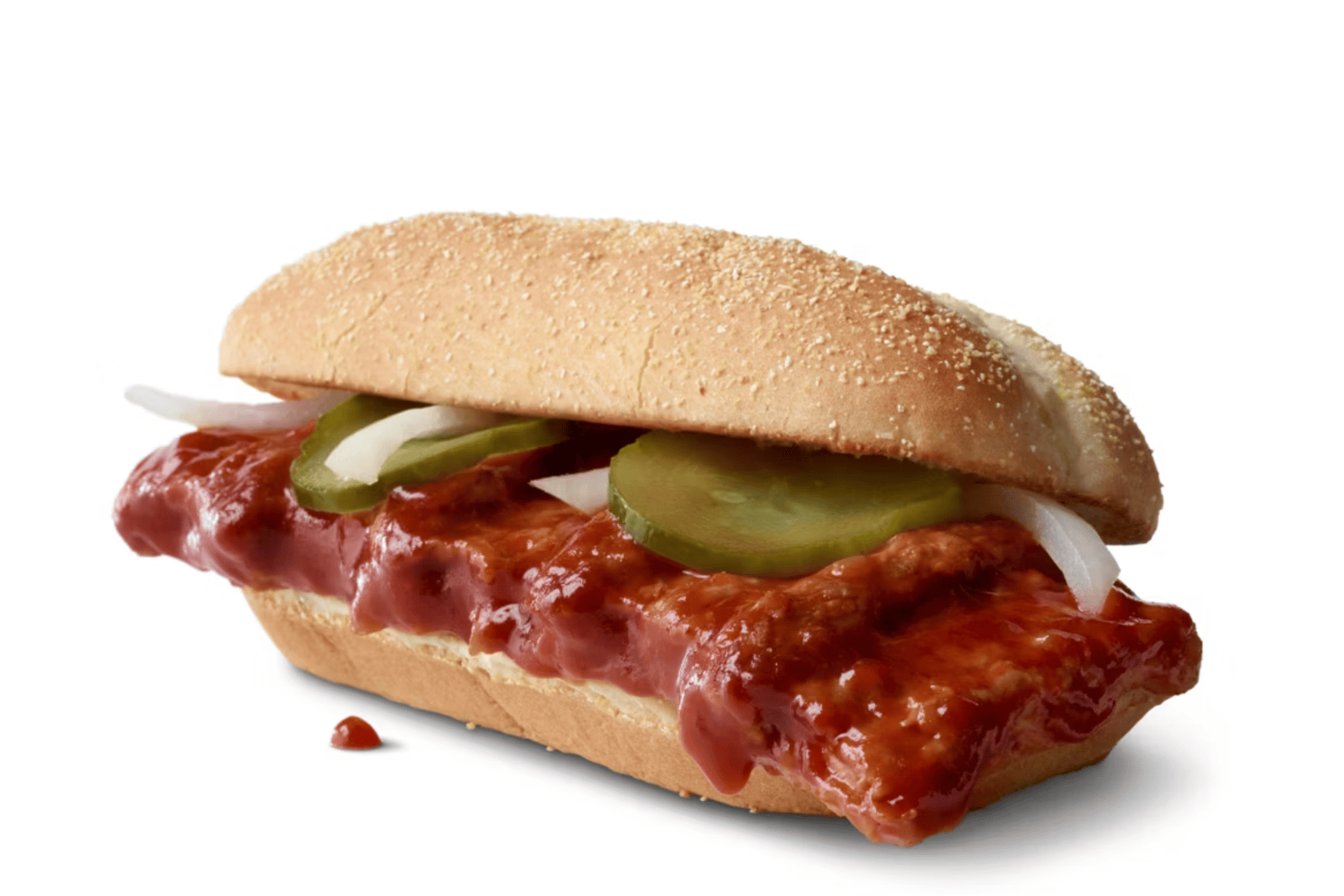
The McRib sandwich from McDonald’s is at the center of a class-action lawsuit, as a federal judge has ruled that the company must defend itself against claims that its name, appearance, and marketing mislead customers into believing it contains pork rib meat.
This legal battle places the McRib among other McDonald’s products that have faced scrutiny in court, such as Chicken McNuggets, french fries, and coffee.
Why McDonald’s Faces Legal Action for the McRib
The lawsuit was initiated by four customers in December 2025, filed in the U.S. District Court for the Northern District of Illinois. According to the complaint, McDonald’s intentionally designed the McRib patty to resemble a rack of ribs, though it contains no pork rib meat. It alleges that less expensive pork cuts, including shoulder, heart, tripe, and scalded stomach, are used instead.
The lawsuit claims that consumers paid a premium for the sandwich, believing it contained rib meat. McDonald’s ingredient list states the patty includes pork, water, salt, dextrose, and rosemary extract, described as “seasoned boneless pork,” without specifying rib meat.
On October 30, U.S. District Judge April Perry dismissed some claims but allowed others, including consumer deception, fraud, and unjust-enrichment, to proceed. Perry stated it was premature to determine if consumers would believe the McRib contained rib meat.
Despite the ruling, McDonald’s USA maintains the lawsuit distorts facts. The company assures that their McRib is made from 100% pork from U.S. suppliers and denies using the ingredients specified in the lawsuit.
McDonald’s History of Legal Challenges
McDonald’s has faced several high-profile lawsuits. One such case resulted in an $800,000 award to a child burned by a hot Chicken McNugget in Florida. Jurors found the franchise negligent due to insufficient warnings or instructions about foreseeable risks. McDonald’s USA was found not negligent but failed to provide adequate warnings.
The nugget case drew comparison to the infamous hot-coffee lawsuit involving Stella Liebeck, who sustained severe burns from McDonald’s coffee in 1992. Liebeck was hospitalized and required extensive medical care. The jury awarded compensatory and punitive damages, which were later reduced. The final settlement figure remains undisclosed.
Another legal issue arose from the use of beef flavoring in McDonald’s fries and hash browns, despite a switch to vegetable oil for frying. This led to lawsuits from vegetarians and Hindus alleging misleading information. In 2002, McDonald’s settled for $10 million to various organizations and improved disclosure practices.
The Future of the McRib Lawsuit
The McRib lawsuit is in its early stages, unlike previous cases that reached settlements or jury verdicts. The recent ruling allows the main allegations to proceed, meaning plaintiffs must demonstrate that the McRib’s marketing misleads consumers.