
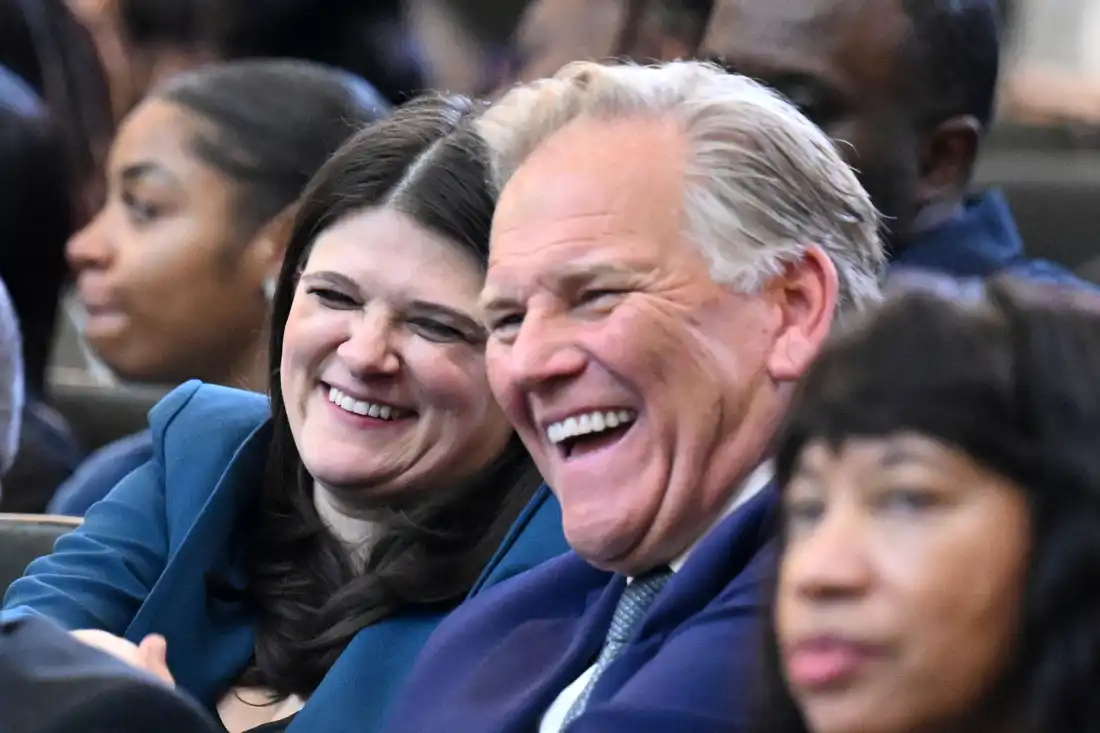
Detroit—In a dramatic turn, Rep. Haley Stevens has endorsed Republican Senate candidate Mike Rogers, distancing herself from her Democratic primary rival Abdul El-Sayed. This announcement comes just days before Election Day.
Stevens’ decision was preceded by a surprise appearance alongside Rogers at a Detroit church service. Stevens posted a video on social media explaining her choice, citing that El-Sayed suggested she was unwelcome in his campaign. As a result, Stevens expressed her support for Rogers.
El-Sayed responded to Stevens’ endorsement amidst the “Souls to the Polls” event, dismissing her influence. He redirected attention to local issues, emphasizing concerns such as education and healthcare in Detroit.
El-Sayed told reporters, “There are families who are prepared to send their kids to schools tomorrow that look like they did 50 years ago. They’re worried about what their kids will eat for lunch and paying bills if their kids get sick.”
Stevens’ endorsement also referred to her disassociation from streamer Hasan Piker, who previously campaigned with El-Sayed. Piker had caused controversy with remarks about Jews and Israel, leading El-Sayed to distance his campaign from the issue without outright disavowing Piker.
Despite ongoing tensions between Stevens and El-Sayed, Stevens’ support for Rogers was unexpected. It followed her fiancé’s public statement supporting Rogers, and Stevens’ televised commitment to back the Democratic nominee.
Stevens’ decision was influenced by an ad from Cenk Uygur of Young Turks, which linked Israel to U.S. economic issues. Stevens criticized the ad and called for El-Sayed to denounce it, citing it as offensive. El-Sayed’s campaign refuted involvement and criticized the ad on Saturday.
Stevens decided against attending a planned joint event with El-Sayed and Rep. James Clyburn, citing conditions for El-Sayed’s public disavowal and apology regarding the ad. The event proceeded without her.
Her endorsement has troubled the Democratic Party. Minority Leader Chuck Schumer labeled Stevens’ actions as betrayal. Michigan Democratic Party Chair Curtis Hertel condemned her support for Rogers, asserting Stevens has abandoned her values.
Discontentment spread among former staff, with social media reactions and Stevens’ communications director leaving his position. This clash is emblematic of deeper conflicts within the Democratic Party, particularly surrounding Israel discourse.
The implications of Stevens’ endorsement are profound, extending beyond the immediate election, foreshadowing potential effects on the 2028 presidential nomination process.