
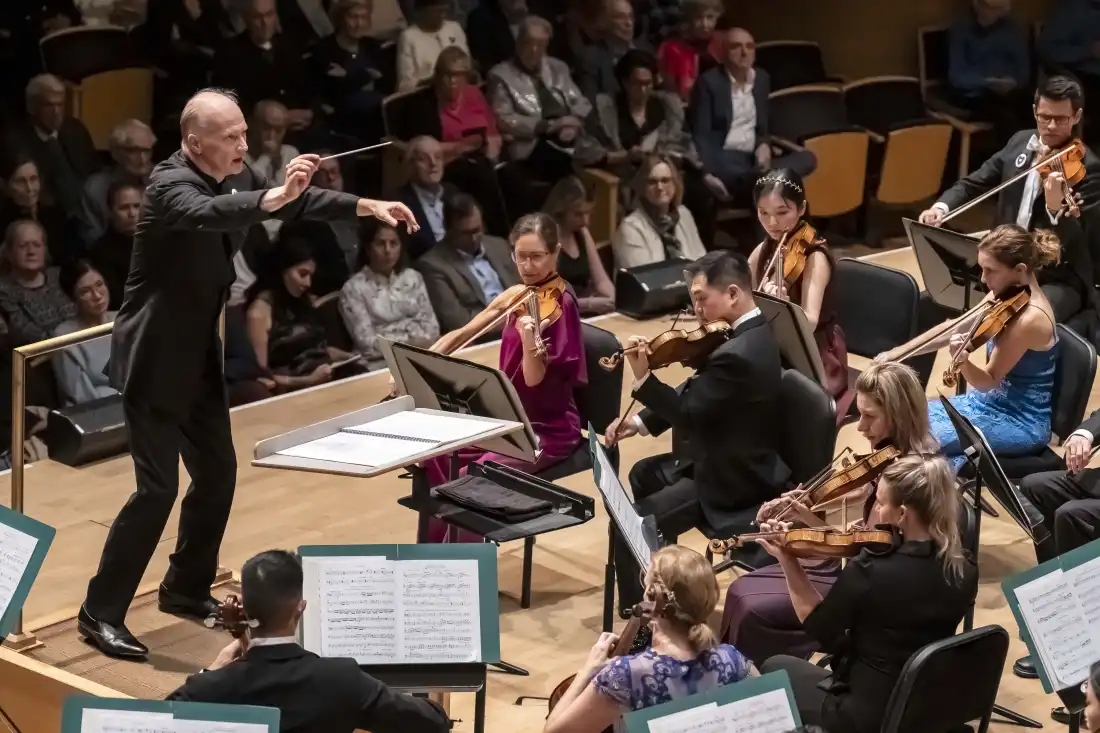
Gianandrea Noseda, the Music Director, led the National Symphony Orchestra (NSO) in its opening concert at the Music Center at Strathmore in North Bethesda, Maryland. The event marked the season’s start.
On September 15, the John F. Kennedy Center for the Performing Arts in Washington, D.C. closed, leaving the NSO without a permanent venue. The closure followed declining ticket sales, public boycotts, and legal challenges related to President Trump’s name being added to the center’s façade. Trump assumed control of the center in early 2025 after dismissing the board of trustees and Kennedy Center president Deborah Rutter.
The NSO has performed at the Kennedy Center since its inception in 1971. Noseda, the Italian conductor leading the orchestra for nine years, expressed surprise at the closure, describing it as unexpected. He faced the challenge of finding alternative venues for the orchestra while awaiting budget assurances amid ongoing controversies.
The orchestra identified six new venues in the Washington, D.C. area. According to former Washington Post music critic Anne Midgette, the link between the NSO and the Kennedy Center made the situation precarious. Midgette expressed concerns about the potential for an NSO season and the orchestra’s survival.
The announcement of the NSO’s new season was delayed due to budget approval from the Kennedy Center Board of Trustees. It arrived in mid-August, just weeks before the September 26 opening at Music Center at Strathmore. The event featured music by Carlos Simon, Tchaikovsky, and Respighi, offering a mix of new compositions and classics.
Midgette described the opening night as bittersweet, highlighting the reality for a major orchestra performing outside its home. While the orchestra faced financial and morale setbacks, Midgette viewed the continuation of the season under such circumstances as a triumph.
The crisis tested both musicians and audiences. Rick Barber, associate principal double bassist, joined the NSO in 1995. Like Noseda, Barber was unprepared for the center’s closure, feeling uncertainty and anxiety about the orchestra’s future.
Noseda remained optimistic, aiming to reach new audiences in different settings. After the firing of Rutter, he chose to extend his contract with the NSO until 2031, seeing it as his duty to support the orchestra and community.
The opening concert ended on a high note, with a packed house in Bethesda applauding the performance. But concerns about the orchestra’s future remain. Midgette questioned public interest in symphonies, noting financial struggles faced by orchestras nationwide.
The NSO anticipates playing fewer concerts this season. Ticket and donation revenue have declined, partly due to significant cuts in the Kennedy Center’s development department. Most of the staff, including former executive director Jean Davidson, departed amid the center’s turmoil.
Noseda emphasized the enduring value of art and its ability to unite people, even in trying times. While the NSO’s return to the Kennedy Center remains uncertain, the experience could ultimately strengthen the orchestra.