
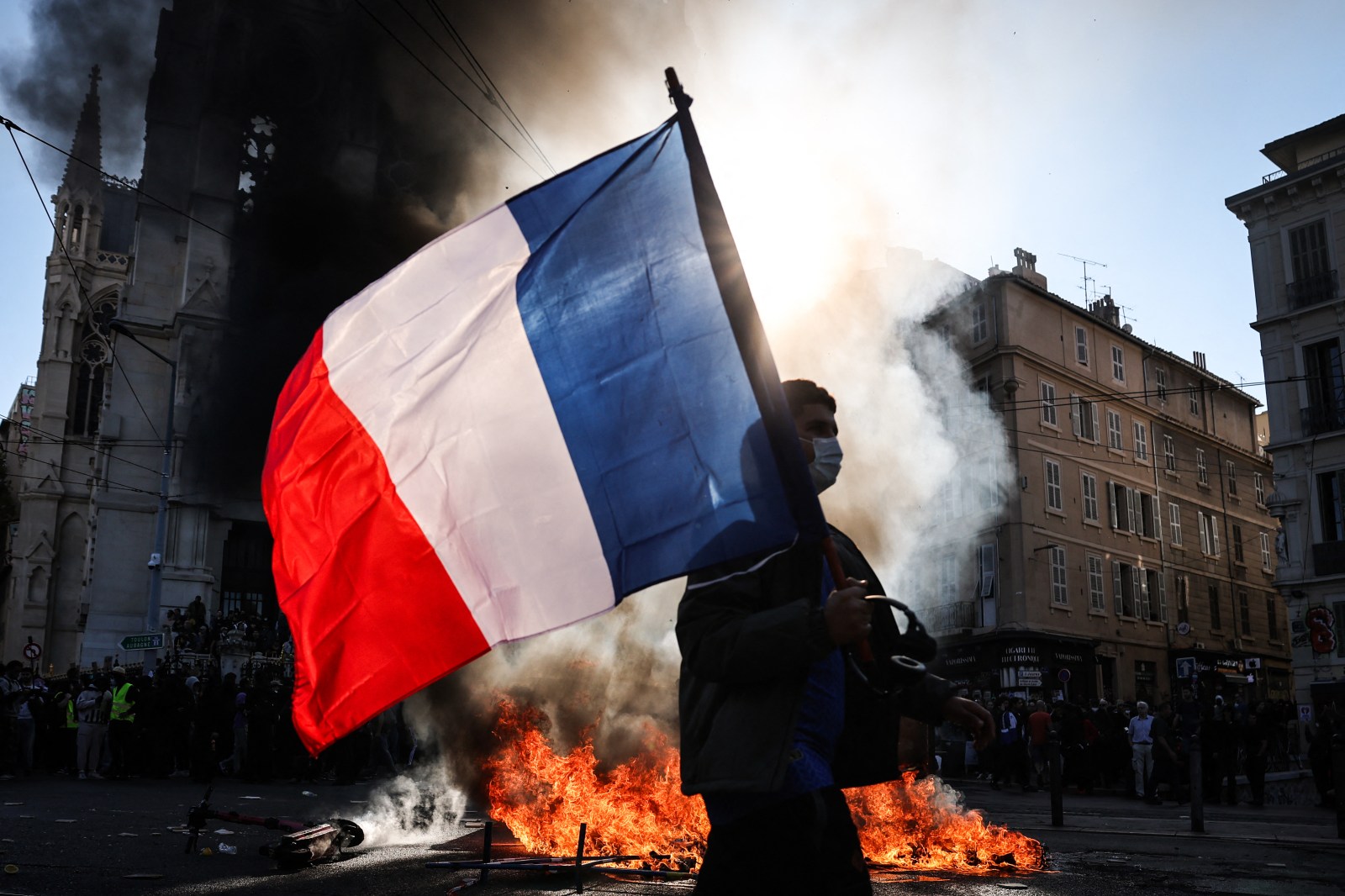
On October 17, over half a million French citizens marched peacefully to protest the rising cost of living and declining school conditions. However, the situation escalated by nightfall. The town hall in Limoges, a building that weathered two world wars, was reduced to a smoldering shell. Authorities reported nearly 2,400 arrests, with approximately 1,000 police officers and firefighters injured. At least 3,000 businesses suffered damage or looting, and numerous cars were set ablaze. What began as a public demonstration transformed into a public order crisis, sounding an alarm for the entire West.
France and Europe have witnessed protests before, yet this wave of unrest spreading beyond French borders poses a critical question: When radical groups exploit valid grievances, how do they weaken the institutions vital for a free society? The crisis erodes societal confidence in self-defense. French leaders are raising the alarm. Prime Minister Sébastien Lecornu informed parliament of an ‘insurrectionary plan’ orchestrated by far-left groups, aided by intelligence reports indicating networks intending to cause disruption leading up to the next presidential election. President Emmanuel Macron accused far-left activists of attacking police and public buildings, while the interior minister acknowledged losing control in major cities.
Peaceful protest is a democratic right. Yet, when organized radical, Islamist groups, and foreign actors exploit grievances to attack law enforcement, destroy businesses, and undermine institutions, the issue extends beyond legitimate dissent. It becomes intimidation.
The pressing question remains: who funds these attacks? Recent investigations into the 54 organizations connected to French protests reveal only 16 are student or youth groups, with the rest comprising political parties, communist and Islamist groups, pro-revolutionary organizations, and varied advocacy groups, both transnational and domestic. Establishing any connections between these groups and violence necessitates evidence, though citizens deserve transparency when networks mobilize against Western institutions.
Modern activism often involves intermediary layers and nonprofits obscuring funding sources. Tech mogul Neville Roy Singham’s financial networks have come under scrutiny for alleged ties to the Chinese Communist Party, funding the nonprofit Tricontinental. Vijay Prashad, its leader, publicly supported the protests, with BreakThrough News, associated with Singham, amplifying them. While these connections don’t definitively prove responsibility for recent violence, their global reach warrants investigation.
These radical organizations’ proliferation has domestic implications. Various global progressive organizations fund harassment of Immigration and Customs Enforcement (ICE) agents and businesses catering to them, supporting movements like Sunrise, which employs financial pressure against hotels housing ICE personnel. This impacts hotel workers, business owners, and ordinary Americans striving to sustain livelihoods.
Marxist revolutionaries, Islamists, and regimes averse to the West may share few commonalities but focus on weakening Western institutions and deepening social divisions. Any cooperation should be investigated and prosecuted.
The Trump administration frames the challenge in terms of civilization. In Athens, Secretary of State Marco Rubio spoke of “thumos,” highlighting passion and strength crucial for national survival. The Munich Security Conference emphasized the threat of “civilizational erasure.” The State Department has designated European far-left groups as foreign terrorist entities.
Americans don’t need to look afar to understand the implications. In the summer of 2020, orchestrated riots erupted across U.S. cities, leading to destroyed businesses and community damage. Many of these businesses belonged to those protesters claimed to defend. These events demonstrate how rapidly public order deteriorates when unchecked violence prevails. The choice for Americans lies between fostering a civil society or allowing intimidation and extremism to undermine it, which necessitates transparent political financing, law enforcement, protection of peaceful protests, and violence accountability.
Radical extremism treats individuals as mere resources for movements. A shopkeeper’s livelihood or a worker’s paycheck becomes an acceptable trade-off for power. In contrast, the principle of “America First” prioritizes citizens over causes.
“E Pluribus Unum” transcends a national motto into a shared commitment—a nation where free people live, work, worship, and disagree without fear of mob dominance. The French riots are a stark warning: civilizations don’t collapse instantly; they weaken when leaders justify disorder, institutions withdraw, and citizens lose the resolve to defend their heritage. The future involves a choice between a dysfunctional society or pursuing greatness through civilizational thumos. I choose the latter.
Chad Wolf is the chair of Homeland Security and Immigration Policy and Western Hemisphere Initiative at AFPI and previously served as acting secretary of the U.S. Department of Homeland Security under President Donald Trump.