
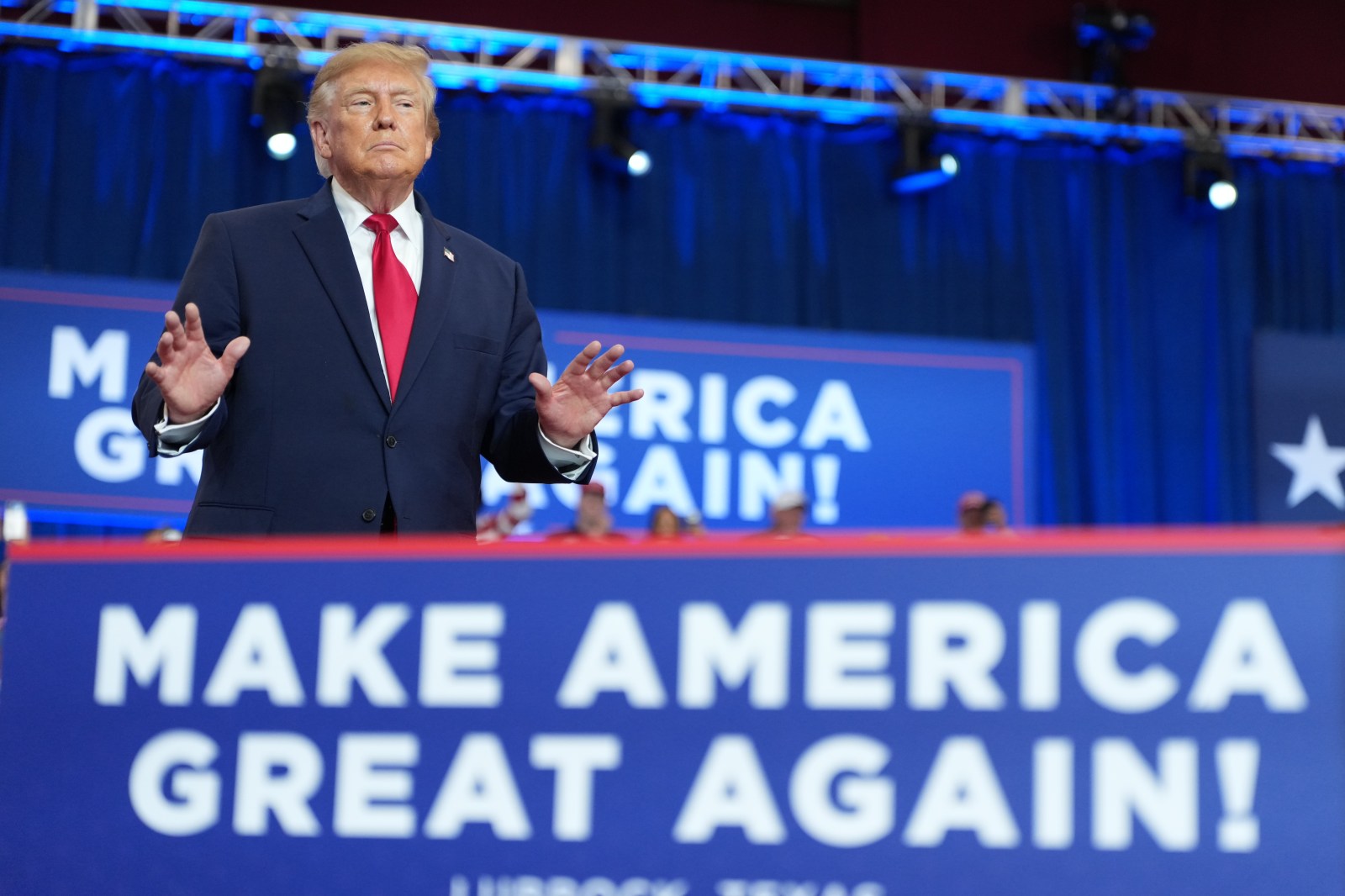
President Donald Trump made a playful remark about the $5,000 payments he promised if Republicans secure both the House and Senate in the November midterm elections. Speaking at a rally in Texas, Trump said that such an amount would not suffice for much at his Mar-a-Lago club. He humorously suggested that $5,000 might cover a hamburger and a small dessert at the resort, if at all. He noted Mar-a-Lago was not a wise choice for those mindful of costs, prompting laughter from the audience.
This discussion arises as affordability is a critical topic in the final days of the campaign. Newsweek has contacted the White House and the Committee for a Responsible Federal Budget for comments outside regular hours.
Affordability’s Role in the Midterm Campaign
A recent NPR/PBS News/Marist poll indicated 34% of likely voters considered the cost of living the primary factor influencing their vote. Meanwhile, an October AP-NORC poll found 84% of voters identified cost of living as a crucial issue. Although the surveys posed different questions, they both showed household expenses as a significant concern for voters as Election Day approaches.
Trump has integrated the promised payment into his economic strategy, claiming his policies are enhancing the economy, and the payment would benefit Americans. This promise depends on the GOP winning control of both Congress chambers, and it lacks official authorization.
Details of the Proposed $5,000 Payment
The Trump administration has labeled the proposition the “Trump Dividend,” described as a $5,000 payment to every adult U.S. citizen. However, no official plan detailing application or distribution processes, timelines for payments, or potential income restrictions has been shared.
The estimated expense of this proposal is approximately $1.2 trillion, considering around 240 million eligible adults. This sum is notably higher than the $1,776 “warrior dividend” issued to military service members in 2025, which derived from a previously approved housing supplement by Congress.
This situation is evolving, and updates will follow.