
Recent developments in the Israeli elections have highlighted the controversial tactics used by Prime Minister Benjamin Netanyahu. On Tuesday, Netanyahu posted several messages on his social media account, X, which experts have described as anti-Arab and misleading. One notable post depicted a line of people in hijabs outside a community center in Sakhin, Israel. This was presented as a polling station image intended to suggest high Arab voter turnout. Another image showed individuals in black niqabs claimed to be in Rahat, Israel.
The caption of the post warned, “This is an emergency call! The future of our Jewish state hangs in the balance. Go out and vote right now! Higher-than-usual voter turnout in the Arab sector compared to the low turnout of right-wing voters.” Achiya Schatz, an expert on online misinformation and founder of Fake Reporter, an Israeli organization combating misinformation, questioned the authenticity of the image from Sakhin, noting that it may be AI-generated. NBC News could not verify the image.
Alongside this, Netanyahu’s campaign included the posting of AI-generated videos depicting Iran’s Supreme Leader Ayatollah Mojtaba Khamenei, suggesting serious geopolitical threats. The messages, according to Schatz, reflect a pattern of fear-mongering aimed at affecting voter behavior and perceptions.
The election results are pivotal as they determine whether Netanyahu can sustain his governance amidst rising domestic pressures. His main rival, Yair Golan, claims that the electorate has effectively dismissed Netanyahu’s leadership. Golan, leader of the Democrats party, stated that they have the opportunity to form a government focused on genuine change.
As the Israeli Central Elections Committee released preliminary results, it showed Netanyahu’s Likud party with 26.50% of the votes from initial polling stations. However, much of the election’s outcome remains uncertain, as no single party has ever gained outright majority, often leading to coalition negotiations.
Arab parties celebrated high voter turnout, seeing it as crucial in preventing Netanyahu’s coalition, described as the most right-wing in Israel’s history, from reclaiming power. Despite Eisenkot’s seeming lead, he has indicated reluctance to form a coalition with Arab parties.
This election occurs in the shadow of the October 7, 2023, attacks, a significant factor influencing voter sentiment. Additionally, economic concerns such as cost of living, corruption, and public service inefficiencies are pivotal issues for voters.
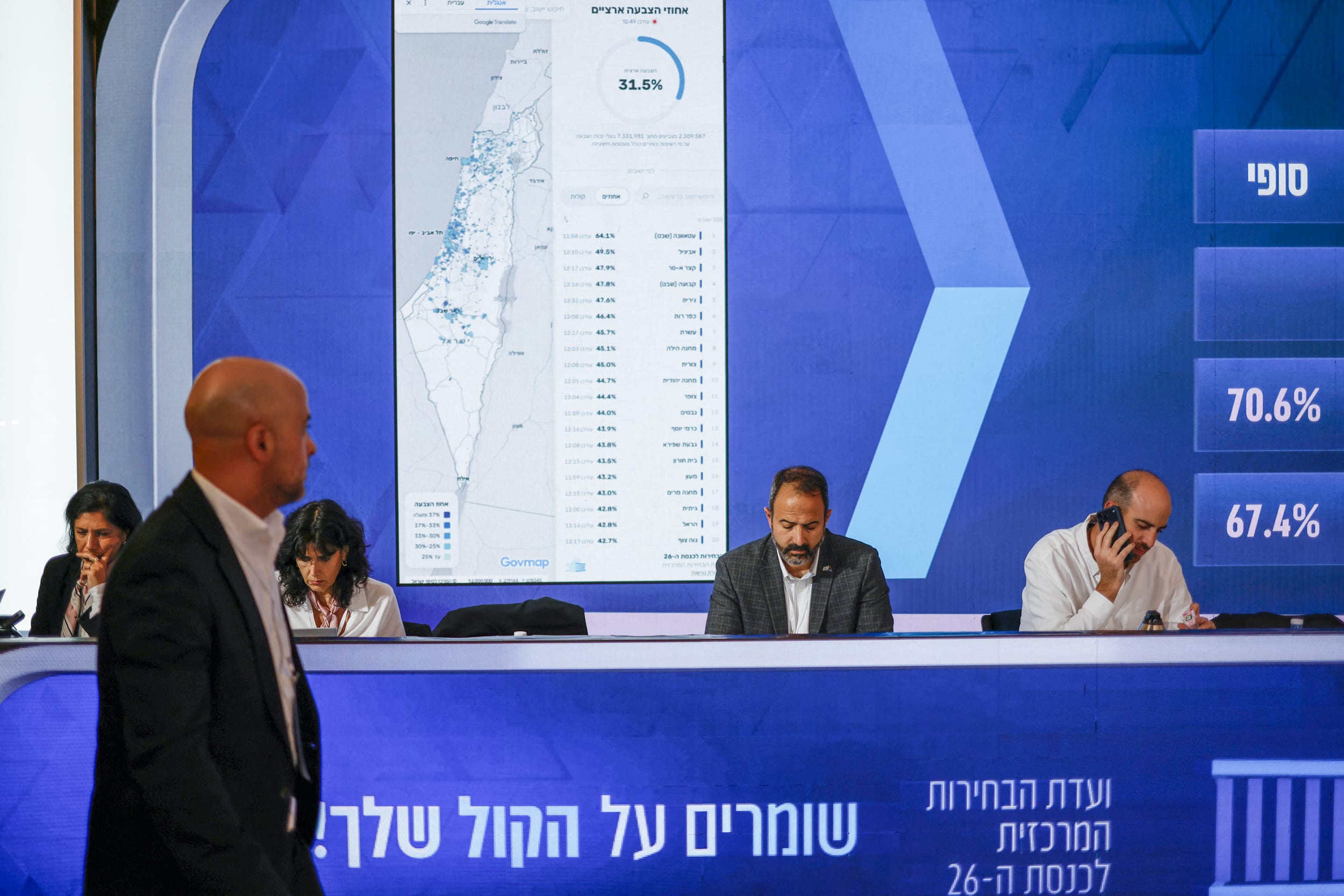
Turnout data shows a historic engagement among voters, with the highest participation rate since 1999. Official results are expected within eight days, during which political parties will engage in discussions to form potential governing coalitions.
Eisenkot highlighted discrepancies in Netanyahu’s handling of national security, especially after the Oct. 7 attacks, seeking to challenge the current administration’s narrative. As Israel awaits the full election results, the nation anticipates potential shifts in leadership and policy direction.