
Brazilians engaged in a significant presidential runoff as incumbent President Luiz Inácio Lula da Silva faced Flávio Bolsonaro. This election will influence the United States’ influence in Latin America. To win, candidates must secure over 50% of the vote. Polls indicate a tight race between the contenders.
This election pits Lula, a veteran left-of-center politician, against Bolsonaro, aligned with U.S. President Donald Trump and son of former President Jair Bolsonaro. In the first round, Bolsonaro surpassed Lula by over 2.2 million votes. Despite voting being compulsory, over 33 million voters from nearly 160 million abstained.
Lula and Bolsonaro clash ideologically on various issues including U.S.-Brazil relations and climate change. Bolsonaro’s victory could steer Latin America’s largest country towards the right, a notable trend after Trump allies’ successes in Chile, Peru, and Colombia. Lula winning would place Brazil and Mexico under left-of-center leadership.
This runoff represents another clash between Brazil’s polarized political forces. Four years ago, Lula narrowly defeated Bolsonaro’s father since the country’s democratic return in 1985.
Economic and Security Concerns
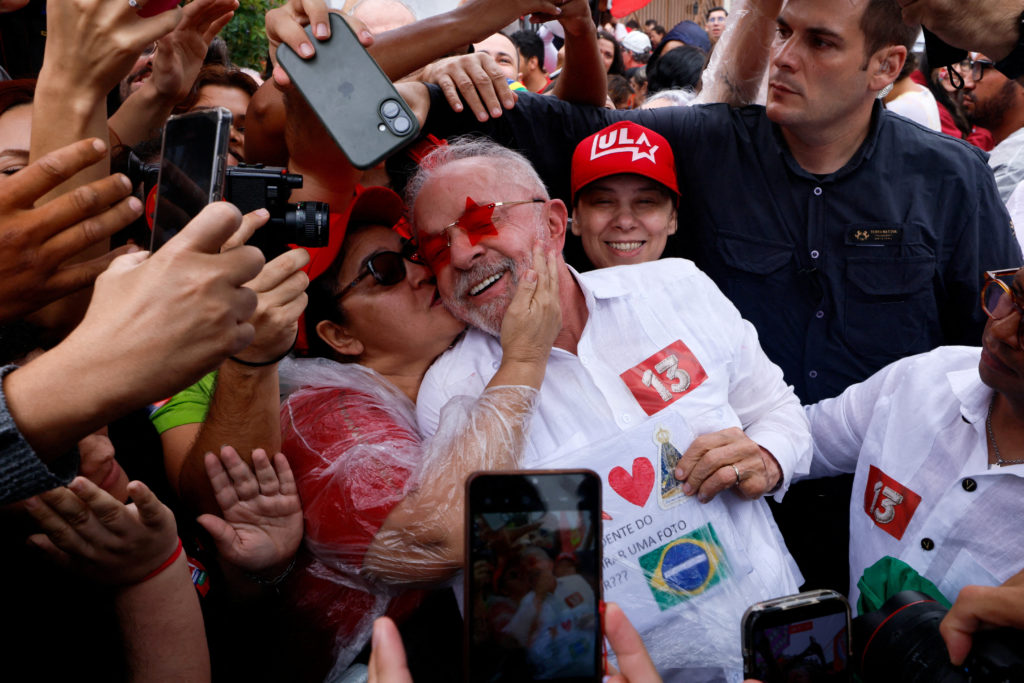
Lula, the Workers’ Party candidate for re-election, greeted supporters after voting in São Bernardo do Campo. His reelection is challenged by cost-of-living and security issues. Bolsonaro’s campaign pledges include addressing crime and reducing food costs. Both candidates face corruption allegations impacting their campaigns.
Bolsonaro voting in Rio de Janeiro heard opposing supporter chants. He emphasized the need for change, criticizing Lula as a threat to democracy. Bolsonaro has promised to pardon his father if elected.
The next president will appoint at least three Supreme Court justices, crucial amid judicial corruption issues. Lula aimed to attract undecided voters with incentives like debt relief for small businesses and free public transportation on weekends. His administration also supported ending a six-day working week, a popular move.
Expressing gratitude, Lula appreciated voter support as he cast his ballot.
Supporters’ Motivations
Lula supporters value his advocacy for marginalized communities and poverty alleviation. Luzia da Souza, a bar owner in Rio, appreciates Lula’s empathy towards the poor. Anderson Falcão, a journalist, voiced concerns over Bolsonaro’s policies as harmful to various communities and environmental resources.
Demand for Change
Flávio Bolsonaro’s voters, often wearing Brazil jerseys, advocated for political shifts. Many, like physiotherapist Fabianne Borges Santoro, sought change due to economic and security dissatisfaction under the Workers’ Party. Young voters like Davi Vidal de Negreiros Nobrega Leite Andrade preferred Bolsonaro’s economic strategies.
Third-party voters and first-round abstainers play crucial roles. Kelvin Gomes Pimental, initially a third-party voter, chose Lula despite imperfections, opposing Bolsonaro’s aggressive policies. Alisson Freitas, abstaining due to work, supported Lula this round, believing Bolsonaro’s term was worse economically.
Influence of U.S. Relations
Lula criticized U.S. intervention, concerned about Trump administration tariffs and drug-trafficking group classifications, positing diplomatic influences. Flávio Bolsonaro highlighted his U.S. rapport, aiming for stronger economic partnerships especially in rare minerals.
Brazil’s electronic voting system provides swift results post-polling, promoting electoral efficiency.
Brazil’s election highlights vital political dynamics affecting democratic principles and international relations.