
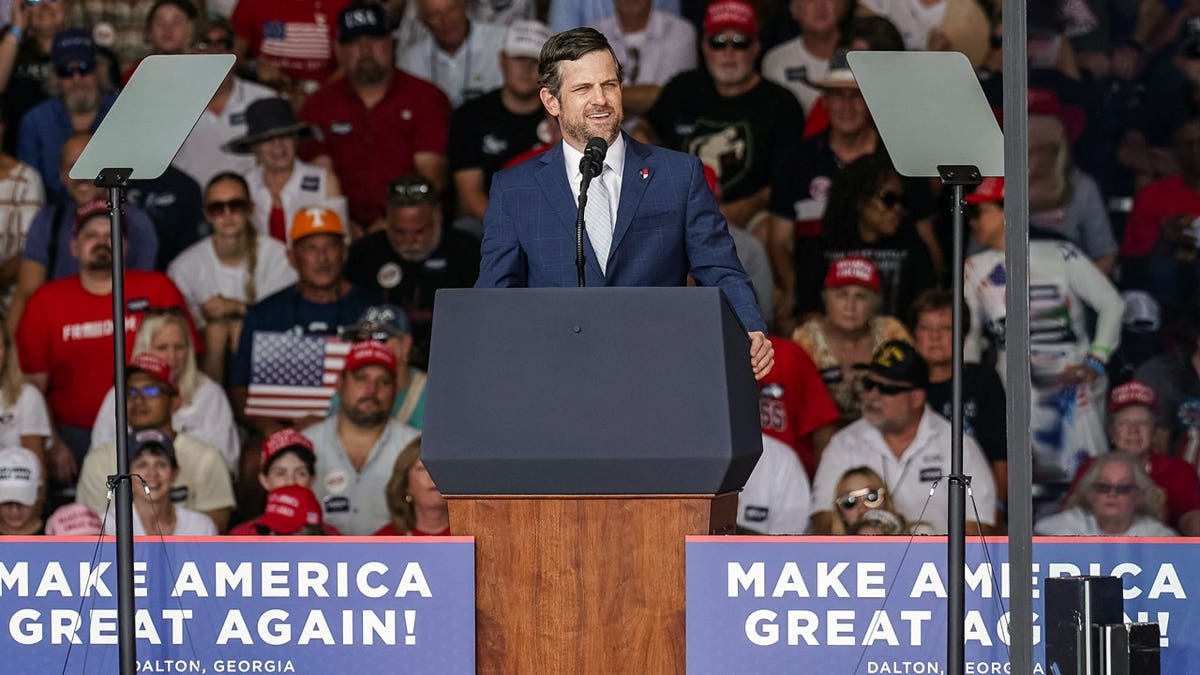
The conflict over reducing autism therapy costs for foster children in Georgia is intensifying at the state Capitol. A Republican lawmaker and affected families are urging a reversal of the 30% cut in reimbursement, citing concerns that gains made by children could be undone.
State Senator Brian Strickland from McDonough has joined the call for action. He addressed the issue of reduced payments for applied behavior analysis (ABA) therapy. The cuts, which began on September 1, are managed by Amerigroup, a Medicaid service provider for foster children in Georgia.
“As a parent of a child with autism, I know the importance of ABA therapy for families and Georgia’s foster children. That is why I made my stance clear at the Capitol opposing these cuts,” Strickland expressed to Fox News Digital.
Strickland, who is campaigning for state attorney general, promised to hold companies accountable if elected.
Georgia state Sen. Brian Strickland, who has a child with autism, described cuts to certain autism therapy reimbursement rates as ‘indefensible.’
The political backlash followed a report that autism advocates feared the reimbursement cut could result in providers ceasing to treat foster children, stemming from a Medicaid fraud crackdown enacted by the Trump administration.
Taylor Sanders of the Autism Families Alliance spoke to Fox News Digital, highlighting that families and clinicians have increasingly voiced concerns after the cuts started.
“Every moment without services, we see regression in communication skills and safety capabilities,” Sanders noted. Sanders warned that up to 75% of clinics might close or stop serving foster children due to these cuts.
A fight over cuts to autism therapy for Georgia foster children is escalating at the state Capitol.
She shared the story of a family whose three-year-old child had started speaking after ABA therapy and now fears losing access to this crucial treatment.
“The mother was in tears, worried and frustrated,” Sanders recalled. The child’s therapy had not been extensive enough to ensure consistent communication across different environments.
Kelsey Bennett from the Autism Families Alliance emphasized, “Time is crucial for these children and their families. Each day without essential care threatens progress and further development.”
Advocates said they fear losing one-on-one therapy that help a child with autism begin communicating.
Bennett urged, “Reverse the cuts.” Advocates are requesting not only that cuts be reconsidered but also that families, clinicians, and others be included in policy evaluation instead of applying a broad approach.
Amerigroup stated to FOX 5 Atlanta that ABA reimbursement rates were adjusted based on complexity and clinical expertise. Rates increased for treatment planning and caregiver-engagement while decreasing for some technician-delivered services. Notably, rates for licensed clinicians remain unchanged and autism services deemed medically necessary are still covered.
Sanders noted technicians, who provide intensive one-on-one care, were significantly affected by the cuts.
Just because we put something down on paper doesn’t mean that it’s gonna be clinically effective or that these children are gonna be able to access care because companies are now having to maybe close their doors to these individuals because they can’t afford the rate cut.
Sanders expressed concern about the long-term consequences for children whose therapy is disrupted.
“Progress lost is difficult to regain, which is our primary concern,” Sanders stated. “Reconsider decisions before removing support from families. Engage clinicians and family members before performing significant cuts.”
Fox News Digital reached out to Amerigroup and the Centers for Medicare & Medicaid Services for further comments.