
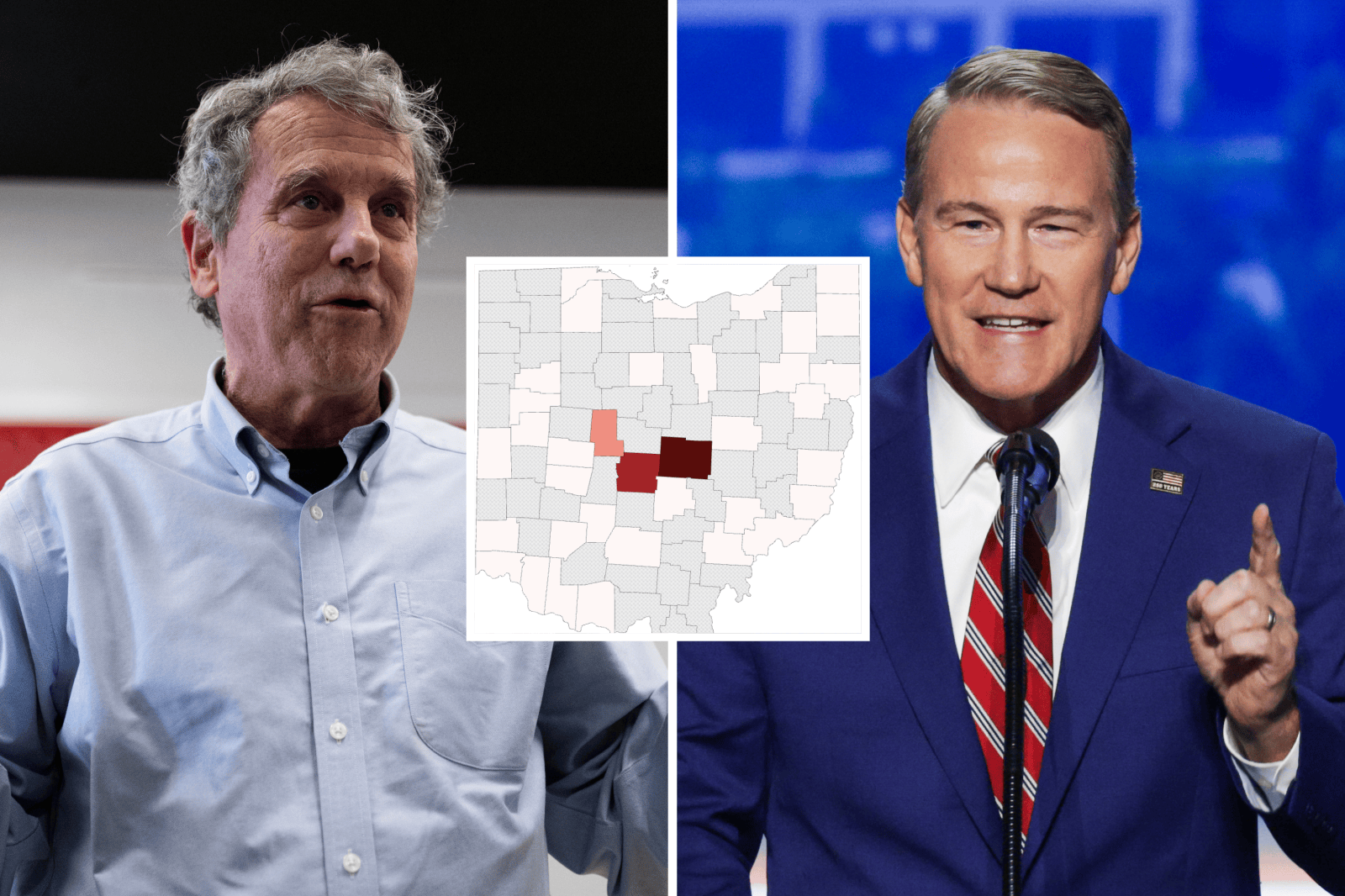
The Ohio Senate race has become a battleground over data center development. Republican Senator Jon Husted and Democratic former Senator Sherrod Brown have highlighted this issue, reflecting a national debate on the presence of data centers in communities.
Data centers, crucial for artificial intelligence (AI), are viewed by some as job creators. Others raise concerns about their environmental impact and noise. Ohio has seen an increase in these facilities, especially around Columbus. Erin Brockovich’s map shows dozens of AI-focused data centers in the state. Despite this, many Ohioans are wary. A poll from Bowling Green State University found that 75% oppose new data centers in their communities. Furthermore, 63% oppose such developments statewide, and 78% support a temporary construction ban until further information about their effects is available. This poll surveyed 1,000 likely voters and had a margin of error of plus or minus 4 percentage points.
AI Data Center Growth in Central Ohio
Franklin County, home to Columbus, has several large data centers. The surrounding conservative counties have also attracted significant investment. These developments have sparked local backlash. Licking County, for instance, attempts to ban data centers over 25 megawatts.
Economic factors attract data centers to Central Ohio, says David Niven, a professor at the University of Cincinnati. The region offers affordable land, water, and access to electric lines. Ohio has also provided $2.3 billion in tax breaks to these facilities, as reported by Signal Ohio.
Political Positions on Data Centers
Both candidates have taken clear stands on the issue. Husted proposed the Ratepayer Protection Act to protect consumers from rising electricity costs. However, this measure failed in the Senate. He emphasizes personal responsibility, stating the demand for digital products drives data center growth.
Brown, on the other hand, questions data center expansion. He calls for transparency and proper utility cost-sharing by these centers. Despite their differences, both candidates believe in local decision-making regarding these projects.
Labor Union Dynamics
Labor unions in Ohio view data centers as a source of union jobs amid economic upheavals. This creates a complex dynamic for Democrats, traditionally supported by unions. Dorsey Hager from the Columbus/Central Ohio Building and Construction Trades Council criticizes negative political positions on data centers.
However, the job creation benefit is limited once data centers are operational, posing a challenge for Democrats balancing union support against voter concerns.
Polling and the 2026 Midterm Outlook
Current polls indicate a tight race. A RealClearPolling aggregate gives Brown a slight edge over Husted. The InsiderAdvantage poll and a Fox News poll also suggest a competitive contest.
Brown’s campaign seeks a comeback in a state that has leaned Republican in recent years. Though once a key swing state, Ohio has trended conservative with a strong rural Republican base. However, Democrats see hope given historical midterm losses for the party in power and recent economic dissatisfaction.
The Ohio Senate race is critical for control of the next Congress. Forecasts label it a toss-up, with early voting already underway. The outcome could have significant national implications.