
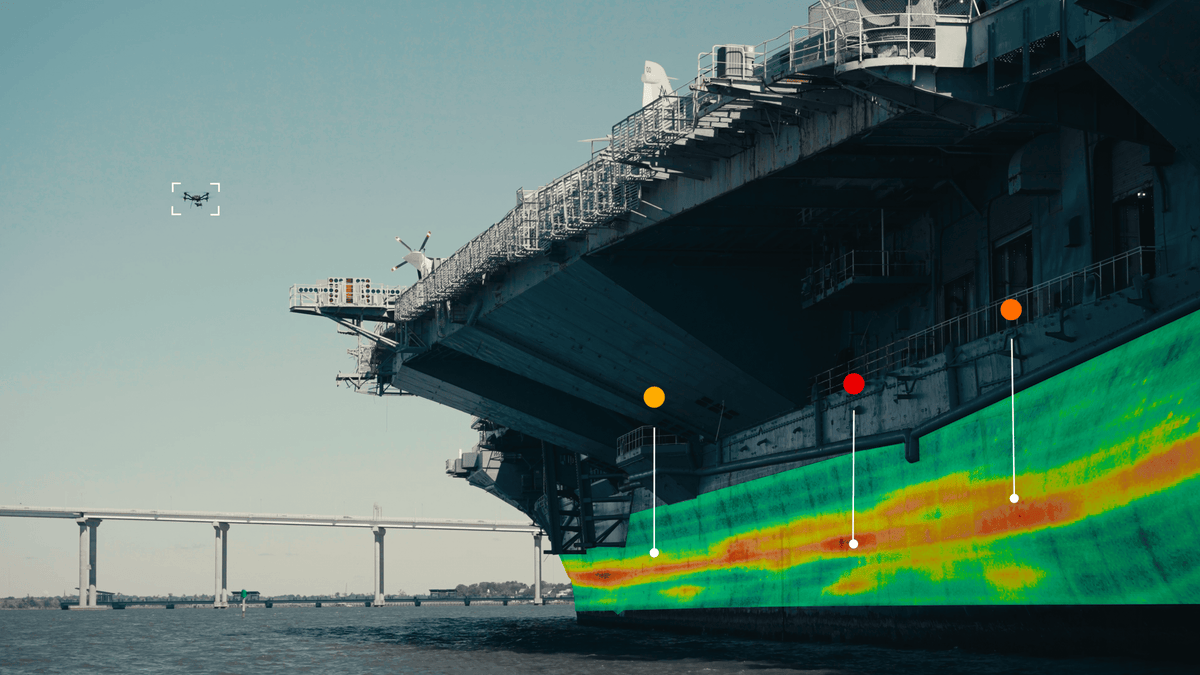
The U.S. Navy is significantly expanding its investment in AI-powered robots to inspect warships. The ceiling for the contract with Pittsburgh-based Gecko Robotics has been raised to $300 million. This move comes just six months after the initial agreement, which was capped at $71 million.
Importance of AI in Ship Maintenance
The decision to enhance the contract highlights the U.S. military’s focus on technological solutions to improve ship readiness. The Navy aims to bridge a shipbuilding gap with China by enhancing maintenance efficiency rather than merely increasing ship production. Gecko Robotics’ technology promises to save the Navy up to $8 million in repair costs per ship and can detect structural issues up to 50 times faster than traditional methods.
Innovative Inspection Technology
Gecko Robotics is introducing a new robot, Komodo, specifically designed for naval use. Komodo can inspect steel beneath thick coatings on ship decks without removing them first. This capability allows maintenance crews to understand the condition of the ship without having to strip away the surface, offering precise assessments of damage that need attention.
Komodo performs a function similar to a CAT scan, revealing what’s beneath the surface without invasive work.
Traditional methods often require removing materials to determine the condition beneath, a process Komodo’s technology aims to simplify.
Robotics and AI: A Combined Approach
Gecko Robotics employs wall-climbing robots that scan difficult-to-access ship areas like hulls and tanks. These robots collect data on material condition and feed it into Gecko’s AI platform to pinpoint necessary repairs. This allows for targeted repairs, reducing the overall workload and increasing speed, a crucial factor for the Navy.
The increase in the contract’s ceiling comes shortly after Gecko began work on 18 Navy ships, including destroyers and combat ships, under a five-year agreement. Gecko’s technology aims to reduce maintenance delays and keep more ships available for deployment.
Strategic Value and Future Goals
The U.S. Navy looks to improve its fleet readiness to 80%. Meanwhile, China continues to produce more ships at a faster pace, prompting the Pentagon to maximize the availability of the current U.S. fleet. Gecko’s longer-term goal is to use extensive data to anticipate future issues before they arise, minimizing downtime and improving efficiency.
In addition, the use of robotics and AI addresses skilled labor shortages by reducing labor-intensive inspection work. The Navy is racing to keep pace with China’s fleet, emphasizing smarter maintenance and operational readiness.
While the U.S. may not be able to outproduce China, we can optimize maintenance and operations, enhancing fleet readiness with existing resources.