
The 2026 midterm elections are predicted to be the most financially demanding in history. Enthusiasm around Democratic candidates and significant contributions from Republican megadonors, notably Elon Musk, are the primary causes. Since the start of 2025, over $15 billion has been raised, with half being spent already according to Federal Election Commission data. Ad spending for House and Senate races has reached more than $4 billion, and millions more are planned for the final weeks of the election, as reported by AdImpact.
Republican Challenges
After securing the White House and a slim majority in both legislative chambers in 2024, Republicans face a dissatisfied electorate, disapproving of President Trump’s policies. This includes an unpopular war in Iran, as well as high fuel costs and inflation. The Democratic Party isn’t particularly favored either, but certain Senate candidates in conservative states like Iowa, Texas, Kansas, and Ohio, along with those in competitive House districts, have experienced a surge in polls and fundraising.
Despite the Democrats’ fundraising prowess, Republican groups, including three super PACs linked to Trump’s MAGA, Inc., have outspent Democrats on media campaigns attempting to portray them as too radical to govern Congress.
Democratic Fundraising Dominance
This election cycle has brought unexpected competitiveness in numerous Senate races, often due to Republicans being outraised by their Democratic rivals. Between July and September, Democratic or independent candidates raised more funds than Republicans in 27 out of 35 Senate contests, achieving a nearly 5-to-1 advantage in the 13 most competitive races.
Texas Democratic Senate nominee James Talarico reported raising around $60 million in the third quarter, marking a record for Senate campaigns in this period pre-election, second only to Georgia’s Democratic Sen. Jon Ossoff’s total for the cycle. In Kansas, Democrat Adam Hamilton raised close to $10 million into his primary campaign committee, far surpassing the incumbent Republican Sen. Roger Marshall’s $800,000. Similarly, Mississippi Republican Sen. Cindy Hyde Smith reported below $700,000, while Sens. Mike Rounds of South Dakota and Jim Risch of Idaho disclosed receipts under $500,000 in the third quarter, their opponents reporting nearly double these amounts.
Democrats, holding 47 Senate seats, are utilizing their fundraising advantage alongside Republican unpopularity to target races in states that favored Trump by as much as 60% of the vote.
Impact on House Incumbents
Anti-incumbency sentiments continued in primaries and affected fundraising, with 50 House members, mostly Republicans, being outraised in the last quarter. Among those vulnerable under the National Republican Congressional Committee’s “NRCC Patriots” list, only Pennsylvania Republican Brian Fitzpatrick raised more than his competitor.
From the Democratic Congressional Campaign Committee’s “Red to Blue” flips, Democratic candidates raised more in 40 of the 46 targeted seats, which includes traditionally Republican districts in states such as Arkansas, Kentucky and Nevada. These districts have seen Republican ad spending surge in efforts to retain control. In “Districts In Play” like KS-02, MI-01, NE-02, and OH-10, Democrats also had fundraising superiority.
The NY-17 race between Republican Rep. Mike Lawler and Democrat Cait Conley exemplifies this trend. Conley raised a staggering $5.4 million in the third quarter, outstripping almost all incumbent Senators during the same timeframe.
Elon Musk’s Financial Influence in Texas
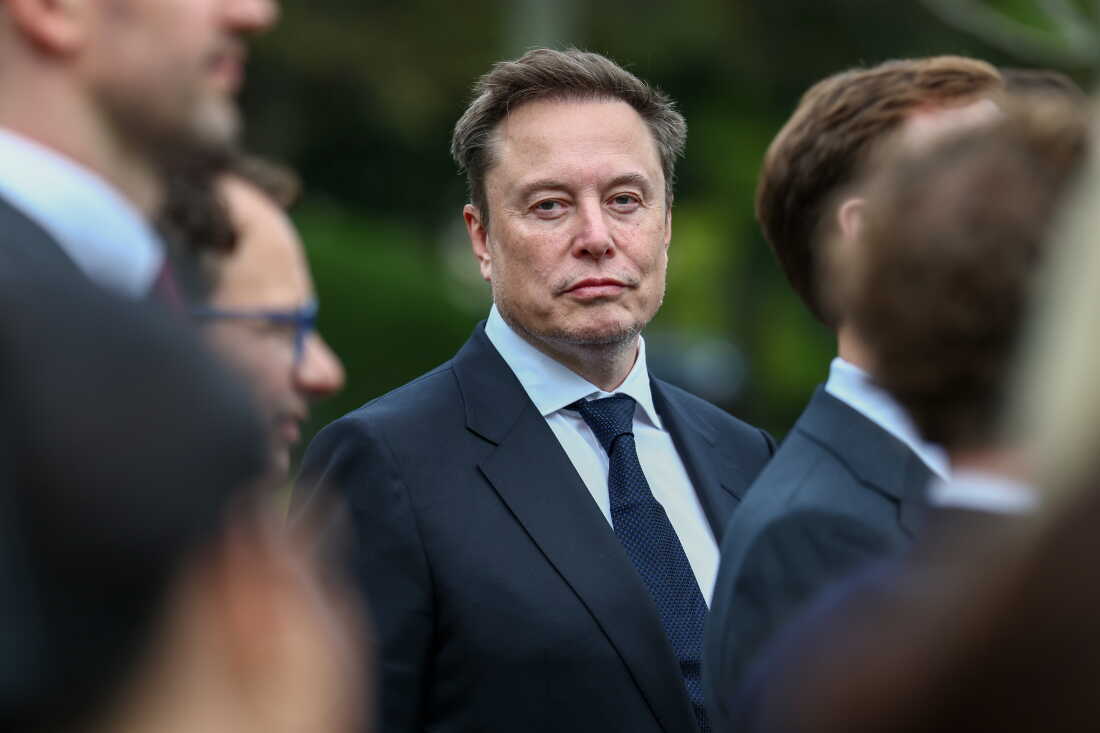
Musk’s substantial financial contributions are largely responsible for bolstering Republican efforts in Texas. Recently, Musk donated $158 million to the Republican Senate Leadership Fund, $20 million to the Congressional Leadership Fund, $89 million to his America PAC, and $10 million to the pro-Ken Paxton Lone Star Liberty PAC. Funds from the Senate Leadership Fund have primarily been allocated to the Texas PAC, spending over $148 million supporting Paxton and counter-advertising against Talarico.
Comparatively, Musk’s donations surpass the combined funds raised by Talarico and Paxton, even equating nearly the total advertising budget for all 470 congressional races in early September. Despite this, advertising rules favor candidates, minimizing the reach of Musk’s contributions amid Texas’ numerous, costly media markets.
Broad and Deep Advertising Investment
The money spent is indicative of where the competitive landscape truly lies, beyond public declarations and press release claims. At least $700 million in advertising bookings is anticipated by Election Day, mainly targeting toss-up or Republican-favored races according to the Cook Political Report.
Since September 28, Republican ad spending has quadrupled in the Kansas Senate race, tripled in Mississippi’s Senate contest, and increased in House races in Missouri, Arizona, Pennsylvania, and Kentucky. Concurrently, Democrats are intensifying efforts with sizable ad buys in existing competitive Senate races in states such as Ohio, Michigan, Maine, Texas, and Alaska, along with newly competitive states like Iowa, Kansas, Mississippi, and South Carolina.
On the House front, “Red to Blue” and “Districts In Play” designations have been backed by significant spending in districts like AR-02, MN-01, MT-01, and KY-06. Large campaign contributions and outside expenditure reports will continue to be disclosed within one or two days up to Election Day.