
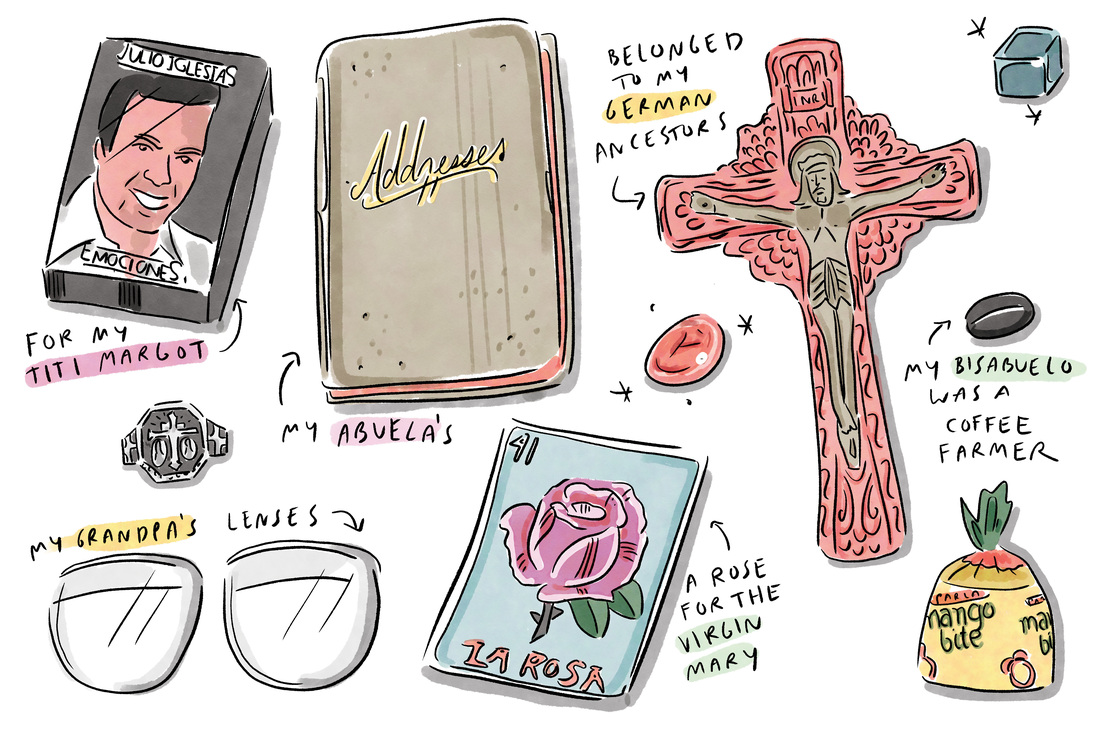
Every morning, I take a moment to acknowledge my ancestors. On my bedside table, I have a collection of items that remind me of them. These include my grandmother’s address book, my grandfather’s eyeglass lenses, and a Polish cassette tape of children’s songs gifted by my great uncle. These objects serve as daily reminders of the love and wisdom that have been passed down through my family.
Ancestral altars are found worldwide. In Mexico, the ofrenda on Día de los Muertos is a way to remember loved ones. Many Buddhist and African religious traditions also maintain permanent household altars to honor the dead daily. According to Ehime Ora, an educator of African spirituality, altars are not limited to religious practice. Anyone can create an altar and pay homage to their lineage.
Exploring Your Intentions
Before setting up an altar, consider why you want to connect with your ancestors. Chelsey Luger, co-author of The Seven Circles: Indigenous Teachings for Living Well, suggests integrating ancestral values into your life. Luger, a member of the Anishinaabe and Lakota nations, emphasizes that everyone is part of a larger web of relations. If you’re not focused on spirituality, consider an altar as gratitude for those who laid the groundwork for your existence.
Choosing a Special Spot
Your altar can be placed anywhere that feels right to you. Mine is on my bedside table because it’s where I keep precious belongings. Ora explains that altars can be found on dressers, tables, closets, or even in a suitcase. What matters is having a dedicated space for communication with your ancestors.
Displaying Objects
The contents of an altar may differ culturally, but its core function is to house ancestral spirits. Rajabari notes that various objects like crystals, dolls, and photos help embody ancestral energy and connect with history. You might seek out family heirlooms or sentimental items to include on your altar. Even if you don’t have direct family items, you can incorporate symbols representing your ancestors.
Luger, for example, treasures a bottle of Givenchy perfume similar to one her grandmother wore. My altar has a Julio Iglesias tape, reflecting my Titi Margot’s musical tastes. For those with less detailed ancestral knowledge, speaking with older relatives can help identify meaningful items.
Starting a Ritual
Creating a ritual around your altar can be a meaningful way to honor your heritage. Collins and Rajabari endorse practices like prayer and meditation. Offerings such as food can be left for ancestors in many traditions, serving to strengthen the bond and fulfill prayers.
My own ritual includes greeting each relative, sometimes lighting a candle or wearing my grandmothers’ rings. Although I never met most of my grandparents and their predecessors, my altar honors their lives and brings peace.
Interested in connecting with your ancestors? Share your experiences with us. How have you explored your ancestry, or what have you done to honor them? Perhaps you’ve crafted your own altar. Email us at [email protected] with “Ancestors” in the subject line, and you may be featured on NPR.org.
Audio production for this episode was by Audrey Nguyen, while the digital narrative saw editing by Malaka Gharib. Reach out through voicemail at 202-216-9823 or email [email protected]. Tune into Life Kit on Apple Podcasts or Spotify, or subscribe to our newsletter.