
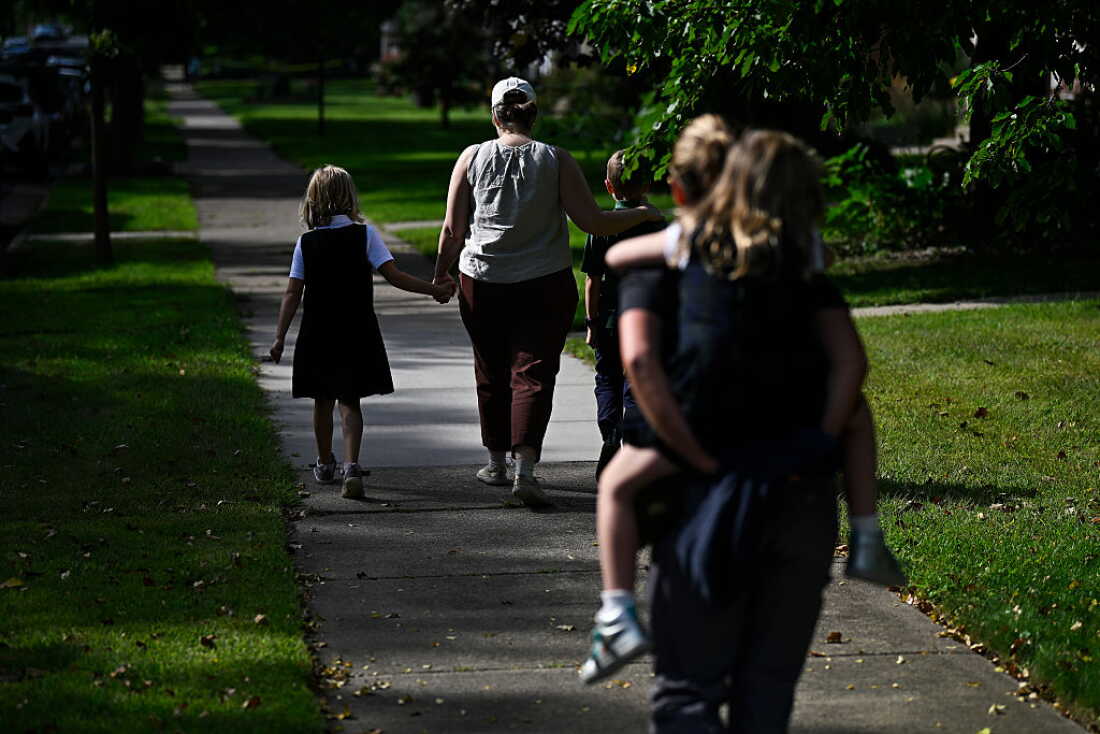
Families left Annunciation Catholic School in Minneapolis on August 27 following a tragic mass shooting. Events like these are a harsh reminder that school shootings are no longer rare in the United States.
The frequency of school shootings has increased significantly. Data from the American Academy of Pediatrics reveals this unsettling trend. CNN reports 44 school shootings this year. The Washington Post records over 400 since the infamous Columbine High School incident in 1999. Each case leaves parents and teachers with the challenge of soothing children’s fears and anxieties.
How to Talk to Children About School Shootings
Parents and teachers often struggle with how to address these tragedies with children. David Schonfeld, director of the National Center for School Crisis and Bereavement at Children’s Hospital Los Angeles, offers guidance. He suggests starting by asking children what they have heard.
Children’s questions may be very different from adults’,Schonfeld explains. Listening to children helps adults understand their true concerns.
His organization provides guidelines for discussing tragic events with kids. Children often ask about who is responsible, what preventive measures failed, and if their school could be at risk. Honest answers build trust. Unfortunately, while schools are generally safe, risks do exist.
Children need to learn to manage their distress when they recognize threats in the world. The amount of information shared should be age-appropriate and consider their past trauma or familiarity with the event.
Emotional Support and Routine
Melissa Brymer, director of terrorism and disaster programs at the UCLA-Duke University National Center for Child Traumatic Stress, emphasizes patience. Parents might need to repeatedly discuss the events with young children.
Talking about these events shouldn’t be taboo,says Brymer.
The American School Counselor Association recommends maintaining routines to provide security. Keeping consistent daily activities helps children feel more secure.
Limiting media exposure is also important. If watching or reading the news doesn’t provide new, useful knowledge, disconnect from it to avoid unnecessary stress.
Strategies for Coping
Discuss coping strategies with children to ease their concerns. Books can be effective tools. Brymer suggests Once I Was Very Very Scared by Chandra Ghosh Ippen for young children. It shows different animals dealing with fear in various ways.
For older children, parents can redirect anger or anxiety into positive action. Involve them in initiatives to combat gun violence. After the 2018 shooting in Parkland, Florida, students from Marjory Stoneman Douglas High School became vocal advocates for gun control.
These efforts didn’t solve the problem but raised awareness,says Schonfeld.
He emphasizes that adults must also participate in the solutions while nurturing children’s involvement.
Continuing the Conversation
Sustained dialogue with children helps address not only tragedies but other life challenges. Schonfeld believes talking about difficult events makes it more likely for children to approach parents with concerns.
Difficult conversations will always be part of life,he notes.
While uncertainty surrounds these conversations, ongoing communication is key to supporting children in troubling times.